
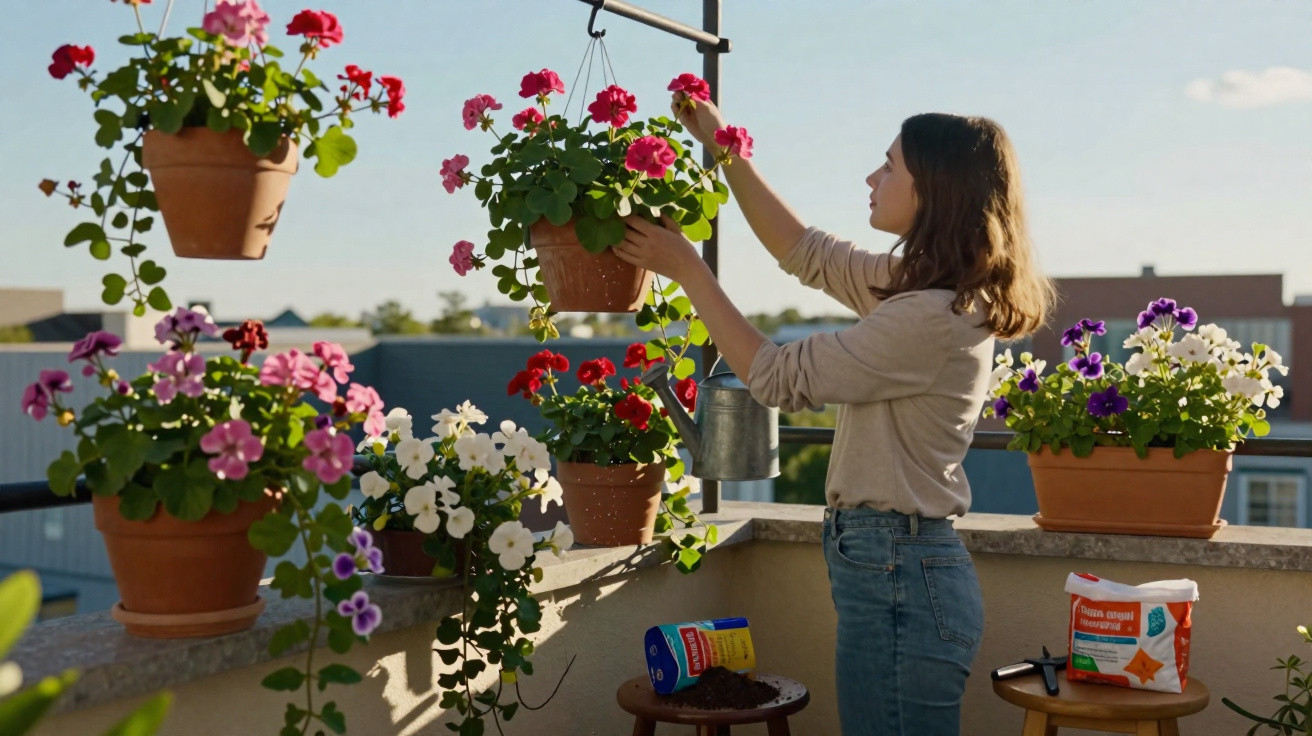
Turning a balcony into a flower-filled spot for most of the year is a popular option for anyone without a garden. Hanging plants stand out because they take up very little floor space, make the most of vertical height and create a green, colourful cascading effect-provided you choose the right species and keep up with straightforward care throughout the seasons.
How do you choose the most suitable hanging plants for a balcony?
Among the most commonly used options, certain species are valued for their long flowering period and for coping well in suspended pots. The idea is to keep a balcony looking colourful for as long as possible, even in compact areas and with changing weather.
Five plants come up again and again: trailing petunia, trailing lantana, chenille plant (Acalypha), trailing geranium and busy Lizzie (Impatiens) in versions suited to taller pots. Each one responds differently to light levels, wind exposure and container type, so it is worth assessing your balcony’s conditions carefully before choosing.
Watch a video on the YouTube channel Guia das plantas showing 8 hanging-plant species that are extremely hardy:
How should you manage light and watering for flowering hanging plants?
The trailing petunia is best for sunny balconies, with direct sun for at least four hours a day and some shelter from very strong winds. Watering should keep the potting mix slightly moist, and in warmer regions it flowers from spring through to autumn when fed with a fertiliser high in phosphorus and potassium.
The trailing lantana copes well with strong sun and hot weather, making it a good fit for very bright balconies, while the chenille plant (trailing Acalypha) does better with bright indirect light or gentle sun. Lantana can handle short dry spells when planted in deeper containers, whereas chenille plant prefers steady moisture in both the potting mix and the surrounding air, which helps keep its foliage in good condition.
How do you decide on the ideal support and pot for hanging plants?
The container you choose has a direct impact on how hanging plants grow. Petunias and geraniums perform best in bowl-style pots that are wider than they are deep, while trailing lantana and chenille plant benefit from deeper pots that accommodate vigorous roots and improve the stability of their stems.
The supports you use on a balcony also affect both safety and plant health, and certain styles suit small spaces better or cope more effectively with wind. Here are common options and how they work in everyday use:
- Ceiling-mounted hooks: best for medium-sized, lightweight pots; they also encourage air movement around the plant.
- Wall-mounted brackets: a good choice in areas with moderate wind, allowing you to position the pot at eye level.
- Rail systems or suspended shelves: make it possible to group several hanging plants together and build a flowering display.
How do you keep trailing geranium and busy Lizzie flowering continuously?
The trailing geranium adapts well to balconies with mild conditions and either morning sun or late-afternoon sun, and it tolerates brief dry periods. To encourage ongoing blooms, remove faded flowers and overly long shoots, and apply a fertiliser formulated for flowering plants every four to six weeks.
The trailing busy Lizzie prefers partial shade, filtered light and frequent watering without waterlogging the potting mix. In warm, humid climates, good airflow helps prevent fungal problems on the leaves, and combining this plant with petunias, lantanas, chenille plants and geraniums at different heights adds visual depth and keeps a balcony colourful for many months in a row.
Comments
No comments yet. Be the first to comment!
Leave a Comment