
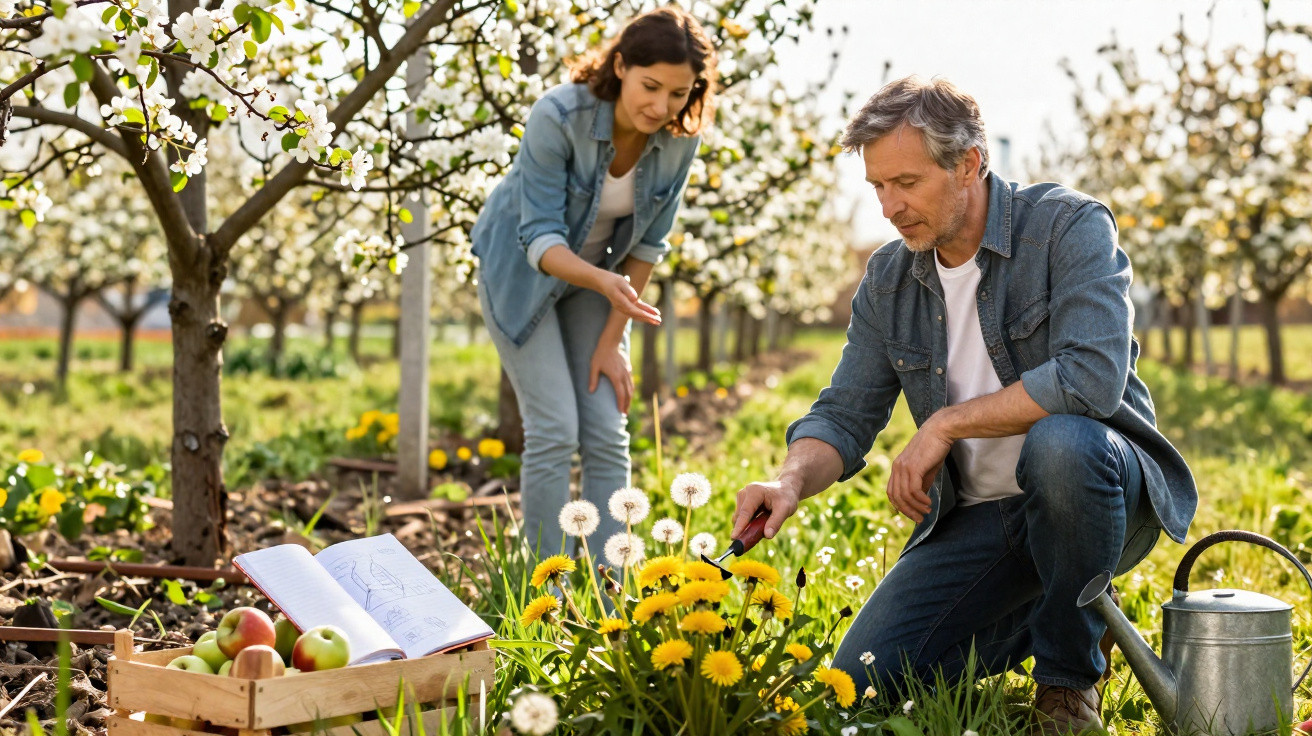
A hobby gardener yanks dandelions out of the lawn in a rage - until a neighbour stops him, quietly saving his fruit harvest in the process.
Plenty of gardeners see those yellow dots in the grass as nothing but “weeds”. Crisp edges, deep green, not a wild flower in sight - that’s the dream lawn. But if you rip out dandelions without mercy in spring, you may be undermining your own fruit harvest without realising it. That’s exactly what happened to one garden owner, when a neighbour halted him mid-pull - offering a reason that sounded ridiculous at first, then completely changed how he looked at his garden.
Why the neighbour’s objection was spot on
In late winter and early spring, honeybees, wild bees and other pollinators come out of the cold season badly depleted. They need fast energy to survive and to feed their young. As soon as temperatures stay milder for a few days in a row, they start flying - hunting for nectar and pollen.
This is where the dandelion plays its quiet leading role. It’s among the earliest flowers of the year. Often it’s already glowing yellow while cherry, apple and plum trees are still only in bud. For hungry pollinators, it’s like an outdoor breakfast buffet:
- tightly clustered, easy-to-reach blooms
- lots of nectar and pollen in a small area
- flowering right during the critical post-winter transition
If you remove every dandelion in March or early April, you take away that early boost. Wild bees don’t have human-managed food stores like honeybees do in a hive. For them, what’s flowering nearby can be the difference between life and death.
“A few yellow patches in the lawn can ultimately decide whether your fruit baskets are full - or almost empty.”
Without that first energy source, many pollinators don’t make it as far as the main fruit blossom. The result: fruit trees can bloom spectacularly, yet set only a small amount of fruit - because hardly any insects are moving pollen from flower to flower.
Invisible helpers: how dandelions support fruit trees
Most garden fruit varieties depend on insects. Wind pollination only plays a minor role for apple, cherry or plum. The heavy lifting is done by honeybees and countless species of wild bees, hoverflies and other insects.
Many solitary wild bees - such as mason bees - are particularly efficient. In many gardens they’re far more numerous than people assume. To be in peak condition when fruit trees flower, they need energy beforehand. Dandelion blooms provide exactly that:
- they help refill reserves after winter,
- they enable the start of reproduction,
- they ensure many bees are active at the same time when fruit blossom begins.
If this “pit stop” disappears, bee populations can crash. You usually only notice weeks later, long after the flowers have dropped: branches covered in the remains of blossom, but only the odd fruit developing. Many hobby gardeners then blame freak weather, fungal disease, or a supposedly “poor tree”. In reality, the issue is often simply that there weren’t enough pollinators at the right time.
More than flowers: what dandelions do for the soil
Dandelions don’t only help above ground. Below the surface, their strong taproot acts like a free soil tool.
The root drives deep, loosens compacted ground and creates fine channels. Rainwater can soak in more effectively, reducing waterlogging. At the same time, the roots attract earthworms, which further aerate the soil and improve its crumbly structure.
A lawn or garden patch with lots of dandelions often indicates compacted or nutrient-rich soil. If you remove everything ruthlessly, you miss that built-in clue. The flat leaf rosettes also shelter young plants and small animals from harsh sun and drying out. And when the seeds ripen, they don’t just drift nicely on the breeze - they also provide food for various bird species.
“Dandelions are less a weed and more a free service package for soil, insects and wildlife.”
A tidy lawn and a good fruit harvest - you can have both
Nobody has to turn the whole garden into a wild meadow to support fruit trees. What helps is a smart approach: targeted tolerance. Instead of fighting every dandelion, it pays to use a graduated strategy.
How to plan a workable compromise
- Leave a strip around fruit trees of about 0.5–1 m.
- Alternatively, set aside a small area of roughly 1 m² per tree as a “flower island”.
- Let dandelions and other early bloomers grow there until after the fruit blossom.
- Once flowering is over, you can mow those zones again or weed selectively.
Early-flowering perennials and shrubs help too. Planting crocuses, hellebores, willows or other early-flowering bulbs lays out an even richer table for pollinators. The more varied the menu, the more stable insect numbers tend to be in the garden.
Turning to chemicals harms the system twice over. Synthetic pesticides can directly endanger pollinators or weaken them. In several countries, such products for private gardens have long been heavily restricted or banned. The direction of travel is clear: working with nature, not against it.
A practical spring routine: when pulling is OK
The best timetable starts as early as late winter. If you plan ahead, you don’t have to keep bouncing between guilt and the urge for neatness later.
- In February and March, deliberately leave the first dandelions standing in the garden.
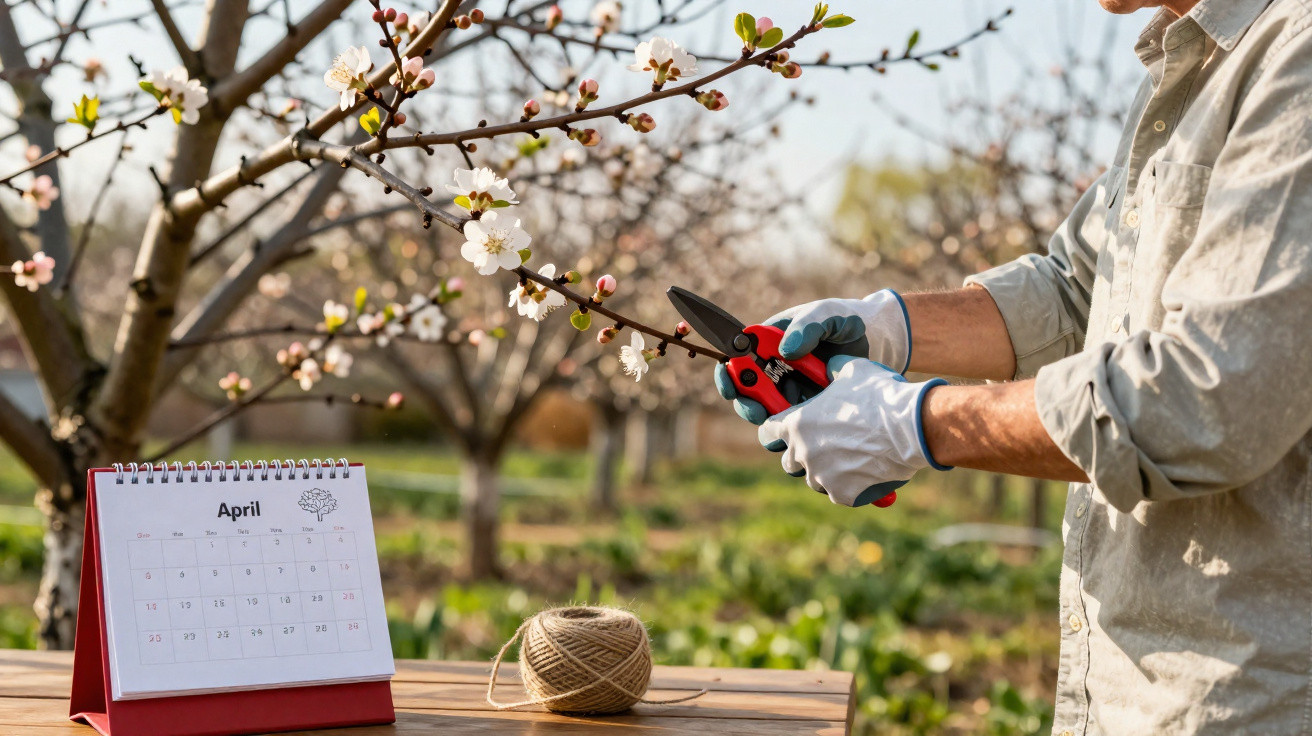
- Watch the fruit blossom develop: buds, first flowers, full bloom, end of bloom.
- Throughout the entire blossom period, tolerate as many yellow flowers as possible close to the trees.
- Only once it’s clear pollination is largely finished should you mow more intensively again or dig out plants selectively.
Even a small number of strategically placed plants can make a noticeable difference. A narrow flowering strip near an apple tree often means far more bees working the tree. The extra minutes spent mowing around it can repay you later with baskets of apples, cherries or plums.
Why the argument about “weeds” is really about yield
Neighbourly debates about garden appearance are officially about order, lawn height or tidiness. Underneath, they’re usually about two very different ideas of what a “good garden” looks like. One person wants a flawless green carpet; another wants a living ecosystem.
From the fruit trees’ perspective, it’s simple: they need insects. And those insects need spring flowers that let them get going for the year. Whether someone likes dandelions or finds them ugly makes no difference to the tree - but it matters a great deal to the size of the harvest.
“If you support pollinators, you’re investing directly in the flavour, size and quantity of your fruit.”
Well-supported fruit trees don’t just carry more fruit - the fruit itself benefits too. More pollinated flowers often means larger, more evenly developed produce. Many gardeners report much fuller harvests once they allow more flowers in spring - whether that’s dandelions, crocuses or early-flowering perennials.
Additional tips for a high-yield, pollinator-friendly garden
If you want to strengthen your orchard long term, you can usefully build on the dandelion effect. A few straightforward measures work together and reinforce one another:
- Nesting sites for wild bees: an insect hotel, hollow-stem plants, or patches of bare ground give wild bees places to breed.
- A spread of flowering times: rotating flowering plants from early spring through to autumn provides continuous food.
- Less mowing - but more targeted: rather than cutting everything short every week, mow selected areas less often.
- No all-night outdoor lighting: light pollution disrupts many insects and weakens their populations.
Combine these steps with a few deliberately tolerated dandelion corners and you build a resilient network in the garden. Instead of wondering each year why the crop is disappointing, you develop a system that largely runs itself - powered by millions of small wings refuelling on yellow flowers in spring.
Seen that way, the observant neighbour wasn’t just making an aesthetic point when he intervened. He stepped in to protect the garden’s invisible workforce. And they repay it with buzzing shifts among cherry blossoms, apple blossoms and plum blossoms - until the basket in summer and autumn is almost too heavy to carry.
Comments
No comments yet. Be the first to comment!
Leave a Comment