
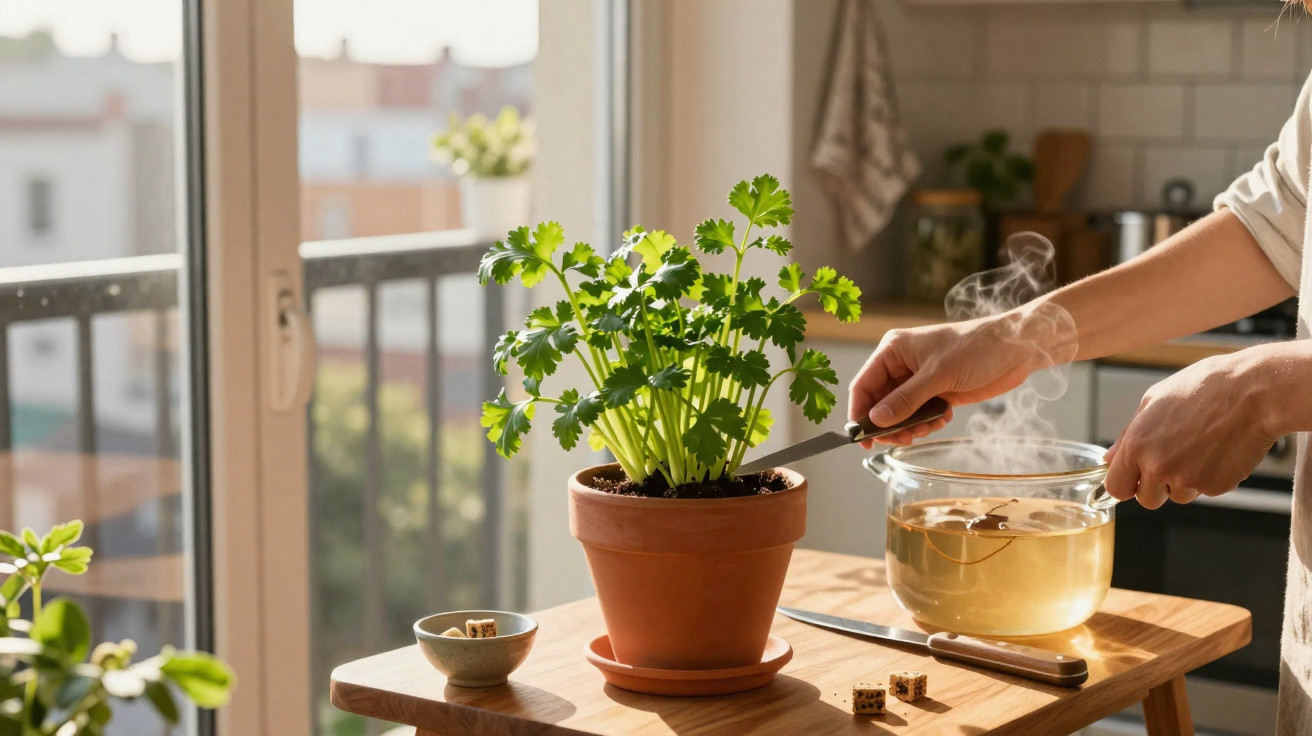
A plain-looking tub on the balcony can make ready-made stock unnecessary – and brings real flavour to soups, stews and sauces.
Many home cooks reach for stock cubes or instant powder out of habit. It is convenient, of course – but it is often loaded with salt, flavourings and additives. Yet there is a hardy, long-lived herb that delivers that familiar savoury note in a fresher, greener and far more natural way. Better still, it grows surprisingly well in a pot on a balcony or terrace.
The secret ingredient: lovage, also known as Maggi herb
The plant in question is lovage. You may also hear it called Maggi herb or perennial celery, because its scent strongly resembles classic soup seasoning.
"Lovage tastes like the heart of stock cubes – only fresher, more herby and without industrial additives."
Planted in the ground, lovage can easily reach 1.5 metres or more. In a container it stays smaller, but the flavour remains impressively intense. A few leaves are enough to noticeably season a large pot of soup.
Its taste leans towards celery, with a bold, savoury depth that gives stocks and stews more body. Many people who start cooking with Maggi herb find they drastically cut back on ready-made stock afterwards.
Why getting started in late winter is worthwhile
Gardeners often write off late winter as a “dead season”. Lovage does not follow that rule. This tough perennial copes well with cold and uses the cooler weeks to establish strong roots.
If you plant a young specimen now, it gets a head start. As soon as temperatures rise, the plant puts on rapid growth, and the first leaves often end up in the saucepan in spring – at a time when other herbs are only just waking up.
The right pot and the best compost
Lovage forms a strong taproot, so a shallow balcony trough is not suitable. A deep container works far better.
- Minimum depth: about 30 cm
- Diameter: 30–35 cm or larger
- Material: thick-walled plastic or a traditional terracotta pot
- Drainage holes: essential, as waterlogging damages the roots
A drainage layer at the bottom helps excess water run away quickly. Expanded clay pellets or coarse gravel work well, 3–5 cm deep.
For the growing medium, choose something rich yet airy. A simple mix for a medium-sized pot is:
- 6 parts multipurpose compost
- 3 parts garden soil
- 1 part well-rotted compost
Mix thoroughly, sieve out larger pieces, and avoid compacting it too firmly. The rootball needs a loose, breathable structure to grow into.
Planting lovage in a pot: step by step
- Add a drainage layer of expanded clay or gravel to the pot.
- Tip in a first layer of compost mix.
- Gently remove the young plant from its small pot.
- Position it centrally, with the crown sitting just below the rim.
- Fill around it with compost and press lightly with your fingers.
- Water well until water runs out of the bottom.
- Place the pot somewhere bright with partial shade, sheltered from wind.
Full sun on a hot, south-facing balcony can stress the leaves in midsummer. A spot with morning or evening sun, plus some shade at midday, is usually a better fit.
Care: minimal effort, big impact
Once established, lovage is one of the easiest kitchen herbs to keep. The compost should never dry out completely, but the plant also dislikes “wet feet”.
- Watering: water regularly when the top layer feels dry, but do not keep it constantly saturated
- Feeding: in spring, spread 1–2 cm of compost over the surface and lightly work it in
- Cutting back: harvest leaves often; it encourages fresh growth
When flower stems appear, snip them off with scissors just above where the leaves emerge. That way, the plant puts its energy into lush foliage rather than seed production.
A useful side benefit: the strong aroma deters many pests. Lovage is rarely heavily attacked by aphids or caterpillars and, in a pot, usually manages without any plant protection products.
How lovage replaces stock cubes
The key point is that the leaves carry a very concentrated savoury flavour. A little goes a long way, and too much can quickly take over.
- Instead of a stock cube: add 1–2 tablespoons of finely chopped fresh leaves to 1 litre of cooking water.
- Vegetable soup (4 people): stir in about 5 g of fresh leaves (a well heaped tablespoon) shortly before the end of cooking.
- Savoury omelette: whisk 4 eggs with 1 tablespoon of finely sliced Maggi herb and a little salt.
- Simple vegetable stock: simmer 1.5 litres of water with two carrots, one onion, a piece of leek, two bay leaves and 2 tablespoons of chopped lovage for 30–40 minutes.
"If you dose lovage with care, you season as if with stock – just with fresh green leaves instead of a pressed cube."
The leaves work particularly well with:
- clear soups and stews
- potato dishes, such as potato soup or mash
- slow-cooked dishes with beef or chicken
- homemade vegetable stock as a base for risotto or sauces
Use it fresh, dry it, or store it for later
In day-to-day cooking, the leaves usually go straight from plant to pan. In the fridge, they keep for roughly a week in a loosely closed bag.
To preserve a surplus, dry the stems:
- Tie several shoots into small bunches.
- Hang them upside down in an airy, shady place.
- Wait until the leaves rustle and crumble easily.
- Crush the dried leaves and store in a tightly sealed jar.
Dried lovage is noticeably stronger than fresh. As a starting point, you often need only:
1 teaspoon of dried lovage per 1 litre of water.
Increase gradually if you want more intensity.
Health benefits and practical everyday tips
Compared with many ready-made stocks, cooking water seasoned with lovage is much lower in salt. Anyone who enjoys hearty food but also wants to be mindful of kidney health or blood pressure can benefit from this natural seasoning.
Lovage also contains essential oils and bitter compounds that may help stimulate digestion. If you have sensitive kidneys or are pregnant, it is best to discuss larger quantities with a medical professional, as strong herbs can have a pronounced effect.
A practical bonus: once the plant is established, a vigorous pot will supply fresh leaves for years. Many gardeners pair lovage in a container with other perennial kitchen staples, for example:
- chives in a separate pot
- parsley for a milder green note
- thyme and rosemary for Mediterranean flavours
This creates a compact “outdoor soup shelf” that provides seasoning for most of the year, even in a small space.
Why a pot of lovage changes your kitchen cupboard
One robust container of Maggi herb can noticeably reduce how many stock cubes you get through. Cook with it regularly and you soon realise that many dishes do not need any artificial “flavour enhancer” when an aromatic herb is simmering alongside.
The initial cost is modest, the upkeep is straightforward, and the difference in taste is immediate. For balcony gardeners with limited room, this single plant is a long-term investment in better, more natural everyday cooking.



Comments
No comments yet. Be the first to comment!
Leave a Comment