
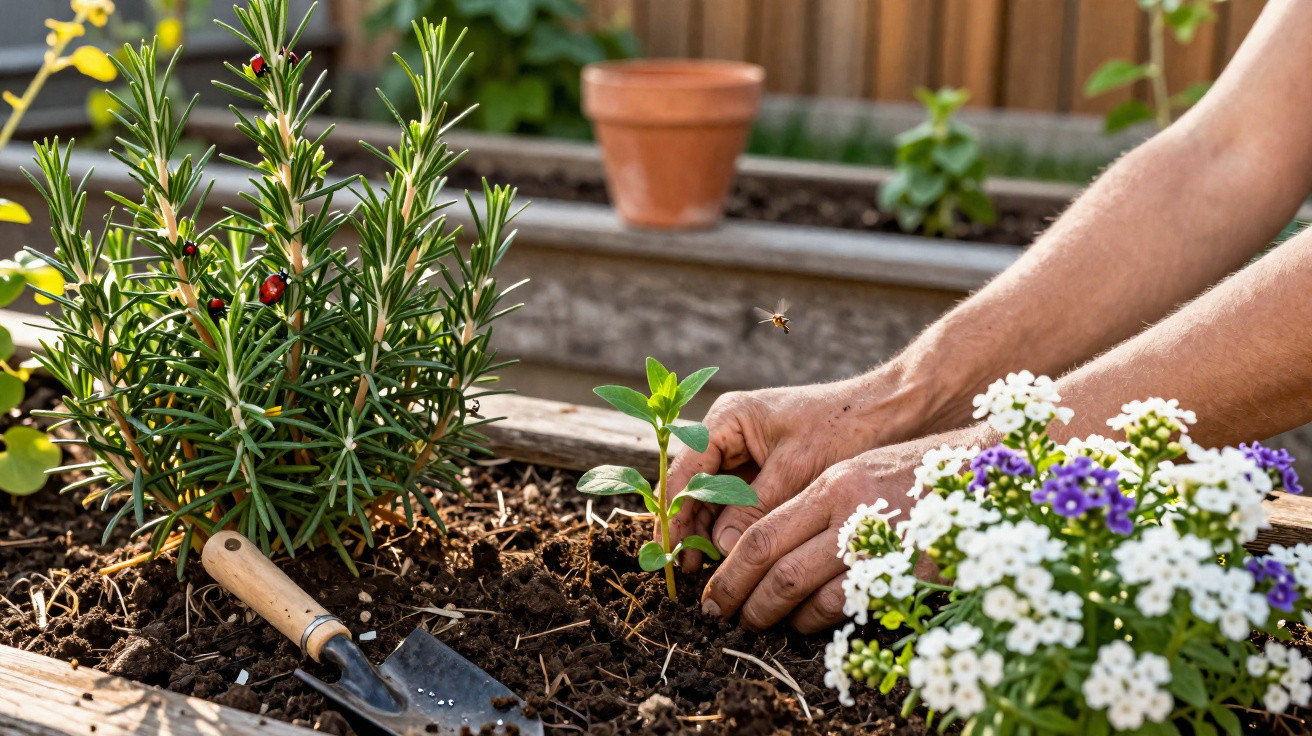
An aromatic shrub, a tiny flower - and suddenly the balance of power in the garden swings towards the beneficial insects.
Many home gardeners rely on rosemary to deter pests. Yet when spring is mild, aphids, whiteflies and small caterpillars still show up again. The answer isn’t the next chemical treatment, but an understated annual flower planted right at rosemary’s feet - it turns the bed into a real magnet for helpful insects.
Why rosemary alone doesn’t stop an aphid infestation
Rosemary is widely seen as a tough, fragrant all-rounder in the garden. It thrives in full sun, prefers light, relatively poor soil, and cannot tolerate waterlogged conditions. In heavy, clay-rich ground or in pots that stay damp, it struggles - leaves yellow, growth slows, and the plant becomes weak.
When rosemary is thriving, it releases essential oils. Those scents can discourage certain pests and attract bees and butterflies. Even so, its aromatic “shield” isn’t strong enough to stop every attacker. Aphids, whiteflies and some caterpillars, in particular, still find their way to fresh new shoots.
"Rosemary is more watchdog than fortress: it alerts you, attracts pollinators - but it doesn’t bring enough hungry helpers into the bed."
To build a more reliable defence, the shrub needs backup. The goal is a plant partner that flowers for a long time, provides plenty of nectar, and therefore keeps drawing in predators of aphids and other pests.
Alyssum: the small cloud of flowers that attracts bodyguards
That’s where alyssum - also known as rock alyssum - comes in: Alysson maritimum (Lobularia maritima). It stays low, usually about 10–20 cm tall, and forms dense cushions. Its tiny blooms appear in white, pink or violet - from spring right through to autumn, if you manage it correctly.
The fragrance is light and sweet, slightly honey-like. For insects, it’s an always-open buffet. Bees and hoverflies flock to it. And with them, an entire “security team” moves into your garden:
- Ladybirds and their larvae eat large numbers of aphids.
- Hoverfly larvae clear whole shoots of aphid colonies.
- Parasitic wasps parasitise caterpillars and whiteflies.
- Lacewings lay eggs near prey; their larvae also feed on aphids.
Put simply, alyssum turns the area around rosemary into an insect canteen - specifically for the helpers you want in the vegetable patch.
How to combine rosemary and alyssum properly
Choosing the spot and preparing the soil
Rosemary sets the requirements. It needs:
- a position in full sun
- well-drained, relatively dry soil
- no constant moisture around the roots
For beds, many gardeners create a looser base mix:
| Component | Proportion | Purpose |
|---|---|---|
| Garden soil | 3 parts | Basic structure and nutrients |
| Coarse sand | 2 parts | Drainage, aeration |
| Mature compost | 1 part | Moderate nutrient boost |
Plant rosemary first - ideally on a small mound or slightly raised area so rainwater can run off. Don’t place alyssum right against the stem; instead, plant it about 20–30 cm away. This keeps airflow around the crown and makes fungal issues less likely.
Growing in a pot or balcony planter
If you don’t have garden soil available, use terracotta pots at least 30–40 cm in diameter. Drainage holes are essential so water can escape.
Pot set-up:
- Add a drainage layer (for example, expanded clay pellets).
- Fill with the loose substrate mix listed above.
- Plant the rosemary in the centre.
- Sow alyssum around the rim, or plant small plugs about 20–25 cm apart.
Water sparingly. Let the top layer of compost dry out before watering again. In hot spells, one watering per week is often enough - depending on exposure and wind.
"A common mistake: treating rosemary like a balcony petunia. Too much water weakens the shrub and opens the door to pests."
After each major flush of flowers, alyssum can be trimmed back lightly. It then regrows and keeps flowering - which helps keep beneficial insects on site right into autumn.
Where this pairing really shines in the vegetable garden
The rosemary–alyssum duo isn’t just attractive; it also works as a functional companion planting in productive beds. Here are a few places where the effect is particularly noticeable:
- Along the edge of cabbage beds: fewer aphids and cabbage white caterpillars, more natural predators.
- Around peppers and chillies: hoverflies and lacewings reduce thrips and whiteflies.
- Beside carrot or strawberry rows: a lively border, more pollinators, and lower pest pressure.
This won’t make pests disappear completely. However, infestations tend to spread more slowly, and the ecological balance becomes more stable. Sprays are often unnecessary because beneficial insects step in early.
Variety choice, common mistakes and practical tips
For planting with rosemary, low-growing alyssum varieties are especially suitable. A popular option is the compact ‘Carpet of Snow’, which forms dense white carpets of flowers. It won’t smother rosemary and casts very little shade.
Sow in spring directly into the bed or pot. Alyssum can self-seed easily, so depending on the climate you may see a few volunteer seedlings the following year. For a dense, controlled cover of flowers, though, it’s still worth sowing again.
Keep a few common pitfalls in mind:
- Neighbours that need lots of water: herbs such as basil, or thirsty perennials planted right next to rosemary, disrupt the dry conditions it prefers.
- Saucers left full of water: permanently wet saucers under containers lead to waterlogging - and rosemary hates it.
- Cold: in exposed areas, rosemary is often happier in a movable container that can be kept sheltered over winter.
For pots in cooler regions, this approach works well: overwinter the rosemary in its container, then sow fresh alyssum in spring. That way, the partnership starts each season from scratch.
Why this method fits so well with natural gardening
If you want less chemistry in the garden, you need strong allies - and they usually have six legs. Beneficial insects won’t stay without food. Alyssum supplies nectar and pollen for months, while rosemary adds structure, scent, and the dry, warm conditions many insects like.
Together, they act like a simple building block for a resilient garden: the shrub contributes aroma and baseline deterrence, and the flower cushions provide a steady supply for predators. Gardeners reach for sprays less often because many issues are contained early by natural enemies.
If you like the results, you can extend the idea: adding other nectar-rich, low-growing flowers nearby - such as calendula or small native perennials - can strengthen the effect. The key is to keep the area around rosemary from becoming too wet or too densely planted, so it retains its vigour.
With just a few small steps, you create a patch of garden that smells wonderful, looks attractive, and noticeably eases pest pressure. One small annual flower, one aromatic shrub - and that’s often enough to leave aphids with very little chance.




Comments
No comments yet. Be the first to comment!
Leave a Comment