
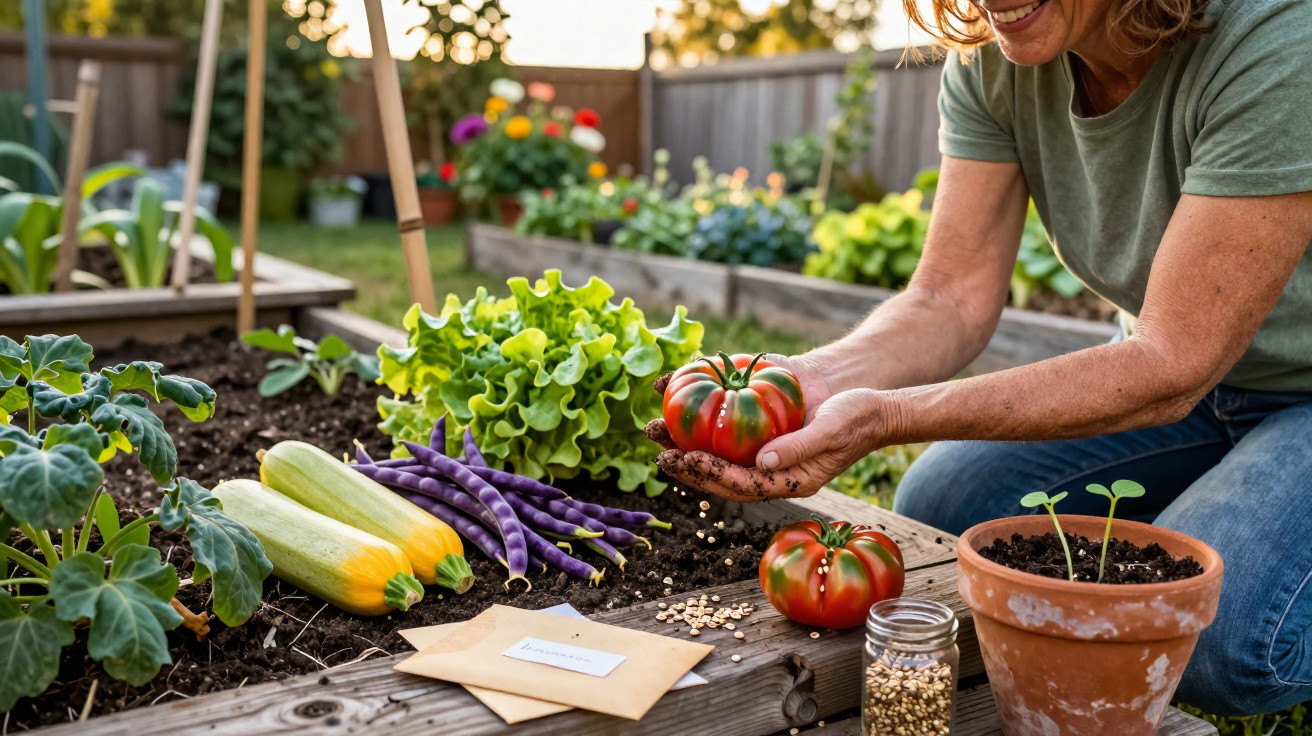
Old vegetable varieties quietly vanished from countless gardens - now they are surging back and transforming entire beds.
Sowing heritage varieties in spring does more than fill a plot with produce. It rekindles memories, rescues real flavour, and-almost as a side effect-builds biodiversity in the garden. And often, the very first bite explains why your grandfather saved those seeds year after year.
Why old varieties are suddenly back in fashion
For a long time, shops were dominated by uniform vegetables that looked flawless. They keep well, stack neatly and suit supermarket logistics-but in the garden it becomes obvious: appearance is no substitute for taste. Many home growers have got used to watery tomatoes, bland lettuces and interchangeable beans without quite realising what’s missing.
Heritage varieties change that. Historically, these plants were selected mainly for flavour and resilience, not for standardised size or easy transport. You notice the difference in everyday cooking:
- Tomatoes with a strong scent and an almost fruity depth
- Beans with real bite instead of soft, generic mush
- Lettuces that not only crunch but also bring their own subtle notes
- Squashes with a concentrated sweetness and a dense, creamy texture
“Old vegetable varieties bring imperfect shapes, but astonishingly full flavour, back into everyday life.”
There is another advantage as well: many of these varieties cope with fewer chemical inputs. They come from a time when gardens and fields had to manage without modern plant-protection products. If you garden in a more natural way today, you benefit from decades of that practical, hard-won selection.
What earlier generations already knew about seed
Saving seed used to be ordinary routine. Many families kept home-harvested seed in a cupboard or up in the loft. Beans and tomatoes were swapped with neighbours, notes were made about what stored well through winter, and which plants cropped reliably in the bed.
The mindset was practical: which varieties survive cold springs? What gives dependable yields in a small space? Which plants tolerate light soils or exposed, windy sites? As the seed display in DIY stores became the default, some of that experience faded.
Now that approach is returning. Terms such as “farmhouse varieties” are commonly used for seed that has proved itself over many years in home gardens. These lines are often tuned to local conditions, surprisingly tough, and well suited to a style of gardening that relies on compost, mulch and diversity rather than constant feeding and purely ornamental perfection.
Which old varieties are especially worth sowing in spring
Spring-particularly from mid-April onwards-is an ideal time to give heritage varieties the spotlight. The soil starts to warm up, the days lengthen, and seedlings get enough light to establish strongly.
Classics for beds and raised beds
- Old tomato varieties – large beefsteak types, darker forms or striped selections add variety in both colour and flavour.
- Runner or climbing beans – ideal for small gardens because they grow upwards and take up little ground space.
- Traditional radishes – some are hotter, others milder, and a few come in unusually vivid colours.
- Traditional squashes – from storage squashes to aromatic eating varieties with firm skins.
- Classic butterhead lettuces – tender leaves, often less bitter and bred more for enjoyment.
- Old pea and broad bean varieties – great for the start of the season, and many tolerate cooler temperatures well.
Even without a garden, you can take part. A balcony can be enough if you have a few deep pots plus a sturdy box or a modular raised-bed unit. Tomatoes, lettuces, radishes and herbs do remarkably well there when they receive regular water and nutrients.
How to manage sowing and young plants without stress
You don’t need a professional greenhouse set-up to begin with heritage varieties. A few simple basics are enough:
- Prepare the soil: Loosen the ground rather than digging it over completely. A small amount of well-rotted compost is sufficient as a starter feed.
- Keep areas clean: Remove old root remains and persistent weeds so seedlings are not immediately fighting competition.
- Use the right sowing depth: Place seeds roughly two to three times as deep as the seed is large.
- Water gently: Use a fine spray so the seeds stay where you put them.
As a guide to sowing depth, use the overview below:
| Vegetable type | Sowing depth |
|---|---|
| Radishes | around 1 cm |
| Lettuce | 0.5–1 cm |
| Beans | 2–3 cm |
| Squash | 2–4 cm |
| Tomatoes in pots | about 0.5 cm |
“Less effort, more method: if you loosen the soil, sow at the right depth and water carefully, you remove most early setbacks for your plants.”
Protection from cold, wind and spring weather swings
Spring can be deceptive: T-shirt weather by day, ground frost at night-and young plants feel that strain. Even when working with robust old varieties, it pays not to rely on toughness alone.
A few small tools make a big difference:
- Horticultural fleece or a light cover for chilly nights
- Clear cloches, cut plastic bottles or old window panes as a mini greenhouse
- Wooden or cardboard edging to break drying winds that can desiccate seedlings
One key point: ventilate on sunny days in good time so moisture does not build up on the leaves. Wet plants with poor airflow are more vulnerable to fungal diseases.
Why old varieties often taste more intense
Many modern varieties have been bred for yield and uniformity. With older lines, enjoyment was often the priority. They had to feed the household and taste good-not last for weeks in a crate.
A fully ripe tomato from your own garden, finished on the plant, has a different sugar–acid balance from a supermarket fruit picked early. The same applies to tender lettuces or bean varieties with a clearly defined character. That is where the “aha moment” comes from: one bite, and you understand why people passed seeds on for decades.
Saving your own seed - keeping the treasure in the garden
Once you’ve found a variety that thrives in your garden, you can preserve it long-term with very simple methods. That saves money and makes you less dependent on whatever happens to be available in shops.
The process is straightforward:
- Make a selection: Use only vigorous, healthy plants as your parent stock.
- Let fruits fully ripen: Allow a few examples to mature completely; don’t harvest too early.
- Extract the seed: Remove seeds carefully-tomatoes, for instance, are taken out with their gel coating.
- Clean: Remove remaining flesh; for beans, simply dry and shell.
- Dry and store: Keep cool, dry and dark-ideally in paper envelopes labelled with date and variety name.
“Saving your own seed turns the garden into a small archive - each season, a piece of family history grows alongside the crop.”
What this means for diversity, climate and neighbourhood life
Heritage varieties are not only about flavour; they also act like a safety net for the future. The more different lines we grow in gardens, the broader the genetic base. With increasingly extreme weather, a resilient, well-proven old variety can be invaluable because it may cope better with drought, heavy rainfall or late frosts.
There is a social side too. Swapping seed gets people talking. When you give someone a handful of bean or tomato seeds, you also pass on a story-when they cropped well, which recipes worked, and which small tricks helped in the bed.
Practical tips for beginners with old varieties
If you’re just starting out, you don’t need to overhaul the entire plot. A small trial area is sensible:
- Create a separate bed or raised bed just for heritage varieties
- Try only a few new varieties each year, but watch them closely
- Keep notes: sowing time, yield, flavour, vulnerabilities
- Ask friends and family specifically for proven “heirlooms”
It also helps to keep a simple notebook-or a digital note-listing each variety with a short description. Over time, you build your own small database: what works in shade, what thrives on a south-facing balcony, and what needs particularly frequent watering.
It becomes even more engaging when children are involved. A bean tepee made from old varieties, a row of tomatoes in unusual colours, or a strip of radishes they are allowed to harvest themselves-those experiences stick. Many adults can still recall, decades later, the tomato from their grandparents’ garden or the first truly hot radish.
Choosing old vegetable varieties makes your beds feel less generic. Instead of anonymous standard produce, you grow distinctive plants with a story of their own. From a handful of seeds in spring, you don’t just get a harvest-you cultivate a small piece of lived tradition that can be sown again each year.
Comments
No comments yet. Be the first to comment!
Leave a Comment