
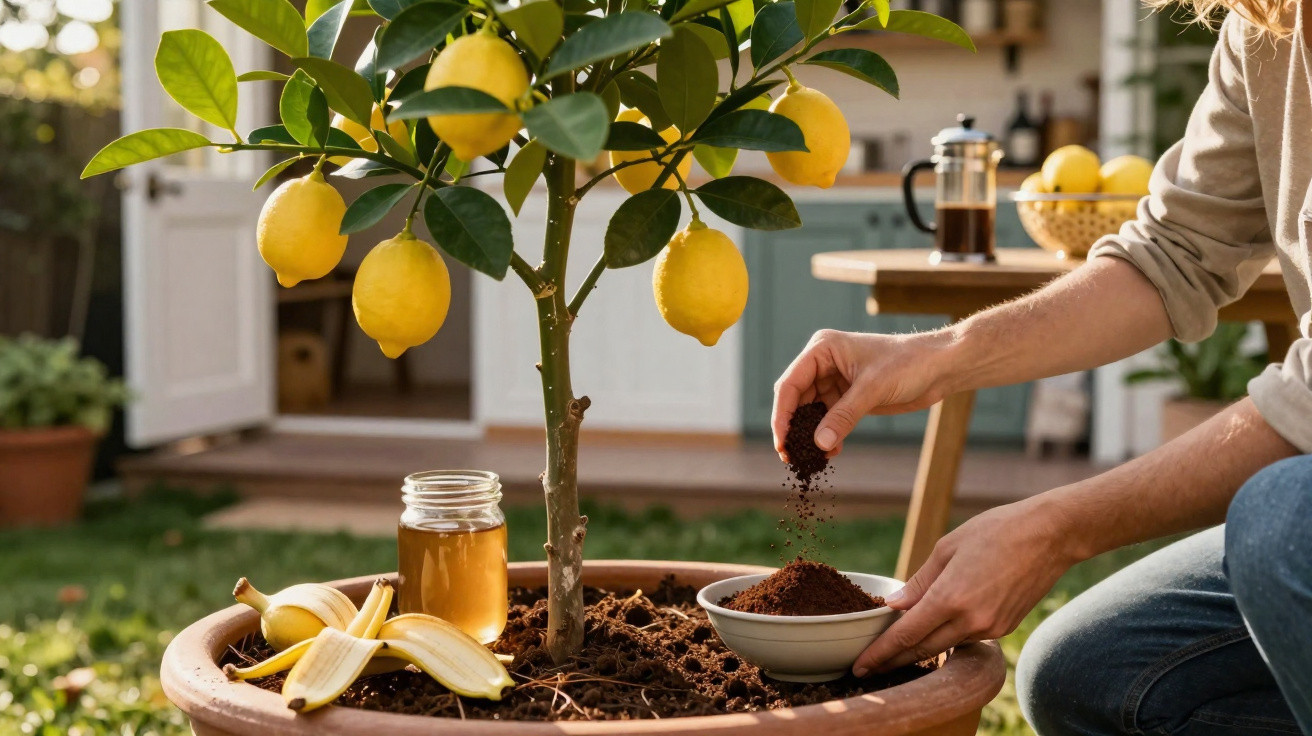
A few leftover bits from the kitchen, used the right way, and your lemon tree can look as if it’s been replaced - packed with leaves, blossom and big fruit.
Many amateur gardeners are puzzled when their lemon tree seems sluggish after winter and barely produces any fresh shoots. Often, it isn’t a lack of skill at all, but down to timing and minor nutrient gaps. That is exactly where a straightforward kitchen trick from mid-March comes in - no pricey specialist feed, just what you already have at home.
Why mid-March is the turning point for the lemon tree
After the dark winter months, a lemon tree is frequently stuck in energy-saving mode. Cool temperatures, limited light and inconsistent watering slow it down. It more or less keeps going, but produces little new growth or budding.
From around mid-March, conditions start to shift. Days lengthen, temperatures rise, and the plant gradually switches back into growth. Sap flow increases, buds begin to swell, and the first new leaves appear. At this point, the tree responds particularly well to nutrients.
"A targeted nutrient boost from mid-March helps the lemon tree develop strong foliage and lays the foundations for plenty of blossom and large fruits."
If you start at exactly this moment with a suitable kitchen add-on, you can noticeably stimulate growth, rather than simply trying to prop up a weakened tree.
Secret helper from the kitchen: coffee grounds instead of chemicals
That unremarkable leftover from the coffee machine has more to offer than it seems. Used coffee filters usually go straight in the bin or onto the compost heap. For a lemon tree, coffee grounds can be a small trove.
Coffee grounds contain mainly:
- Nitrogen - supports fresh leaf growth and a rich green colour
- Organic matter - encourages soil life and helps keep the compost/soil open
- A mildly acidifying effect - citrus plants generally prefer slightly acidic conditions
Used regularly - but in modest amounts - the tree can look noticeably more vigorous within a few weeks. If the foliage was previously thin and pale, many people see stronger, greener leaves after three to four weeks.
Using coffee grounds correctly: step-by-step instructions
Simply tipping a thick layer of coffee grounds onto the soil can do more harm than good. Follow a few basic rules and it works reliably.
How to prepare the coffee grounds
- Collect coffee grounds over several days (around 3 to 5 portions).
- Spread them thinly on a plate or on paper and leave to dry for 24 to 48 hours.
- Only use them once they are completely dry - this helps prevent mould.
How to apply them to the lemon tree
- Check that the soil is slightly moist - not bone dry and not soaking wet.
- Loosen the surface 2–3 cm deep with a small fork or hand cultivator.
- For a pot about 30 cm in diameter: use 1–2 tablespoons of coffee grounds.
- In garden soil: scatter 2–3 loose handfuls around the root area.
- Never place coffee grounds directly against the trunk; work them in around the outer edge of the root ball.
- Mix lightly into the top layer and then water in gently.
- Repeat every 3–4 weeks from mid-March to the end of August.
"With coffee grounds, less is more: small amounts spaced out work better than one big dose in one go."
For XXL lemons: combine coffee grounds with banana peels
If your aim is not only more leaves but, above all, larger and juicier lemons, you also need to consider potassium. This nutrient supports blossom, fruit set and fruit size.
Banana peels are among the best-known household sources of potassium. Paired with nitrogen-rich coffee grounds, they form a two-part feed that suits citrus plants well: energy for leafy growth plus support for abundant flowers and robust fruit.
Recipe: liquid feed made from banana and coffee
Ingredients for around 5 litres of watering solution
- 2 clean banana peels (no stickers, ideally organic)
- 1 litre of water for the initial brew
- 2 tablespoons of used coffee grounds
- 4 litres of fresh water for diluting
Preparation and use
- Cut the banana peels into small pieces.
- Put them in a pan with 1 litre of water, bring to the boil and simmer gently for about 15 minutes.
- Take the pan off the hob, add 2 tablespoons of coffee grounds and allow everything to cool.
- Strain the liquid so no bits end up in the watering can.
- Top up with 4 litres of water to make roughly 5 litres of feed.
- Apply only to soil that is already slightly moist, watering around the base of the tree.
- Use once a month from mid-March to the end of August.
If you apply this liquid feed more frequently, you risk overfeeding and, in extreme cases, salt build-up around the roots. The guiding principle is: better to stick to a monthly routine than to add constant little “extras” in between.
Perfect conditions for a healthy lemon tree
No fertiliser can compensate for a consistently unsuitable position. For a lemon tree to really surge with vigour, its setting and care need to be right.
- Soil: loose, free-draining, humus-rich and slightly acidic; avoid waterlogging at all costs.
- Light: as much sun as possible, a sheltered spot, and no exposure to cold draughts.
- Water: keep evenly moist; the root ball must never dry out completely, but must not sit in water either.
- Overwintering in a pot: a cool, bright place at 5–15 °C, such as a garage with a window, a stairwell or a conservatory; warm living-room air puts the plant under stress.
"When position, watering and temperature are right, coffee grounds and banana water act like an extra turbo boost - not an emergency rescue plan."
What to do from 15 March in practical terms
| Period | Action |
|---|---|
| Mid-March | First light application of coffee grounds; remove diseased and dead shoots; only thin the crown gently. |
| April | First watering with the banana–coffee infusion; keep an eye on new leaves. |
| May to August | Alternate monthly: dry coffee grounds one month, liquid feed the next. |
| End of August | Reduce additions significantly; from autumn, stop using household feeds so the tree can settle into dormancy. |
Pruning correctly without weakening the tree
Every cut is a stress for the plant. If you reach for the secateurs too often, you take away energy the lemon tree needs for flowers and fruit.
In most cases, one light round of shaping and maintenance pruning per year is enough. The best time is late winter or very early spring, shortly before growth begins.
- Remove dead, brown or brittle branches.
- Take out branches that cross over or rub against each other.
- Open up the centre of the crown slightly so light can reach the inside.
The aim is not a perfectly sculpted tree, but an airy crown that lets light reach leaves and flowers. Together with coffee grounds and banana feed, the tree can then channel more energy into new shoots, blossom and fruit.
Typical mistakes and how to avoid them
Especially with household remedies, there are a few common pitfalls - but they’re easy to avoid with a little know-how.
- Too much coffee grounds: compacts the surface, disrupts the roots and can go mouldy. It only helps in thin layers.
- Undried coffee grounds: quickly develops mould; always dry first.
- Cold tap water: ice-cold water shocks warm roots; lukewarm water is gentler.
- Feeding in winter: during dormancy the tree needs very few nutrients; too much encourages weak, spindly growth.
FAQs: common questions about coffee grounds and lemon trees
Can I use instant coffee?
Pure instant coffee powder is far too concentrated and should not be applied directly to the plant. Only used coffee grounds are suitable, because some of the soluble substances have already gone into the drink.
Can I give coffee grounds to other plants?
Yes. Many acid-loving plants benefit from small amounts, such as blueberries, hydrangeas or rhododendrons. Use a similarly cautious dose as you would for a lemon tree.
How can I tell whether my tree is responding well?
In the weeks after you start, a healthy lemon tree shows stronger, deep-green leaves and sturdy new shoots. If the leaves stay pale or begin to curl, it’s worth checking watering, position and any possible pests.
Using coffee grounds and banana peels thoughtfully turns kitchen waste into a useful resource and can reduce the need for expensive specialist fertilisers. With the right timing from mid-March, careful dosing and a sunny, sheltered spot, a lemon tree often goes from problem plant to a real showpiece with plump, well-filled fruit.


Comments
No comments yet. Be the first to comment!
Leave a Comment