
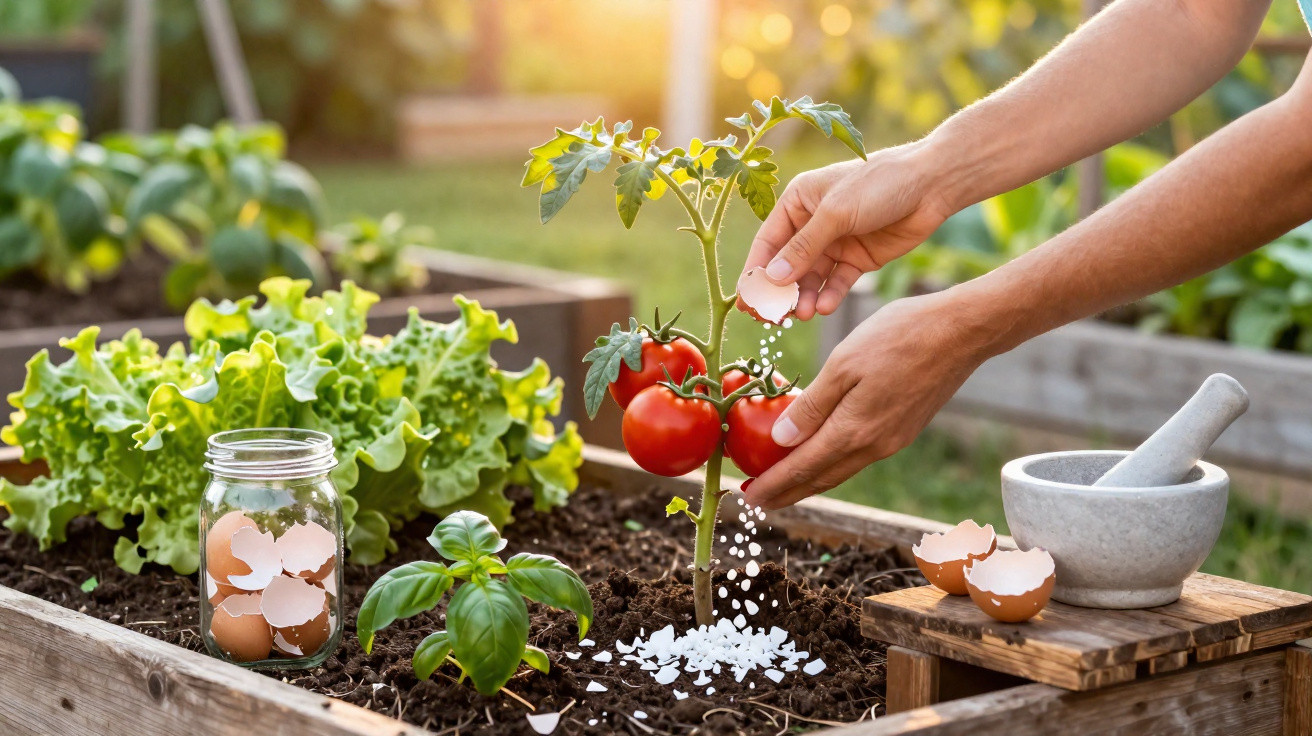
Among the many handy tricks used by people who grow plants at home, reusing crushed eggshells has been gaining attention because it can protect plants and improve the soil using something that would usually end up in the bin. This simple approach is often described as particularly helpful in home vegetable patches, container gardens and small beds, where hands-on care from the householder can make a real difference to plant health.
How do crushed eggshells protect and feed plants?
When scattered around plants, eggshells mainly work by creating a ring that makes it harder for soft-bodied pests such as slugs and snails to get through. Their sharp fragments form an awkward surface for these animals, helping to keep them away from young shoots and new leaves without relying on chemical products.
As the shells break down, they release calcium and small amounts of other minerals, helping to keep the soil better balanced. Calcium strengthens plant tissue and can lessen issues linked to deficiency, such as blossom-end rot in fruit, acting as a useful top-up in ongoing growing.
Watch the video on the YouTube channel Horta Mineira about “HOW TO USE EGGSHELLS CORRECTLY IN YOUR VEGETABLE PATCH”. The content walks through the ideal step-by-step method for preparing and applying this ingredient to nourish the soil and protect your seedlings.
How to prepare and apply crushed eggshells in the garden?
For eggshell protection to work properly, careful preparation matters. Washing, drying and crushing helps prevent unpleasant smells, reduces the chance of attracting opportunistic animals, and supports nutrient release into the soil, while also making the physical barrier more effective.
- Cleaning: after using eggs in the kitchen, rinse the shells to remove any remaining egg white and yolk, which helps cut down on odours and insects.
- Drying: leave them to air-dry in a well-ventilated place, or briefly place them in a low oven, using the residual heat after cooking other food.
- Crushing: once dry, crush them by hand, with a pestle and mortar, or in a blender; larger pieces create a rougher barrier, while a fine powder is useful when mixed into the soil.
When applying, spread a layer of crushed eggshell around the base of the plant in a continuous circle. This “crown” needs topping up from time to time, because rain, watering and decomposition break the pieces down, and they gradually become incorporated into the soil.
Which plants benefit most from eggshells?
Some plants respond better to the combination of a physical barrier and a calcium boost in the soil. Fruiting vegetables and leafy crops that slugs tend to target often show clearer results, as do ornamental plants grown in damp or shaded beds.
For day-to-day use, it helps to know a few plant groups where this reuse is especially worthwhile:
- Fruiting vegetables: tomatoes, sweet peppers, chillies and aubergines, which are more prone to problems linked to low calcium.
- Leafy greens: lettuce, spinach, rocket and cabbages, which are frequently attacked by slugs and snails.
- Culinary herbs: basil, parsley and spring onions, particularly in pots and window boxes.
- Flowers and ornamentals: roses and border flowers that are vulnerable to crawling pests.
How often should you renew eggshells on the soil?
How often you need to top them up depends on the weather, the watering method and how severe the pest pressure is. In rainy areas, the shell layer breaks down faster, so renewal may be needed every one or two weeks, while in drier regions or in sheltered pots the interval can be much longer.
A simple way to judge it is to check whether the fragments are still visible and feel sharp to the touch. Once they start blending completely into the soil, the barrier becomes less effective, which is the cue to add more; done regularly, it becomes part of the vegetable-patch routine and turns household waste into a subtle, practical helper.
Comments
No comments yet. Be the first to comment!
Leave a Comment