
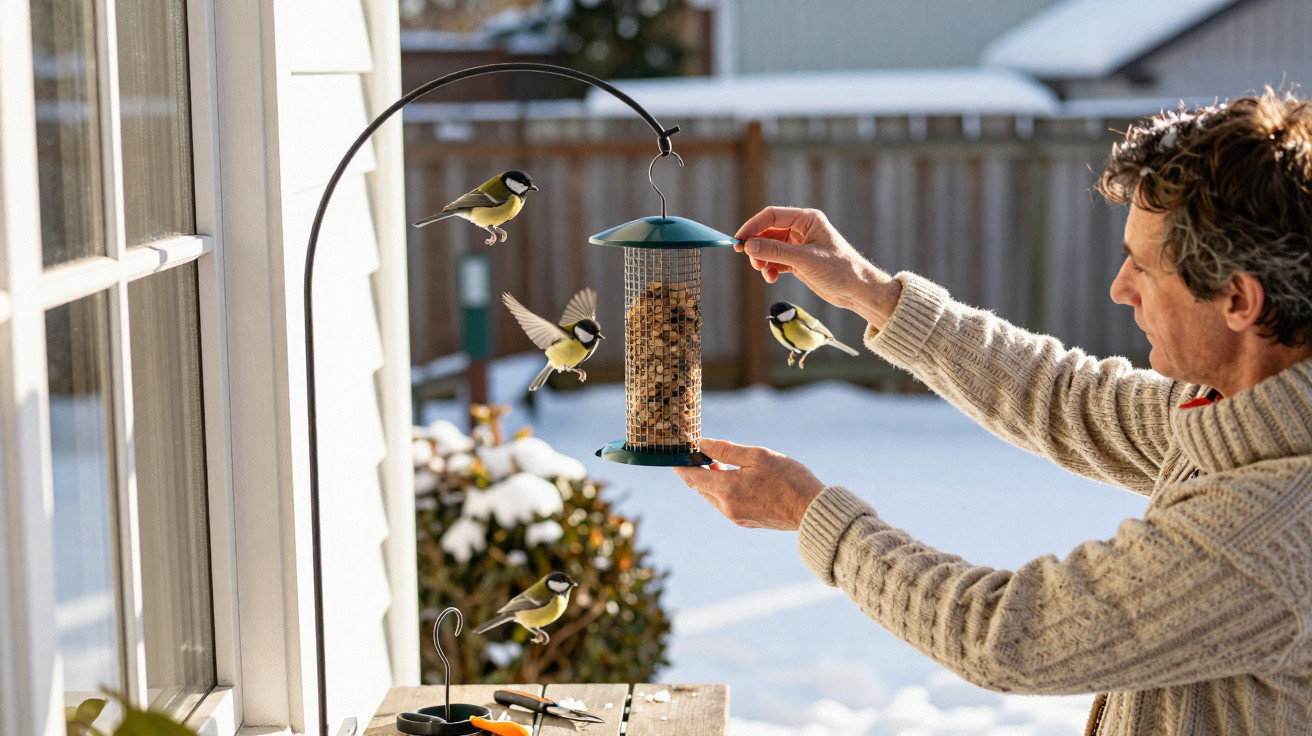
When the mercury falls and frost sets in across gardens, bird lovers in Europe and North America have started turning to an item more often left in the back of the wardrobe: the humble clothes hanger. Once reshaped, it is being suspended above bird feeders, wedged between branches or hooked over balcony rails, doubling as a sturdy support and a simple barrier for small birds trying to get through the coldest weeks.
How a forgotten hanger became a quiet winter trend
This idea did not come from shop displays or a major awareness drive. Instead, it spread the way practical garden tips often do: via forums, local gardening groups and birdwatching communities sharing cheap, workable fixes. One person tried positioning a metal hanger over a feeder, saw fewer mishaps and less predator trouble, and the suggestion quickly travelled.
"By reusing a basic metal hanger, bird feeders stay higher, safer and far more stable in harsh winter weather."
A lot of the popularity comes down to three straightforward benefits: it costs next to nothing, it is quick to do, and it is adaptable. A metal hanger can be bent by hand or tweaked with basic pliers, then made to fit awkward balcony corners, a crooked apple branch, or the lip of a shed roof. For many households, it also avoids spending on specialist hooks, brackets and mounts.
A small hack that fits the eco-minded mood
Repurposing a hanger also matches a wider “use what you already have” attitude among gardeners and birders. It may not look particularly stylish, yet it can become a tough hook, a moveable arm, or even a simple frame for homemade bird feeders.
Bird groups have noted rising interest in “no-buy” and “low-buy” ways to feed wildlife. People want to support birds through tougher winters associated with climate instability, while keeping both household budgets and environmental impact in check.
Why winter safety around bird feeders suddenly matters more
During cold snaps, birds spend enormous energy simply staying alive. Reliable access to fat, seeds and clean water becomes essential, and that rush to feed can expose weaknesses in poorly planned set-ups.
"An unstable feeder can spill food, injure birds and attract predators right where small species gather."
Common problems with traditional setups
- Feeders hung too low, within jumping range of cats.
- Fixed to thin branches that snap under weight or ice.
- Hooked to flimsy plastic or string that breaks in strong winds.
- Placed close to fences or walls that act as launchpads for predators.
These issues often only become obvious when the first real winter blow arrives. Feeders can thump into trunks, drop onto the ground, or turn into night-time targets for rats and martens. Shaped correctly, a simple metal hanger can tackle several problems at once by lifting the feeder and keeping it away from solid surfaces.
Height, distance and swing: three quiet lifesavers
Bird organisations commonly suggest positioning feeders at least 1.5 to 2 metres above the ground, and far enough from trees or walls that a cat cannot leap across. Used as a small extension arm, a metal hanger nudges the feeder outward, increasing the distance from the support point.
That slight movement can be useful too. For a cat or rat, a swinging target is harder to grab and hold. For a blue tit or a sparrow, the motion is barely an inconvenience; they can land, feed and lift off without much trouble. That imbalance helps cut down ambush attempts and reduces stress at the feeder.
How bird lovers reshape a clothes hanger into a safety arm
People do it in different ways, but the basics tend to look much the same. The steps below are a commonly shared method in bird forums.
From wardrobe to feeder: a quick method
- Straighten the metal hanger into a rod around 35–45 cm long.
- Bend one end into a wide hook or loop to hold the feeder firmly.
- Shape the other end into a secure hook to attach to a branch, beam or balcony rail.
- Check that the feeder can move slightly without tipping over or falling.
Getting the bends right can take a little practice. Many gardeners then “stress test” the set-up by pulling down gently on the feeder to mimic several birds landing at once and a strong gust. If it holds its shape and swings rather than twisting loose, it generally copes well when storms arrive.
"A solid hanger arm turns a basic feeder into a small, elevated platform that stays up even when branches ice over."
Mistakes that keep showing up
Bird rehabilitation centres sometimes see injuries linked to domestic feeding arrangements. Volunteers describe a few repeating issues caused by unsuitable hardware, including hangers that have been reused in the wrong way. Frequent problems include:
- Hangers that are too thin or already rusting, which snap after repeated bending.
- Feeders hung directly against a trunk or post, giving predators a straight path.
- Feeder arms leaning heavily to one side, causing seed to spill in one spot.
- No regular checks for wear after storms, frost and repeated use.
A brief weekly inspection of hanging points, knots and bends is often enough to stop small faults becoming bigger hazards. Many birders now include this alongside their routine checks for clean water and tidy feeding surfaces.
Keeping predators at bay without harsh measures
Domestic cats, urban foxes and rats quickly learn where easy food appears. Without careful positioning, a busy bird feeder can turn into a convenient hunting zone. The hanger approach provides a mild, non-lethal way to improve protection without traps or toxic products.
Creating a “no-jump zone” around the feeder
When positioned properly, a hanger holds the feeder high and slightly out over open air. That removes nearby launch points and forces predators into awkward, risky jumps. In many gardens, that extra gap is enough to reduce attacks.
| Set-up feature | Risk level for birds | Effect of hanger arm |
|---|---|---|
| Feeder close to trunk or wall | High (easy ambush) | Moves feeder away from vertical surfaces |
| Low hanging height (under 1 m) | High (within cat jump range) | Raises feeder to safer height |
| Rigid, fixed support | Medium (easy to climb) | Introduces movement that disturbs predators |
Some gardeners go one step further and dust the upper section of the hanger with fine ash, soap, or another harmless slippery layer. This can make it harder for climbing animals to get a grip, without applying anything that could harm birds.
Choosing the right spot around the house
Where you place a feeder can matter just as much as what you hang it from. Wildlife groups often recommend:
- Placing feeders several metres away from dense shrubs where cats can hide.
- Avoiding narrow alleys or corners where birds might panic and hit windows.
- Leaving a clear “escape corridor” so birds can fly off in several directions.
- Using nearby trees as lookout points but not as direct access routes.
A hanger makes these adjustments easier, because you can fine-tune height, distance and angle without drilling new holes or shifting heavy posts in frozen ground.
The double reward: protection and front-row winter viewing
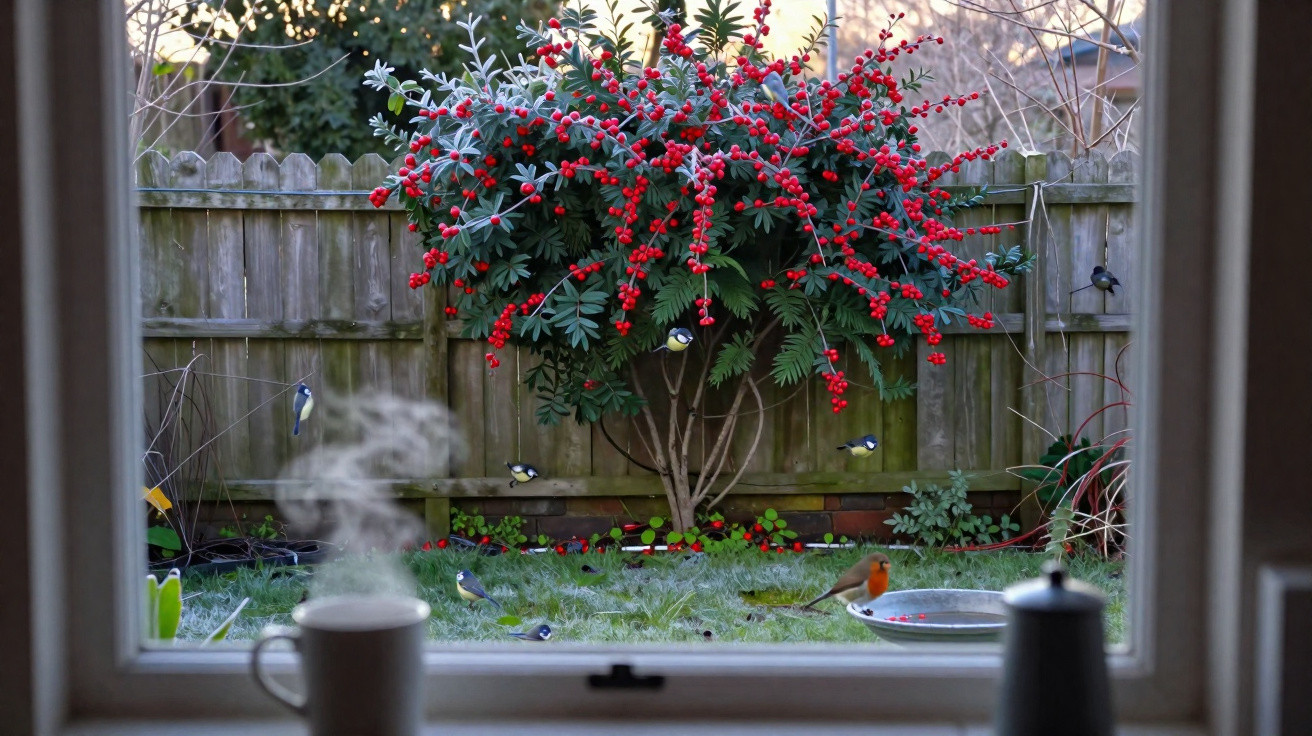
Although safety is the main aim, many people also notice a bonus: more relaxed viewing from inside the house. A steady feeder set around eye level, suspended on a discreet metal arm, often ends up perfectly framed by a kitchen or living-room window.
"A well-placed hanger feeder turns a grey January afternoon into a steady stream of visits from robins, finches and tits."
Less chaos, more natural behaviour
With the feeder steadier and set away from clutter, birds often appear to feed more calmly, sometimes queuing rather than scattering. Observers report clearer views of how species interact, easier counting for garden bird surveys, and less spilled seed that would otherwise draw in pigeons or feral birds.
This calmer, cleaner arrangement can also help families introduce children to birdwatching. Youngsters can recognise repeat visitors, spot plumage details, and see how severe winter conditions push birds to rely on food people provide.
Going further: extra ideas for hanger-based bird support
For some, the clothes hanger trick is not limited to bird feeders. Resourceful gardeners are using the same bit of metal for other winter jobs that help local wildlife.
Beyond feeders: other quick builds with a hanger
- Supporting small fat ball garlands at different heights to reduce competition.
- Holding shallow water dishes slightly off the ground to limit contamination.
- Acting as a frame for temporary windshields made from branches or reed mats.
- Creating simple, hanging brush piles where small birds can hide between visits.
These small changes are not a substitute for longer-term habitat improvements such as planting native shrubs or leaving leaf piles in quiet corners, but they can provide immediate help when the weather turns harsh.
Risks and limits to keep in mind
A metal hanger can be genuinely useful, but it is not a universal solution. Very heavy feeders, or large birds such as crows, may require stronger fixings. In places hit by severe storms, many gardeners still opt for purpose-built poles set deep into the ground.
Metal can also become hot in direct summer sun or rust quickly in salty coastal air. As a result, plenty of bird lovers mainly use hangers in winter and swap to more permanent hardware in spring. Others wrap the metal in a thin layer of tape where it touches branches to reduce the risk of bark damage.
For anyone starting from scratch, wildlife charities typically advise a simple order: choose a safe location first, pick a robust feeder design second, and only then decide how to hang it. Within that framework, a repurposed clothes hanger has become a surprisingly effective seasonal tool: inexpensive, adjustable and capable of holding steady when storms roll in and gardens go quiet.

Comments
No comments yet. Be the first to comment!
Leave a Comment