
A robin’s song can seem louder in November, perhaps because everything else has fallen quiet. When the garden turns still and you’re longing for that chestnut flash, there’s one unassuming fruit that keeps drawing them back - day after day. It’s a straightforward, time-tested trick.
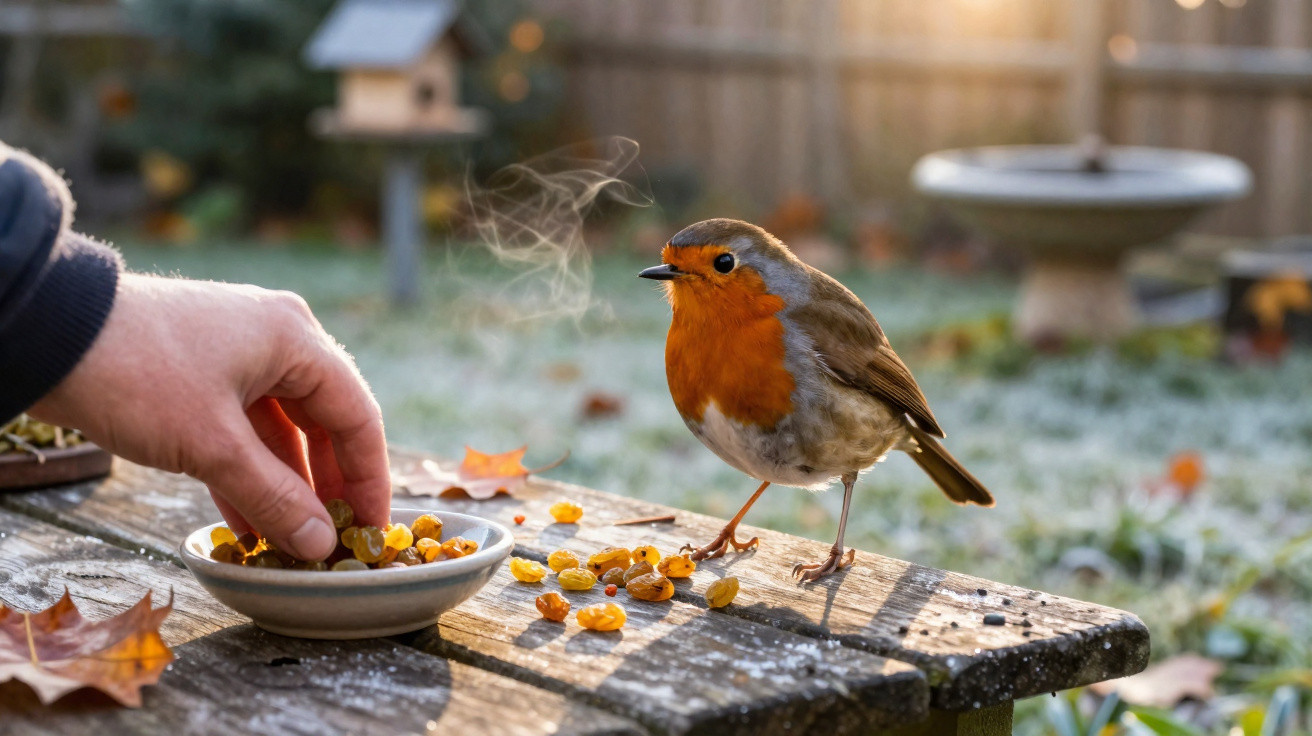
I took a small handful of raisins, plumped them up in a mug of warm water, then scattered them low down by the base of an old terracotta pot. A russet flicker sprang from the ivy - cautious at first, then confident. The robin cocked its head, listened, and lifted a glossy piece as if it had found treasure. Most of us know that feeling when a wild creature decides to come closer, and for a moment the garden becomes a little theatre staged just for you. The method wasn’t clever or new; it was sweet, sticky, and older than the fence.
The one fruit robins can’t resist in late autumn
Soaked raisins - swollen to softness - are a November draw for robins because they offer fast sugar and a bit of moisture at the point when insects are hard to come by. They also look safe and familiar: dark, shiny, easy to peck up, and best placed on or near the ground where robins prefer to forage. Soaked raisins can quietly transform a cold morning, turning a bare border into a tiny café a robin remembers. There’s no need for a special feeder or a fussy mix; it’s all there in a cup and in your hand, ready in a couple of minutes. It’s the kind of small, low-effort routine that winter birds often repay almost immediately.
I picked this up from a retired head gardener who insisted that “a thumb’s worth” of soaked raisins brought the very same robin back to his potting bench for three winters in a row. He’d put them out at first light beside a shallow dish of water, then again before dusk, and swear the bird would tap its beak on the shed latch like a courteous regular. Across the UK, robins are among the most frequently spotted garden birds through the colder months, and with a body weight of about 18 grams, they can burn through energy reserves quickly on short, dim days. It still feels like a small miracle.
At heart it’s simple biology paired with routine. Robins feed on the ground, and their short, fine bills suit softer foods - worms first, then fruit - so a raisin that’s been soaked for ten minutes lands in the perfect zone. Sugar stokes the tiny furnace of a winter metabolism, while extra moisture reduces the work of finding drinkable, ice-free water. Put the fruit low down and close to cover, and the robin can dart out, grab a piece, and disappear back to safety in a blink. Offer it in the same place at roughly the same time, and the bird learns your pattern much like a neighbour learns your doorbell.
How to use it so the robin comes back every day
Use this simple routine: take a small handful of raisins, cover them with warm tap water, and leave them for 10–15 minutes until they’re plump and soft. Drain them well. Put out a teaspoon or two on a low tray, a terracotta saucer, or directly on the soil beside a shrub. Set a shallow dish of fresh water nearby, no deeper than a fingertip. Repeat at about the same times daily - early morning and late afternoon tend to work best. Reliability matters more than volume, particularly in hard weather. You’re creating a rhythm a robin can depend on.
A few gentle ground rules help keep the trick working. Keep portions small and clean; replacing tiny amounts beats leaving one larger heap to go stale. If the weather turns wet, choose a spot under a bench or beneath the overhang of a pot so the fruit doesn’t become mush. Don’t leave raisins where dogs can reach them - grapes and raisins can be toxic - so use a corner pets can’t access. And realistically, nobody manages it perfectly every day; if you miss a feeding time, simply restart the routine the next morning and the robin will cope. Avoid bread and salty snacks, as a robin’s digestive system isn’t designed for them. A clean, shallow dish of water placed next to the fruit is more important than many people assume.
If you’re unsure, picture life from a small bird’s point of view: a low feeding place, a quick escape route, brief visits, and familiar timings. The rest is patience - and a warm coat for you.
“My grandmother left a thumb of raisins on the back step every November. The same robin met her there for years, and she always said it remembered the kindness more than the sweetness.”
- Soak raisins 10–15 minutes; drain well.
- Place food low, near cover; add shallow water.
- Offer small amounts twice daily; refresh often.
- Clean the spot every few days; discard anything mouldy.
- Keep raisins away from dogs and curious pets.
A tiny ritual that makes cold mornings feel warmer
What begins as a handful of raisins can turn into a winter ritual - a small exchange that draws you into the season rather than pushing you through it. The robin reappears, you step outside a minute earlier, and the day seems to widen slightly; the air feels sharper, your coffee tastes better, and the garden seems to breathe. A soft fruit and a steady habit can thread life back through a quiet month. You may start noticing fresh tracks in the frost, or how the ivy berries have darkened since yesterday, or that you’re listening for wings before the headlines. Pass it on to a neighbour, or to a child who thinks birds only exist in books. The trick is old, modest, and forgiving - and yes, it still works.
| Key point | Detail | Why it matters to you |
|---|---|---|
| Soaked raisins in November | Plump in warm water for 10–15 minutes and serve low | A simple, quick way to attract robins reliably |
| Timing and placement | Offer small portions at dawn and dusk, near cover | Builds a predictable routine birds learn to trust |
| Safety and hygiene | Keep away from dogs; refresh often; add shallow water | Protects pets and helps keep birds returning in good health |
FAQ:
- Why raisins and not apples or berries? Raisins provide quick sugars, soften easily, and are neat to place low down where robins feed; apples tend to attract blackbirds, while raisins are easy pickings for a robin’s fine bill.
- Do I have to soak the raisins every time? Dry raisins are harder for small beaks and may dehydrate birds; a short soak makes them safer and much more tempting.
- Will other birds steal the raisins? You may see blackbirds or thrushes join in; putting out smaller amounts more often helps spread the food and still suits a robin’s quick visits.
- Is it okay to feed daily through winter? Yes, regular feeding during the cold months can help; if you need to stop, reduce portions gradually so birds aren’t faced with an empty stage overnight.
- What if my garden has no shrubs or cover? Use a low tray tucked beside a pot, a step, or a small bundle of twiggy stems set out as a “mini hedge”; robins like a bolt-hole within a hop or two.



Comments
No comments yet. Be the first to comment!
Leave a Comment