
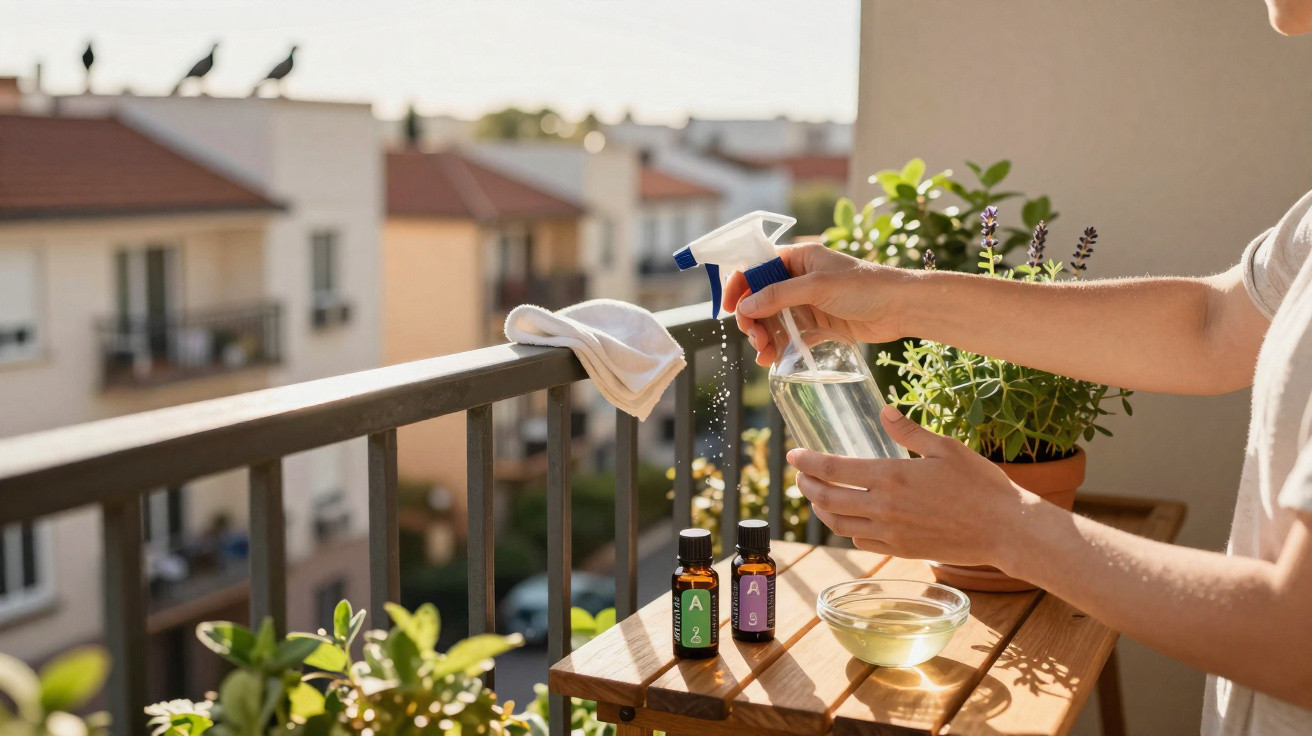
If you rent a flat, you often notice it as early as spring: pigeons start landing on the balcony railing more and more, then gradually carry in twigs and begin to settle. Rather than paying for expensive netting straight away, a very simple household trick is often enough to send them packing effectively - without violence and without fiddly installations.
Why pigeons love balconies so much
Pigeons thrive in towns and cities. They can find food, warmth and plenty of hiding places - and there are few natural predators. To them, balconies are ready-made nesting spots: sheltered, protected from the wind and close to people, where edible scraps often turn up.
Between April and August in particular, the birds actively hunt for safe places to build a nest. During this period, the number of breeding pairs rises noticeably. If you don’t respond early, the problem can quickly become long-term, because pigeons tend to return to places they already know.
Acting early stops pigeons from making themselves at home on your balcony for good - and saves you a lot of mess and hassle later.
More than just annoying: a health risk on the balcony
That familiar pigeon droppings on the floor, on plant pots or along the balcony ledge aren’t just unpleasant to look at. They may contain pathogens and, over time, can also damage surfaces and materials. Families with small children or pets, especially, don’t want a fully soiled outdoor area right outside the front door.
Noise is another issue: cooing from early morning, plus wing-flapping right by the balcony door - all of it can disrupt day-to-day life. Many landlords only step in once things have clearly got out of hand. If you take action yourself, you’re far more likely to bring it under control quickly.
Early warning signs: how to tell pigeons are trying to nest
Before a full nest appears on your balcony, there are clear clues that pigeons are trying to reserve a spot. If you notice them early, you can counter it with a simple measure.
- The same pigeon repeatedly perching on the railing or floor
- A few twigs or bits of straw left in one corner
- Fine pigeon droppings on the floor or window sill
- Loud, repeated cooing coming from the same direction
As soon as you spot the first twigs, the birds are usually already planning a nest. That’s the moment to move fast: remove any material, clean thoroughly - then bring in the fragrance trick.
The simple scent trick to deter pigeons
Instead of fitting metal spikes, wires or costly systems, a cleaning mix made from water and strongly scented additives is often enough. Use it as your balcony’s mop bucket solution - it works like a natural repellent barrier.
Essential oils pigeons genuinely avoid
Pigeons are highly sensitive to strong smells. They find certain scents intensely irritating and will consistently steer clear of treated areas. These are particularly suitable:
- Lemon oil
- Eucalyptus oil
- Peppermint oil (from mint)
You can buy these oils from pharmacies, chemists or herb shops. They’re highly concentrated, linger for a long time and are easy to use around the home - as long as you dose them correctly.
A few drops of essential oil in your cleaning water can turn a pigeon magnet into a place the birds reliably avoid.
How to mix the solution properly
You can make the basic mixture with everyday items. You’ll need:
- 2–3 litres of water (warm is best)
- at least 30 drops of essential oil (lemon, eucalyptus or mint)
- optional: a splash of white spirit vinegar
- optional: a small piece of soft soap or some liquid pure soap
Add the oil drops to the water, stir vigorously, then add vinegar and soap if you want. The vinegar strengthens the smell; the soap helps lift dirt and droppings and leaves a light scented film on the surface.
| Amount of water | Recommended oil drops | Note |
|---|---|---|
| 2 litres | 30–40 drops | Basic dosage for a small balcony |
| 3 litres | 40–60 drops | Suitable for larger areas |
How to apply the trick correctly
First, clear away every visible trace of pigeons: twigs, feathers, droppings. Ideally, wear gloves and dispose of everything in a sealed bag. After that, it’s time for the scented mixture.
Using a mop, cloth or sponge, wipe down:
- the entire balcony floor
- the balcony ledge/railing inside and outside (where safely reachable)
- window sills
- the frames of the balcony door and windows
Let everything dry undisturbed. For people, the smell is usually only faint; for pigeons, it’s extremely strong. After a first attempt to land, many birds will immediately take off again and choose a different place.
Consistency matters: wiping the balcony once a week with the scented mixture keeps the protective smell barrier in place.
How often should you wipe again?
Rain, wind and sun gradually weaken the effect. Ideally, repeat the clean roughly once a week - and, during the main breeding season, more often if needed. After heavy rain, a quick re-wipe is worthwhile.
Other gentle methods pigeons dislike
The scent trick works especially well when paired with other animal-friendly measures. The goal is to make your balcony as unattractive to pigeons as possible - without harming them.
- Movement and reflections: Light wind chimes, reflective tape or old CDs fluttering in the breeze can unsettle them.
- Keep things tidy: Avoid open food sources - no scraps and no open rubbish bags.
- Block off hiding spots: Clear out corners where pigeons can sit undisturbed.
Many landlords don’t allow permanent nets or spikes - it’s often written into tenancy agreements. Using scented cleaning solutions and movable, easily removable items is usually unproblematic. If in doubt, it’s worth checking your tenancy agreement or asking the property management.
How safe are essential oils on a balcony?
Essential oils are very concentrated. If you have pets or small children, don’t drip them neat onto surfaces; only use them heavily diluted in cleaning water. Direct skin contact with concentrated oil can irritate sensitive skin.
For pigeons, the deterrent is purely scent-based. The birds aren’t injured - they simply look for another spot. That’s exactly why many people prefer this approach over harsh metal spikes or traps.
If you’re unsure, test the mixture on a small, inconspicuous area first to make sure it doesn’t cause discolouration - especially on natural stone or other delicate finishes.
Practical tips for a pigeon-free balcony day to day
The best protection begins well before the first pigeon starts bringing in nesting material. A few simple habits can keep your balcony permanently uninteresting to them:
- Do a regular deep clean, particularly at the start of the warmer months
- Don’t leave open food bowls for other birds directly on the balcony
- Position planters so they don’t create a sheltered nook
- Only put rubbish bags outside briefly, if at all
If you only act once there are already eggs in the nest, you face a different issue: under animal welfare rules, occupied nests often can’t simply be removed. That’s why a watchful eye in spring is so important.
Many readers say they saw noticeably fewer pigeon visits within a few days using the water-and-essential-oil mixture with vinegar and soap. Sometimes it takes two or three cleaning rounds before stubborn birds finally give up. Keeping at it pays off - and your balcony becomes what it should be: a clean, quiet retreat in the middle of the city.
Comments
No comments yet. Be the first to comment!
Leave a Comment