
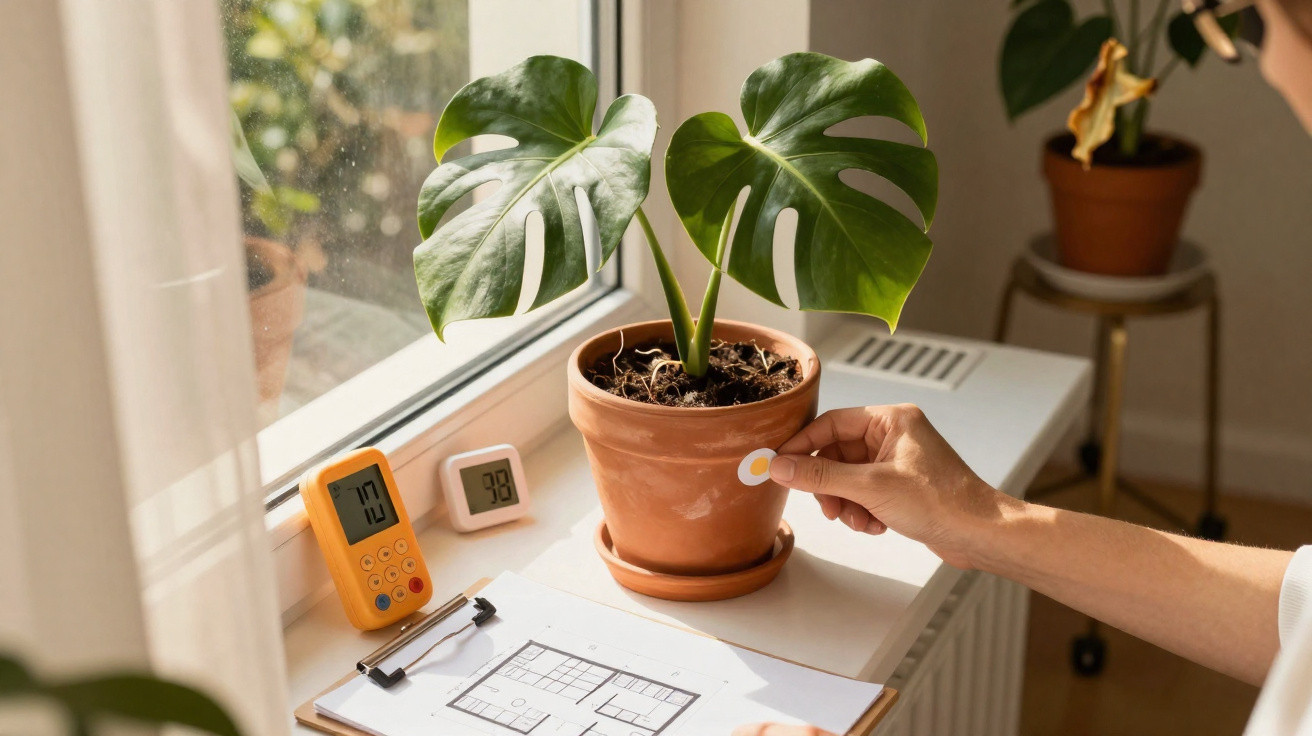
Light, draughts, and clumsy hands quietly shape the fate of your indoor jungle.
A tiny change to your routine can transform everything.
Houseplants almost never collapse overnight for no reason. Every yellowing leaf or sagging stem is your home giving away clues: patterns you repeat, things you miss, and-sometimes-care that’s a little too enthusiastic.
Why consistent placement changes how plants behave
Indoor plants exist inside conditions we largely dictate: light, watering, humidity, temperature and airflow. Shifting them from place to place keeps rewriting those conditions. Their leaves and roots settle into one set of expectations, only for the expectations to change again.
Plants are slow, methodical creatures. They commit to a spot, build systems for that spot, and struggle when the script keeps shifting.
Left in the same position, a plant slowly tunes its chemistry, adjusts the angle of its leaves and extends roots in ways that suit that specific microclimate. A north-facing windowsill at 18°C with dry air is a completely different world from a bright, steamy bathroom-even if both are inside the same flat.
When you relocate a plant repeatedly, it’s pushed to begin that adjustment cycle from scratch. That costs energy which would otherwise support new foliage, blooms or root growth. Over time, the accumulated strain can show up as poorer pest resistance, sluggish growth and sudden setbacks that appear to come “out of nowhere.”
How light patterns train indoor plants
Light is not only what keeps a plant green; it effectively sets the timetable. The direction, strength and timing of light signals when to grow, when to pause, and where to lean.
Plants remember where the sun lives
Keep a plant beside one window for several weeks and you’ll see stems gradually arc towards the brightest side. Leaves reposition, chloroplasts redistribute within cells, and the plant effectively builds a working “map” of light in that room.
Change the plant’s position too often and that map becomes useless, like moving street lights every night in a city and expecting drivers not to crash.
Reliable light matters for a few key reasons:
- Photosynthesis runs more smoothly when the plant can anticipate where light usually arrives from.
- Growth stays more even, rather than producing lopsided stems as it chases a different window every weekend.
- Day-length cues are important for flowering plants; switching rooms can disrupt their seasonal timing.
Plenty of popular houseplants-snake plants and pothos among them-cope with low light. But coping is different from flourishing. When they remain in one place, they gradually adapt by altering leaf thickness, pigment concentration and even leaf size to extract the maximum from whatever light they receive.
| Placement habit | Short-term effect | Long-term result |
|---|---|---|
| Moving a plant every few days to “chase” the sun | Leaves swivel and contort; the plant appears unsettled | Spindly, leggy growth with increased leaf drop |
| Leaving a plant in stable, bright-indirect light | More consistent colour; slow, steady leaning | Fuller foliage, sturdier stems, stronger resilience |
| Rotating the pot in the same spot every couple of weeks | The plant adapts without a jolt | A balanced shape with minimal stress |
Temperature swings and “microclimate whiplash”
Most homes don’t operate as a single, even climate. They’re made up of warm pockets, cold draughts and oddly chilly zones. A shelf above a radiator can be 5–7°C warmer than the floor nearby. Move a plant from that shelf into a shaded hallway and it experiences the change like you walking from a summer afternoon straight into a walk-in fridge.
What happens inside the plant during sudden moves
Shifting a plant between temperature zones throws multiple internal processes off balance:
- Water transport through stems speeds up or slows down.
- The enzymes that power growth thrive in certain ranges and underperform outside them.
- Roots react badly in a cold pot, taking up less water just as the leaves continue to demand it.
People often blame themselves for “overwatering” or “underwatering” when the real culprit is a temperature shock from moving the pot.
Plants that stay put gradually adjust their membranes and metabolism to that particular temperature pattern-warmer days, cooler nights, but within a predictable range. Regularly changing locations removes that predictability and ramps up stress, especially in winter when windowsills, radiators and front doors create harsh contrasts.
Drafts, vents and the misunderstood role of airflow
Air movement can be either a helper or a hazard. Gentle circulation around foliage discourages fungal problems and helps build stronger stems. However, powerful, inconsistent draughts near doors, single-glazed windows or air-conditioning can dry leaves out and chill the root area.
The difference between airflow and draft damage
With a stable position and mild airflow, plants respond by thickening stems and forming tougher leaf cuticles. Move that same plant beneath a vent that blasts hot or cold air several times a day and you create conditions where:
- Leaf margins dry out and turn crisp as moisture is stripped away.
- Fresh growth becomes misshapen after repeated strain.
- Compost dries patchily, increasing the risk of root issues.
Many “mysterious” leaf crisps on indoor plants can be traced to a chair that was moved, a new fan, or a desk relocated under an AC unit.
As with light and temperature, steady placement gives a plant time to acclimatise. If a breeze arrives from one direction with roughly similar strength, the plant can adjust. If it alternates between stillness, icy gusts and hot blasts depending on which room the pot is carried into, adapting becomes far more difficult.
Watering patterns depend on where the pot lives
A lot of plant-care problems begin with one assumption: watering isn’t only about volume-it’s also about location. A pot in bright warmth with moving air can dry out quickly. The identical plant in a dim, cool hallway may remain wet for several extra days on the same watering amount.
Consistency makes your watering routine smarter
When a plant stays in one place for months, you learn that location’s cadence. You notice the compost is typically dry after four days in summer, or that in February the top layer may take ten days to lighten.
Stable placement turns guesswork into pattern recognition. Your fingers start to sense when the pot is “right on schedule” or heading for trouble.
If you constantly reshuffle plants, that sense of timing disappears. You may end up giving too little water to a plant that’s suddenly sitting in brighter warmth, or soaking one that has been moved from a sunny sill into a gloomy corner. The plant looks like the problem, but the timetable changed without warning.
Stress, shock and the slow language of plants
Plants don’t yelp or limp like pets. Their discomfort shows up later: yellowing foliage, stalled new growth, blackened roots, or a pot that inexplicably refuses to dry. Frequent rearranging is often the hidden cause behind these signals.
How to spot when a move was too much
Clues that a recent change of position has stressed a plant include:
- Leaves sag or curl within 24–72 hours of being moved.
- New leaves appear smaller or more washed out than they were.
- Compost stays wet for much longer than before, even with similar watering.
- Brown tips develop after shifting closer to a radiator or heater.
Plants can bounce back, but repeated shocks reduce that buffer. A peace lily moved three times in two months, repotted in between, then shifted from bathroom to bedroom to office may struggle to recover its earlier vigour.
When moving your plants actually makes sense
Consistency doesn’t mean a plant must be fixed in place forever. Some moves are genuinely beneficial-provided they’re deliberate and infrequent.
Good reasons to relocate a houseplant
- Seasonal light has shifted and the plant is now hit by harsh midday sun.
- A cold draught develops in winter beneath a door or through a leaky window.
- The plant has simply outgrown its current shelf or stand.
- Pests are spreading through a cluster and you move an affected plant to quarantine.
Think of placement changes like major furniture rearrangements: do them with a clear goal, not on a whim.
If you decide relocating is necessary, aim for a gentle transition. Nudge the plant towards the new spot over the course of a week rather than moving it across the room in one go. That slower shift allows its internal systems to adjust.
Simple placement rules for a calmer indoor jungle
You don’t need formal horticultural training to benefit from consistent placement. A handful of practical habits suit most plants:
- Pick a position with dependable, indirect light and treat it as the plant’s “home base.”
- Don’t place plants above radiators, beside ovens, or directly in front of air-conditioning units.
- In winter, set plants a little back from leaky windows to prevent cold roots.
- Turn the pot in the same location every two weeks to encourage even growth without relocating it.
- Once you’ve found a spot where a plant thrives, avoid “upgrading” it without a real need.
Extra nuance: species that like stability vs those that forgive chaos
Not every plant reacts to being moved in the same way. Species with thicker leaves and sturdier root systems generally cope better than those with delicate tissues.
- Highly sensitive to changes: fiddle-leaf fig, calathea, gardenia, many orchids.
- Moderately tolerant: monstera, peace lily, rubber plant.
- More forgiving: snake plant, pothos, spider plant, ZZ plant.
More delicate plants benefit most from a “do not disturb” mindset once you’ve found a position they accept. Tougher species give you more room to experiment with shelves, corners and furniture changes without falling apart.
Going further: using “microclimate mapping” at home
If you’d like to take your plant care a step further, run a simple week-long exercise: walk around your home at different times of day and note where sunlight falls, where you notice draughts, and where the air feels distinctly warm or cool.
That rough “map” helps you match each plant to the right microclimate from the outset, reducing the need to move them later. A thirsty tropical plant might do well near the door of a steamy shower room, while a hardy succulent may be perfectly content on a hot, bright sill that would scorch a fern.
You can also make it a quiet learning project: choose one plant, move it to a thoughtfully selected new position, and take a photo each week for two months. Pay attention to leaf colour, the direction of growth and how quickly the compost dries. That slow tracking teaches far more about consistent placement than anything printed on a nursery label.
Ultimately, consistent placement isn’t about rigid rules-it’s about recognising how slowly plants handle change. Offer a steady corner, a reliable beam of light and a break from constant redecorating, and they tend to reward you with steadier growth, fewer emergencies and a home that feels subtly more alive.
Comments
No comments yet. Be the first to comment!
Leave a Comment