
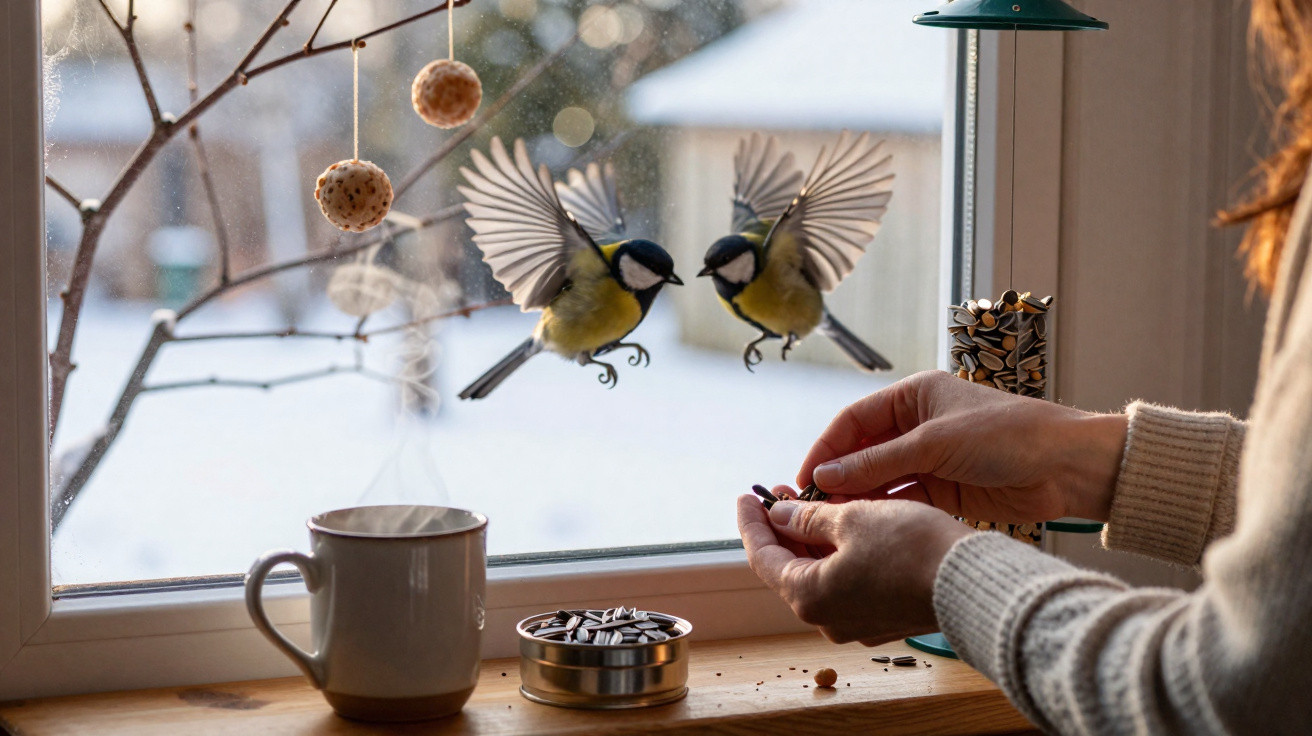
Some people look out at silent hedges and untouched feeders, while others get a reliably timed morning flurry of great tits and blue tits. The deciding factor is rarely garden size or how expensive the seed is. It usually comes down to a single, consistent habit that turns a scatter of food into a daily rendezvous birds learn to keep with near-minute accuracy.
Winter silence broken by tiny acrobats
In winter, even a carefully tended garden can seem deserted: leafless branches, leaden skies and ground hardened by frost. For small birds, though, this is the toughest time of the year.
Great tits and blue tits-regular visitors in many European gardens-do not head off to warmer climates. Instead, they stay through below-zero nights, spending precious fat stores simply to maintain a safe body temperature.
By first light, many are close to running out of energy. Their priority is not singing, nesting, or looking charming on a twig; it is locating a high-calorie breakfast quickly enough to avoid drifting into hypothermia.
For tits, the first hour after sunrise is a race: replace lost fat or risk not making it through the next night.
This is why a garden that feels lifeless can suddenly burst into motion as a small group arrives, flitting about, hopping, and dangling upside down from stems to reach the feeder. They are not there just to brighten the view-they are treating your outdoor space like a vital refuelling stop.
The rule bird experts swear by: timing beats quantity
A common assumption is that birds are drawn by the biggest feeder or the fanciest food. Bird experts and ornithologists consistently highlight something different: dependable timing.
Research and long-running observations indicate that tits remember time and place extremely well. They retain not only where food was available, but also when it was put out.
If feeding is erratic-late one day, near dusk the next, then nothing for a couple of days-your garden becomes an unreliable option in their eyes. They might pass through, but they will not hang around waiting. They simply cannot.
The real “trick” that brings tits back at the same time every day is ruthless punctuality, not a fancy seed mix.
When a feeder is topped up at the same hour each morning, it quickly becomes embedded in their routine. People who keep a steady schedule often notice the same development: after a week or two, birds begin assembling a few minutes beforehand, perching in nearby branches and watching the back door or kitchen window.
Why morning matters most
Food late in the afternoon can help birds face the night, but for tits the most important period is early morning. They wake up depleted and cannot put off refuelling.
- At dawn: an energy emergency; birds hunt for dependable feeding points.
- Mid-morning: those that have eaten can rest and preen, while others continue searching.
- Late afternoon: they replenish stores before the coldest hours overnight.
Pick a consistent time close to sunrise and your garden becomes part of their survival plan. Keep changing the hour, and they stop relying on you.
The menu that keeps them coming back
A strict routine helps, but it is not the only ingredient. The food needs to deliver plenty of energy in small, manageable bites. Budget mixed seed often includes a lot of wheat and other filler grains that tits commonly flick aside.
In winter, two choices are especially suitable:
- Black sunflower seeds – oil-rich, with relatively thin shells that small beaks can open quickly.
- Unsalted, unroasted peanuts – extremely energy-dense; best offered crushed or in proper mesh feeders.
High-fat, high-quality seeds turn a feeder from “snack bar” into a dependable fuel station for cold mornings.
What they do not benefit from is people food. Bread, salty snacks, sugary leftovers, and processed scraps are unhelpful. Bread, in particular, can swell in the stomach, provides little nourishment, and may contribute to digestive problems.
Suet or fat balls made specifically for birds can be useful too, provided they contain no added salt. When temperatures drop very low, these solid fats give tits an extra lift to replace the energy lost overnight.
Setting the stage: where and how you feed
Location is as important as the ingredients. Tits may be agile, but they are also wary: they want to snatch a seed and then shoot back to cover.
The best feeding spot combines a clear outlook with fast access to shelter. Ornithologists commonly suggest placing the feeding point roughly two to three metres from dense vegetation:
| Element | What to aim for |
|---|---|
| Visibility | Open enough for birds to spot predators in time |
| Cover | Near a hedge or bush for rapid escape |
| Height | Out of easy reach of cats, but still visible from a window |
| Stability | Feeder that does not swing wildly in the wind |
Hygiene also influences whether birds continue to use your garden. In mild, wet winters, seed can go damp and mould quickly, and dirty perches can spread illness between birds.
A two-minute daily routine – emptying clumped seed, wiping trays, topping up – quietly decides if your feeder becomes a safe hub or a health risk.
A quick rinse with hot water, plus a more thorough clean every week or two, greatly reduces the chance of infections such as trichomonosis, which can devastate small local populations.
A daily show outside the kitchen window
Once your schedule is established, a surprisingly stage-managed scene often follows. Many people describe the same sight: a scattering of blue tits and great tits on nearby branches, all oriented towards the house, shifting position and making soft contact calls.
As soon as the back door opens, they may dart away, then loop back. Some wait until you have gone inside; others are braver, landing while you are still visible. Their movements are brief, cautious, and remarkably accurate.
After a while, you may even start recognising individuals: a dominant great tit that drives others off, a young blue tit that fumbles and drops its seed, or a bird missing a claw yet still performing astonishing feeder acrobatics.
This is not “taming” in the sense of turning them into pets. They remain wild and will vanish at any sudden gesture. Even so, a real shared routine develops-your clock on the wall matching their internal sense of time.
Winter help, spring rewards
Supporting birds through the colder months does more than brighten dark mornings. It can also shape what your garden looks like when spring arrives.
Tits that keep good condition over winter are more likely to breed successfully. They may lay more eggs, defend nest sites more vigorously, and bring more food to their chicks.
Well-fed winter birds often become the spring pest-control team, stripping your trees of caterpillars and aphids.
Once breeding begins, tits pivot to protein-rich insects to feed their young. Their appetite for caterpillars makes them valuable allies for anyone with fruit trees or ornamental shrubs. The seed you provide in winter can later mean fewer chemical sprays and more robust plants.
Practical scenarios and small risks to watch
If your days are tightly scheduled, feeding “at exactly the same time” can sound unrealistic. In reality, birds are not timing you with a stopwatch. A consistent window-such as 7:30 to 8:00-is generally enough for them to lock in the pattern.
If you will be away for a few days, it helps to ask a neighbour to keep roughly to your usual routine. If that is not possible, the birds will simply switch back to other natural food sources. When you return, they may need a little time to settle into the rhythm again, but they often remember dependable locations.
A few risks are also worth considering:
- Cats – avoid low feeders near cover that predators can use; consider fitting a small bell on the collar of a known garden hunter.
- Window strikes – place feeders either very close to windows (so birds cannot build up speed) or further than three metres away, and reduce reflections with stickers or hanging items.
- Overcrowding – too many birds on a small, dirty feeder increases disease risk; a second feeding spot can ease pressure.
Extra ways to help tits beyond the feeder
A dependable morning feed is only one element of a bird-friendly garden. Nest boxes built for tits-with entrance holes of around 28–32 mm-provide safer options than crumbling masonry or hazardous cavities.
It also pays to leave parts of the garden slightly untidy. Old seed heads, ivy, brambles, and dead wood shelter insects that birds can still pick off during milder winter spells. A mix of evergreen and deciduous shrubs provides cover in every season.
In time, these choices compound: a steady feeding time, energy-rich seed, clean equipment, and thoughtful planting can transform a quiet lawn into a place where, almost on cue, small blue-and-yellow visitors arrive each morning-right on schedule.
Comments
No comments yet. Be the first to comment!
Leave a Comment