
Something is absent.
Across Europe - and increasingly in the UK and the US - home gardeners are warming to a moodier approach: beds and borders centred on foliage that is almost black. It is less about a gothic aesthetic and more about intelligent planting design, rising pest pressure and coping with a changing climate. The “black garden” is no longer just a niche Instagram idea; it is quietly being adopted as a genuinely useful tactic.
The quiet drama of a black garden
When green starts to feel boring
Most gardens operate on a single default: green, everywhere, all the time. Green reads as healthy and alive, yet when every shrub, lawn and hedge sits in the same register, the whole scene can look one-dimensional - particularly towards the end of winter, when daylight is weak and low.
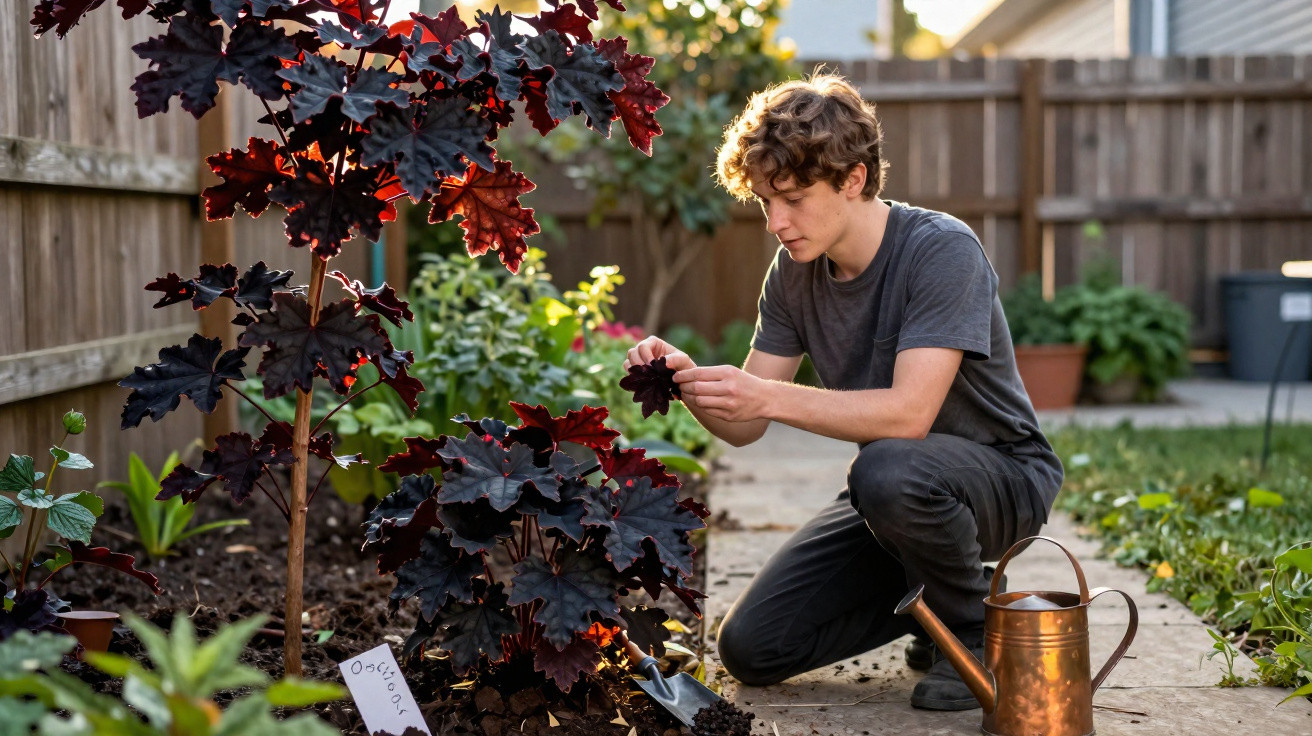
Near-black and deep purple foliage rewrites that rule immediately. It interrupts visual sameness without requiring pricey landscaping or hard surfaces. Even one dark shrub, or a clump of almost black perennials, can draw attention, deepen a border and make the surrounding “ordinary” plants look cleaner, brighter and more defined.
Black foliage acts like eyeliner for the garden: it sharpens the shapes and makes colours around it stand out.
Designers often refer to “negative space” and “anchors” in planting plans. Dark leaves can do both jobs simultaneously: they steady the composition, outline paler neighbours and bring a sense of order - even in a small city courtyard or a rented balcony.
Instant design without a full makeover
Plenty of homeowners want a garden that feels more contemporary, but the cost of new paving, lighting or outdoor furniture can bring plans to a halt. Plants with black foliage provide a quicker route. Used in the right places, they create a sense of deliberate design, as though the space has been professionally reworked.
- In a very small front garden, a single dark shrub in a large container can set the tone for the whole entrance.
- On a patio, a low black-leaved groundcover can weave between pots and visually “join” them.
- In a large border, a cluster of dark plants can form a focal point when viewed from the house or terrace.
Because the effect comes from contrast rather than sheer scale, these plants are particularly useful in compact urban gardens where every square metre has to justify itself.
The headline plants: black elder and obsidian heuchera
Black elder: a light, airy skeleton for the garden
One of the standout shrubs in this darker palette is black elder, commonly sold under cultivar names such as ‘Black Lace’ (Sambucus nigra). It has a fine, lacy look that can resemble a Japanese maple, yet it is far more dependable in temperate conditions.
Key characteristics include:
- Finely divided leaves, ranging from deep purple to almost black.
- Fast growth, so it adds structure within a couple of seasons.
- An open, airy habit that avoids looking bulky or oppressive.
- Soft pink, strongly scented flowers in early summer.
Set it at the rear of a border or let it stand alone on a lawn, and black elder provides height with a gentle, see-through canopy. It can indicate boundaries without becoming a solid visual barrier.
A single black elder can visually hold together an entire border, acting as the “spine” of the design.
Obsidian heuchera: velvet darkness at ground level
At the front of the planting, many gardeners rely on heucheras, and the cultivar ‘Obsidian’ has become a go-to choice. It is a tough perennial that holds onto its leaves for much of the year, which is especially helpful in late winter and early spring when so much else is still asleep.
Gardeners gravitate to Obsidian heuchera because:
- The leaves are a glossy, very dark purple that reads as black from a distance.
- Its compact growth forms a thick, tidy carpet.
- It performs well both in beds and in pots.
- It combines easily with brighter foliage and flowers.
Used under shrubs, beside paths or as edging along a terrace, it creates a velvety dark base that makes nearby plants look fresher and lighter by comparison.
Why darker leaves bother pests less
Pigments with a double job
The styling impact of black foliage is the obvious appeal; the quieter story is about chemistry. Many dark-leaved plants get their colour from high levels of anthocyanins. These pigments help protect against ultraviolet light and heat, and they can also alter how tender and palatable leaves are to sap-sucking pests such as aphids.
Dark foliage tends to be tougher and less appealing to many common garden pests, effectively putting them off the menu.
Many gardeners notice fewer visible infestations on certain dark-leaved cultivars compared with their green equivalents. And even where there is a little damage, it is less noticeable against a dark leaf, meaning the garden can look tidier without constant input.
How black plants support a healthier ecosystem
Deterrence is only part of the picture. Once established, plants such as black elder can contribute strongly to the garden’s ecology. From late spring into early summer, they produce pale, fragrant flower clusters that attract pollinators - and also draw in insects that prey on pests.
Syrphid flies, lacewings and ladybirds are particularly keen on these nectar-rich blooms. These beneficial insects - sometimes called the “garden police” - then range across nearby planting, feeding on aphids, whitefly and other troublesome species.
By planting dark-foliage shrubs that feed beneficial insects, you recruit a standing army against pests without reaching for sprays.
This fits with a wider shift towards low-chemical gardening. Rather than repeatedly treating pests with products, more gardeners are aiming to stabilise the system so flare-ups rarely become serious.
Why late winter is prime time for a black makeover
Planting before the rush of spring
Late winter - when the soil can still be worked but plants have not fully stirred - is a useful window. Roots can start settling into cool, moist ground while top growth remains restrained. By the time summer warmth arrives, newly planted black elder or heuchera should have a stronger root network and a better chance of handling dry periods.
| Task | Ideal timing | Why it helps |
|---|---|---|
| Plant black elder | Late winter to early spring | Gives roots time to establish before summer heat |
| Plant heuchera ‘Obsidian’ | Late winter, or autumn in milder areas | Improves establishment and keeps winter presence |
| Lightly prune elder | End of winter | Promotes bushier, denser new growth |
Low-maintenance by design
Another reason the black garden is gathering momentum is that it does not require extra labour. In reasonably suitable soil, these plants are notably forgiving. Day-to-day care is usually straightforward:
- Water regularly for the first few weeks after planting.
- Apply mulch to keep roots cooler and slow evaporation.
- Give elder a light annual prune to renew the framework.
For busy households, that combination - strong impact with limited upkeep - is exactly the attraction. The plants provide the drama; you simply help them establish well.
Making black sing: contrast, light and clever pairings
Pairing dark foliage with luminous neighbours
A scheme made entirely of black can feel weighty or unmoving. The most striking results come when dark foliage is set against plants that reflect light. Gold, lime green, silvery grey and soft blues all lift black particularly well.
Combinations that often work include:
- Obsidian heuchera with a golden grass such as Hakonechloa.
- Black elder placed behind a variegated dogwood or a pale-leaved hydrangea.
- Dark ajuga or ophiopogon (black mondo grass) alongside silvery artemisia.
Think of black plants as the shadow in a painting: they give shape and intensity to everything bright around them.
When spring bulbs or early perennials flower nearby, their colours can look crisper against this dark “stage”. Even simple tulips or daffodils can suddenly appear magazine-ready.
How light changes black plants through the day
Light conditions also change the read of black foliage. In full sun, some plants shift towards a rich burgundy, revealing red tones. In dappled shade, they tend to look more like charcoal or ink. If you position them where low morning or evening sun can shine through the leaves, the effect can be almost like stained glass.
In smaller gardens, using light in this way makes a real difference. A single, well-placed dark shrub at the far end of a path can pull the eye forward, making a short space feel longer and more layered.
Going further: practical scenarios and small risks to weigh
How a typical small garden could change in one season
Imagine a standard 6×4 metre UK back garden: a simple lawn rectangle, a narrow bed along the fence, and a few shrubs that have lost their spark. Introduce three or four black-foliage plants and the character can change quickly.
- Put one black elder in the back corner to create a clear focal point.
- Run a line of obsidian heuchera along the patio edge.
- Add a patch of dark-leaved grass or ajuga where your eye naturally settles when looking out from the kitchen.
By early summer, the border can look purposeful: the dark elder frames the view, the heuchera visually connects the patio to the planting, and the lawn stops feeling like leftover space and starts reading as an intentional pause between features. Pollinators show up for the elder flowers, and pest problems often remain more manageable.
What to watch out for with black gardens
A black garden is not without compromises. In extreme heat, dark foliage can scorch if compost or soil dries out - especially in containers. And in very shady spots, near-black leaves can feel heavy rather than chic, so pairing with lighter plants becomes important.
There is a design pitfall too: relying on one dark cultivar too much can recreate the same uniformity you were trying to escape, only in a different colour. Mixing leaf sizes, shapes and heights keeps the planting lively. A tall, feathery elder, a low rounded heuchera and a strappy dark grass will always create a richer effect than three shrubs with the same outline.
If you are new to the look, a practical way to experiment is to start with pots. One large container with a black-leaved shrub, underplanted with a ring of dark heucheras, lets you see how the colour behaves with your existing plants and light before you commit to bigger changes in the ground.




Comments
No comments yet. Be the first to comment!
Leave a Comment