
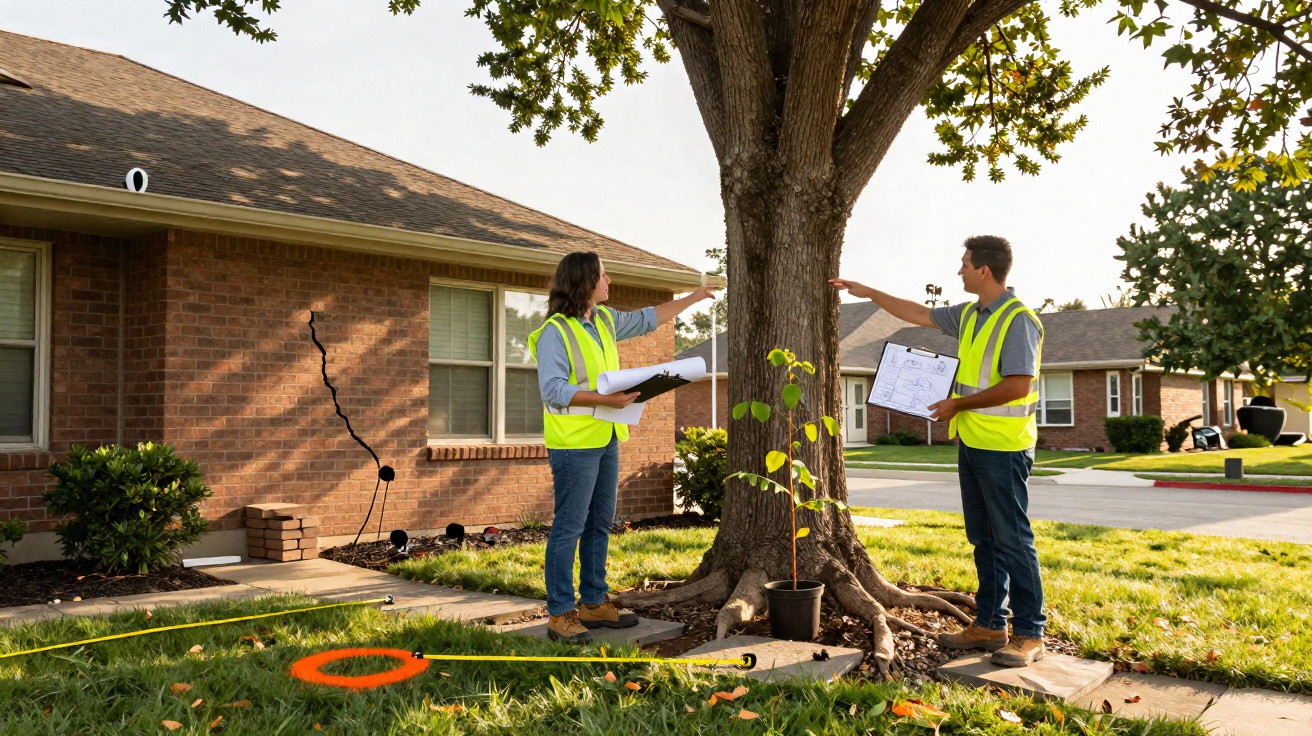
The crown towers over the roofline. The roots have lifted the paved path as if someone had secretly inflated balloons underneath. The homeowner is holding a quote: €8,700. Pipe repairs, lifting the footway, root removal. “Because of this one tree?” she asks, stunned. The officer from the highways and civil engineering department only gives a brief nod and points at the trunk: “Silver maple. These days you wouldn’t even be allowed to plant that there.”
Why local councils are suddenly keeping their distance
If you walk through older residential areas, you see them everywhere: huge, mature trees right on the boundary, tight against the wall, almost leaning into the windows. Years ago, planning rules often amounted to little more than “provide green space”. What species it was, how vigorous the roots might be, how wide the canopy would spread-hardly anyone paid attention. Now many towns and districts are pulling the handbrake. New by-laws ban certain species if they’re intended to go just a few metres from a house. To many people, that sounds over the top-until something goes wrong.
One example from North Rhine-Westphalia: 20 years ago a family planted a fast-growing maple right beside the patio. It looked lovely, gave shade, and the children adored the swings hanging from the branches. Over time, though, the root system pushed up the patio slabs, fine cracks appeared in the house drainage, and damp showed up in the cellar. An expert report found that the roots had deliberately worked their way towards the place where water flows. In the end, the repair bill came to almost €25,000-and there was a court dispute with the local authority because the tree had been tugging at a public pipe.
Cases like this pile up in building departments like paperwork on an overstuffed shelf. People in charge talk about a quiet wave of costs, triggered by popular species such as silver maple, ash, poplar, black locust and plane trees planted too close to homes. Their roots are powerful, persistent and always searching for water. They take the easiest route-often old sewer pipes, loose paving, or areas around foundations without a concrete slab. Councils respond with tighter rules because otherwise they would be forced to spend hundreds of thousands of euros each year repairing pavements, drains and utilities. And because no one wants residents to be able to say later: “Nobody told us.”
What homeowners should do now (and what they should avoid)
If you’re planning to plant a tree near your house, start where most people only go for planning applications: the council’s tree protection by-law and the parks/green spaces team. It’s all there in black and white-which species are permitted in residential streets and what minimum distance they must keep from the house. Often that means 3, 4 or 5 metres. Sometimes specific species are explicitly flagged as risky. A quick check of these documents can save you a five-figure sum later on. It may sound dry, but it feels surprisingly liberating when you realise you can choose a tree that actually suits your garden.
A lot of people underestimate just how big a tree can become after 20 or 30 years. In the garden centre, a small container-grown maple looks harmless-almost cute. In reality it can develop a canopy 12 metres across, with roots reaching well under the drive. Let’s be honest: nobody walks around each spring with a tape measure and recalculates future growth. The classic trap is planting “because it looks nice” and postponing the thinking until later. The result is crown reductions, root cutting, and disputes with neighbours when branches cross the fence or roots start pushing into shared fence footings.
A seasoned urban planner put it bluntly in conversation:
“Problems with trees rarely start dramatically. They start out of sight-in the soil, in tiny hairline cracks, in paving slabs that have dropped. You usually only feel it when the bill lands on the doormat.”
If you want to avoid that, a few rules of thumb help:
- Never plant large trees such as maple, lime, plane tree or poplar closer than 5–8 metres to the house, garage or main services.
- If your garden is narrow, choose smaller ornamental trees or large shrubs-such as serviceberry, crab apple or Cornelian cherry.
- Have existing mature trees inspected regularly by a qualified specialist, especially if you can already see cracked paving or signs of damp in the cellar.
- Before buying a property, look carefully: if a large tree is too close to the façade, there may be hidden follow-on costs that won’t appear in the sales particulars.
Between shade, roots and responsibility
Anyone who has sat beneath an old tree in high summer knows how much a single living thing can change a house. The air feels cooler, the light softer, the garden more alive. It’s no surprise that, after a new build, many people want to plant “something big” as quickly as possible. The restrictions coming from councils aren’t about hating trees; they’re an attempt to reconcile that desire with what happens underground. A tree planted five metres further away still gives shade-just not at the expense of foundations and pipes. The trick is to think about the future on day one of planting.
We all know the feeling: you stroll through an older neighbourhood, admire the towering trees and think, “That’s what I want one day.” What we don’t see are the invoices coming out of cellars, out of council offices, and from insurers. Councils have exactly that perspective-and they shape their rules accordingly. For homeowners, the question is no longer only which tree they like the look of, but also: who carries the risk when it goes wrong? Increasingly, the answer is set out clearly in the by-laws.
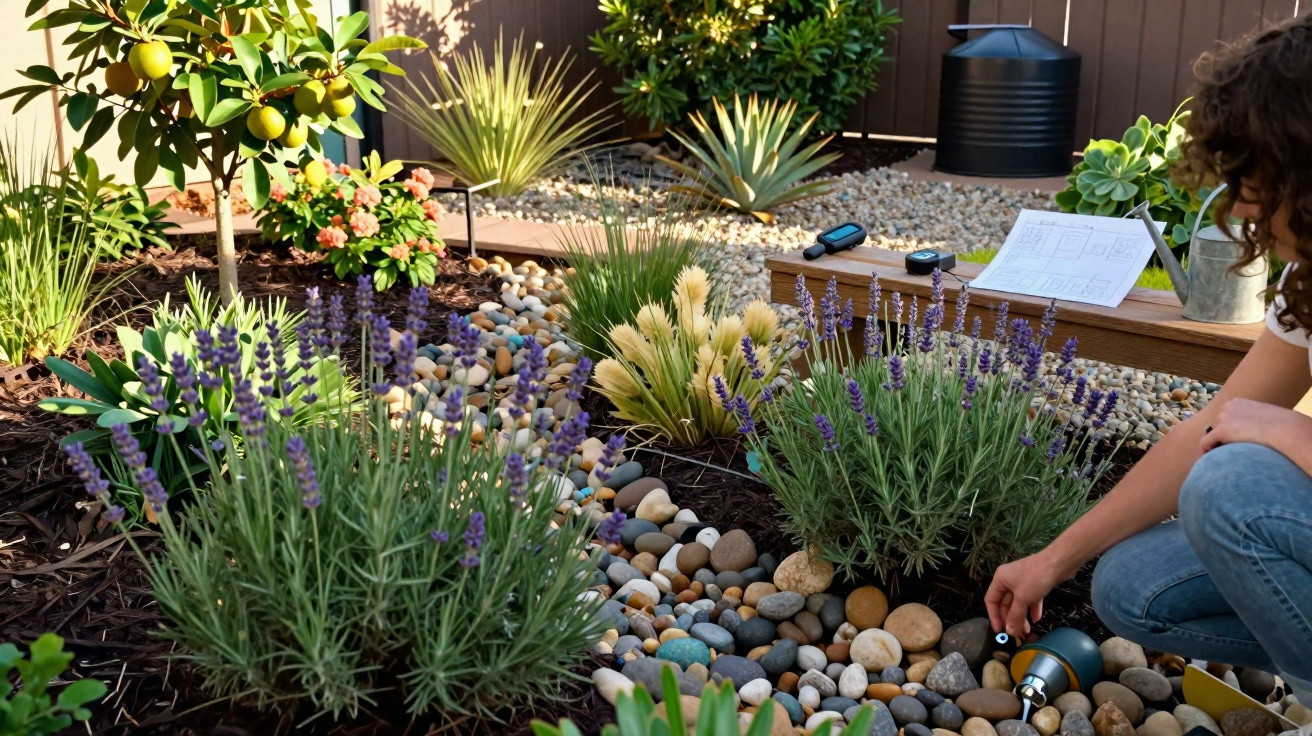
Many councils publish lists of recommended species, distance rules, and even small sketches showing what well-planted plots can look like. On top of that, there are grant schemes for wildlife-friendly front gardens-without gravel, but with carefully chosen trees and shrubs. If you buy into that approach, it becomes obvious: the goal isn’t to stop people planting trees, but to encourage more thoughtful decisions. Banning specific species close to houses is only one tool. The real shift happens in our heads-between “plant it quickly” and “live with this tree for the long term”.
| Key point | Detail | Benefit for the reader |
|---|---|---|
| Spot problematic tree species | Large-growing species such as silver maple, poplar or plane tree have strong, far-reaching roots | Avoid damage to foundations, services and paved surfaces |
| Use local council rules | Check the tree protection by-laws, minimum distance requirements and council recommendation lists | Gain legal certainty and avoid costly reinstatement work or fines |
| Plan for the long term | Consider mature height, canopy spread and root space at planting time | A balanced garden that still works decades later and supports property value |
FAQ:
- Question 1 Which tree species do councils most often prohibit close to houses?
Above all, fast-growing large trees such as silver maple, ash, poplar, black locust, plane tree or certain willow species appear on these lists. They’re seen as high risk because their root systems are very strong and can easily reach pipes or work under foundations.- Question 2 In general terms, how close am I allowed to plant a tree to my house?
That depends on the council and the species. As a rough guide, 3–4 metres is often used for small ornamental trees and 5–8 metres for large trees. The only binding rule, however, is the relevant local by-law or planning document.- Question 3 Who pays if roots damage council pipes or pavements?
In many cases, liability sits with the property owner whose tree the roots come from-particularly if minimum distance rules were ignored. In individual cases, courts decide whether costs should be shared or assigned to one party.- Question 4 Do I have to fell an existing tree if the rules change?
New by-laws usually don’t apply retrospectively. Existing trees typically keep their protected status unless there is an acute risk or significant damage. Where problems are severe, councils can impose conditions up to and including removal.- Question 5 What alternatives do I have if my plot is small?
Low-vigour trees and large shrubs such as serviceberry, crab apple, Cornelian cherry, or columnar forms of many species are often suitable. They provide shade and ecological benefits without competing with the house.
Comments
No comments yet. Be the first to comment!
Leave a Comment