
After winter, a terrace can look like an accident waiting to happen: slippery, grey and covered in moss.
But the usual reach for vinegar and a pressure washer can come back to bite you.
Each spring, plenty of homeowners attack their terrace with real enthusiasm - and end up damaging it a little more year after year. What feels like the right thing to do can make paving stones porous, loosen joints and even help the green film return faster. Professionals are increasingly recommending a surprisingly simple alternative that most people already have in their kitchen cupboard.
What winter really leaves behind on a terrace
When you slide open the garden door in spring, you often see the same scene: slabs with a green haze, joints that have darkened, and puddles where grime collects. It’s caused by the typical winter combination of damp, cold conditions and limited sunshine.
On concrete, natural stone or porcelain paving, a lot can build up during this period:
- Algae, forming a slimy, slippery film
- Moss, which spreads easily in joints and shaded corners
- Fine dust and airborne dirt particles
- Leaf debris, which leaves dark marks as it rots
Together, this doesn’t just make the terrace look neglected - it can turn it into a genuine skating rink. It’s particularly hazardous on smooth slabs and steps.
"A thorough clean once a year is usually enough - as long as it’s done gently and not with brute force."
Why vinegar and a pressure washer cause long-term problems
For years, the household go-to has been vinegar. Many people dilute it with water, pour it over the terrace and are pleased when the growth disappears at first. At the same time, pressure washers sit in many garages, ready to be fired up at full power and driven straight across joints and slabs.
However, experts in paving and terrace construction are increasingly warning against this pairing. The reason is simple: both acidic cleaners and excessive water pressure can attack the surface.
Acid makes surfaces more vulnerable
Used repeatedly, strongly acidic cleaners can:
- etch the top layer of natural stone and concrete
- wash out and weaken jointing mortar or sand
- leave the surface rougher and more porous
It may look cleaner at the start, but it often backfires later: more pores mean more places for dirt, algae and moss to take hold. The terrace ends up getting dirty faster, not slower.
Pressure washers: effective - and risky
A powerful jet will remove visible build-up quickly. But professionals point out that too much pressure can:
- flush out joints, leading to loose stones
- deepen small cracks in slabs so water can get in
- cause even more damage when that water freezes in cold weather
Using a pressure washer is particularly risky at temperatures close to freezing. If water penetrates deeply into joints and cracks and then freezes, it can force material apart and ruin the surface over time.
Washing-up liquid and warm water: the gentle, surprisingly strong solution
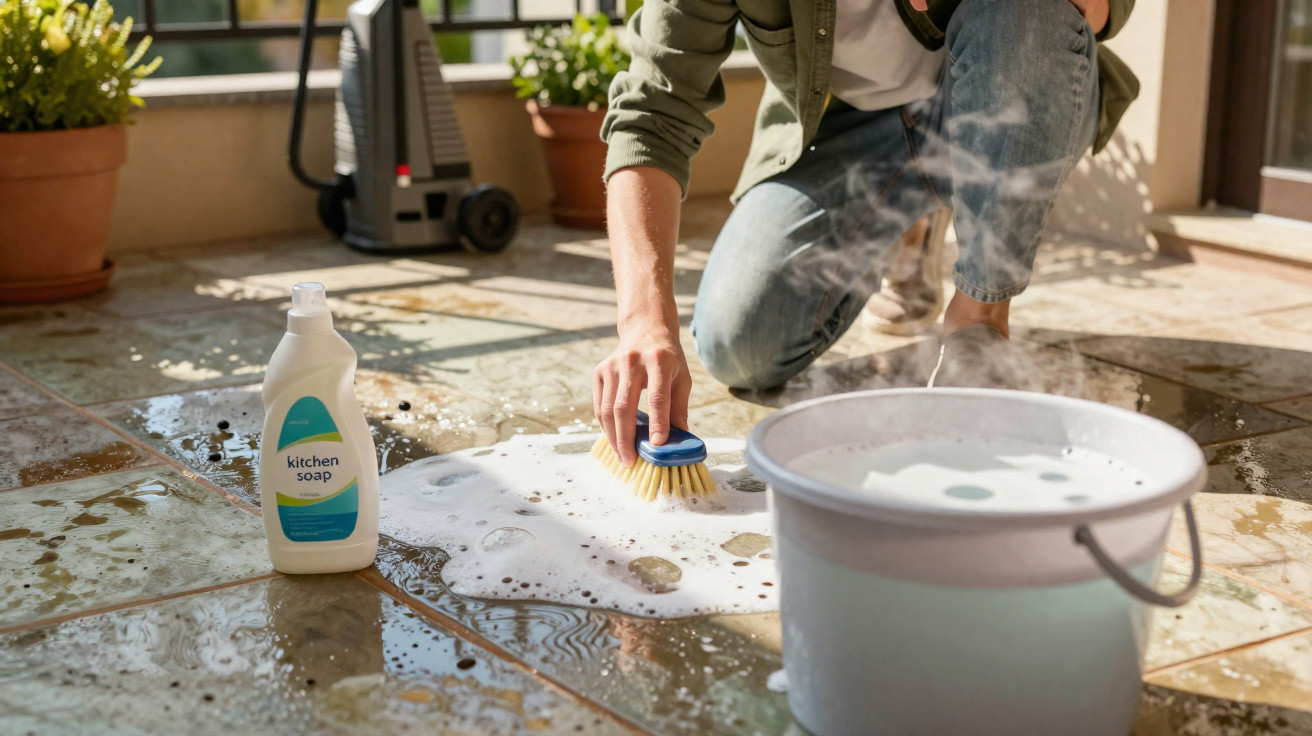
When you talk to professionals in the paving trade, you increasingly hear the same advice: move away from aggressive acids and extreme pressure, and towards a mild but smart mix - warm water and ordinary washing-up liquid.
"Washing-up liquid contains surfactants that lift grease, dirt and the slippery film without attacking stone or joints."
How the method works, step by step
For a thorough spring clean across several square metres, you typically only need:
- 1 bucket of warm to hot water
- a squirt of standard washing-up liquid
- a stiff brush or scrubbing brush
- clean water (an outdoor tap or a second bucket) for rinsing
Then follow a few simple steps:
- Mix it up: Add the washing-up liquid to the bucket, fill with warm water and stir briefly.
- Apply the solution: Work in sections, spreading the mixture over the terrace, ideally starting from one corner.
- Scrub: Brush firmly, especially in the joints and on heavily mossy patches.
- Rinse away dirty water: Rinse with clean water so loosened dirt doesn’t dry back onto the surface.
The effort is manageable and the cost is pennies. At the same time, the texture and appearance of the surface stay the same. If you want, you can repeat the process on stubborn areas without putting the material under strain.
How to keep the terrace cleaner and less slippery for longer
The biggest benefit of the gentle washing-up-liquid approach doesn’t show on cleaning day - it appears in the weeks and months afterwards. Because the stone and joints aren’t roughened up, green growth has less to cling to.
The result: algae and moss return more slowly. To keep that advantage for as long as possible, a small seasonal care routine helps:
- regularly sweep away leaves and blossom with a broom
- avoid leaving water-filled saucers or planters in the same spot for long periods
- tackle the first slippery patches straight away with half a bucket of warm soapy water
- prevent standing water, for example with a slight fall or by keeping drains clear
"If you look after your terrace gently but regularly, you’ll need fewer major cleaning sessions - and you’ll significantly extend the life of the paving."
What applies to different surface types
Not every terrace is made from the same material. Even so, the gentle washing-up-liquid method is suitable for most common surfaces:
| Material | Suitability of the washing-up liquid method | Note |
|---|---|---|
| Concrete paving slabs | very good | don’t allow too much water to sit in the joints |
| Natural stone (e.g. granite) | good | use acid-free products; washing-up liquid is suitable |
| Porcelain paving | very good | treat stubborn marks twice if necessary |
| Timber deck / WPC | conditionally good | use a softer brush; always work with the grain |
When stronger products can make sense
There are situations where the gentle method reaches its limits - for example, decades-old staining that has soaked in deeply, or areas that have been severely neglected. In those cases, professionals recommend acting in a targeted, spot-by-spot way rather than treating the entire surface aggressively.
Possible steps include:
- applying specialist cleaners to individual stains only
- using a pressure washer briefly with reduced pressure and a greater distance
- replacing badly damaged slabs or re-doing joints that have come loose
With sensitive natural stones in particular, it’s worth checking the manufacturer’s guidance or getting quick advice from a specialist retailer. That helps you avoid expensive damage from unsuitable chemicals.
More safety and comfort through small habits
A well-kept terrace isn’t just about looks. Anyone with children, who walks barefoot, or who has older people in the household knows how easily a thoughtless step on slippery slabs can cause a fall. Especially in the changeover from winter to spring, simple routines pay off.
Helpful ideas include setting a fixed date in the diary for the main spring clean, keeping a broom by the patio door, and having a bucket ready that can be filled quickly with warm water and a squirt of washing-up liquid when needed. That way, the space outside the door stays more attractive - and feels like a safe extension of the living room outdoors.

Comments
No comments yet. Be the first to comment!
Leave a Comment