
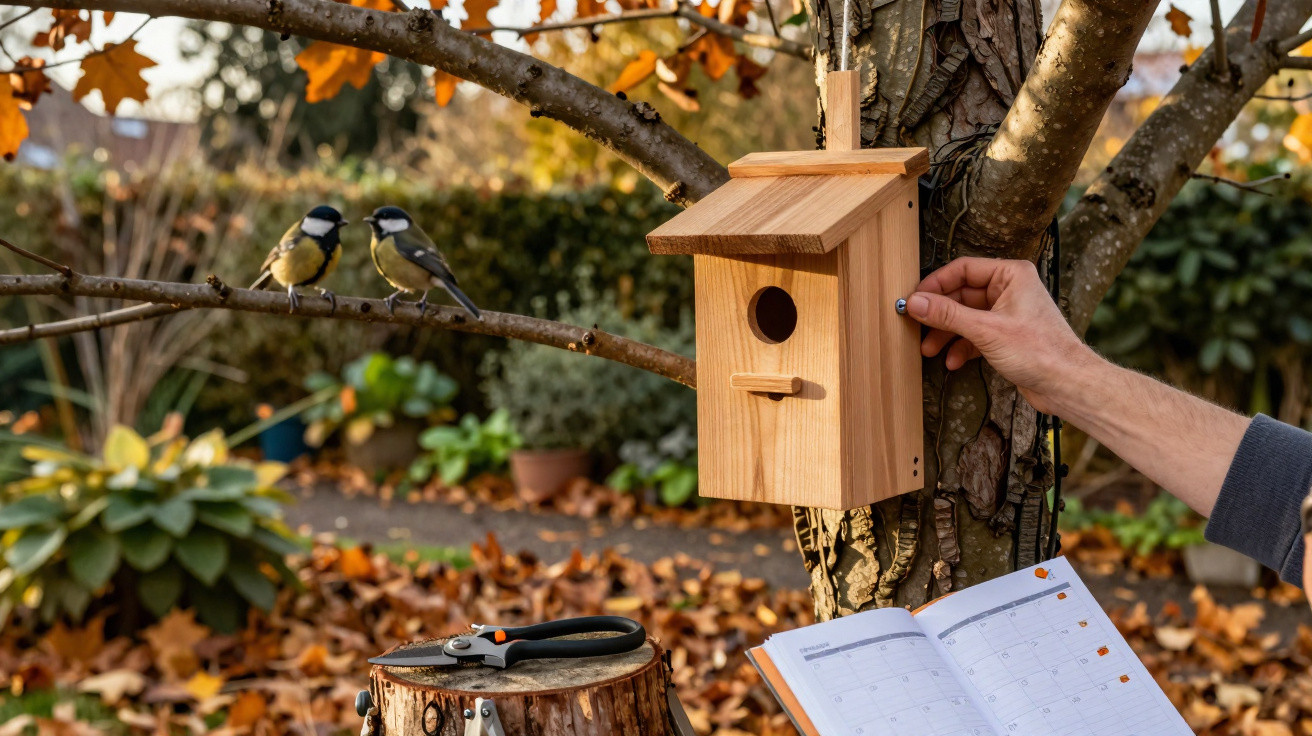
Many people hurry to put up a new bird box the moment the sunshine returns, assuming warm weather automatically signals nesting season. In practice, most birds have settled on their plans well before many of us even reach for a drill. If you get the timing wrong, your attempt to help can quietly backfire.
Why your bird box stays empty when you hang it in spring
For a lot of gardeners, nest boxes sit alongside the usual spring to‑do list: the first lawn cut, bedding plants, a patio tidy. That instinct makes sense to us, but it doesn’t match how wild birds actually structure their year.
By the time blossom appears on the trees, many garden birds have already picked a territory and a nesting site.
The comforting myth of the “spring clean” for wildlife
Putting up a bird box in March or April is much like promoting a hotel after every room in town has already been booked. We spot crocuses and lighter evenings and assume birds are only just gearing up. The reality is that many are already pairing, holding territories and settling on nest sites.
Dropping a completely new object into the garden during this high‑tension period can even work against you. To a bird that’s already alert, a sudden unfamiliar structure can look risky. Rather than drawing them in, it may encourage them to stick with a proven tree hole a few gardens away.
How early birds really start looking for nesting sites
For many resident species in Europe and North America - blue tits, great tits, chickadees, robins, nuthatches - the search for a home begins in the final weeks of winter.
- From January: males sing, establish territories and start checking out holes.
- February–early March: pairs form and return to promising cavities again and again.
- Mid-spring: nest sites are typically chosen and the first eggs arrive.
By the time buds open and we notice “spring”, the biggest decisions have often already been made. A box that appears in late March may simply have missed the early inspection period and so goes unused all season - unless a second brood, or a failed natural nest, creates a rare late opening.
The winning calendar: put your bird box up in autumn
If spring is already too late, when is the right time to fit a box? Seasoned birders and conservation organisations tend to give the same guidance: think autumn, not April.
The sweet spot for installing a bird box runs from October to the end of December.
Why autumn offers the best conditions
Autumn is when gardens settle down. Leaves drop, grass growth slows, and people spend less time outside. For wildlife, that lull is ideal: a new structure can become “normal” without causing alarm.
A box fitted in October brings several clear benefits:
- It has months to weather and shed that “brand new” smell.
- Birds can investigate it at leisure, away from the pressure of breeding.
- Winter storms will reveal whether it’s securely mounted, long before any chicks are inside.
If you miss this window and only get the box up in late winter, your odds for the coming spring drop. It can still be valuable next year, but you’re taking a chance with this season.
Use pruning season to choose the best place
Autumn and early winter often line up with pruning trees and cutting back hedges. With leaves gone, it’s easier to see trunks, forks and strong limbs, which makes choosing a secure fixing point far simpler.
Pick a trunk or a substantial branch, and attach the box with wire or straps that won’t cut into the bark. If the box can withstand winter gales, it’s much less likely to fall when it contains a nest, eggs and half‑grown chicks.
Birds need time to “trust” a new box
From a bird’s perspective, selecting a nest site is a serious gamble. A poor choice can mean losing an entire brood to predators, cold weather or parasites.
A nest box is not adopted overnight; many birds spend weeks checking it before committing.
How birds test a potential nest site
Before they place a single feather, small birds may:
- Sit at the entrance again and again at different times.
- Peer inside to assess depth and room.
- Keep watch for cats, squirrels, magpies or jays in the area.
- Listen for sounds and keep tabs on human movement in that part of the garden.
This cautious “inspection period” is much easier when the box has already been in place since autumn. By spring it feels established and dependable, not like something suspicious that appeared right before breeding begins.
Blending into the landscape reduces suspicion
Birds are wired to treat anything new as a potential threat. A fresh box on a bare fence post signals sudden change - and it can also draw attention from predators. Given a few months, though, the box becomes part of the backdrop.
As birds follow their winter feeding routes, they repeatedly pass it and stop reacting to it. Once it no longer stands out, they’re more willing to enter - and eventually to nest. That sense of routine often marks the difference between a used box and a decorative one.
Why a bird box matters long before eggs appear
It’s easy to think nest boxes only matter for a few hectic weeks in spring. In fact, they can also help birds through the toughest winter nights.
Before it’s a nursery, a bird box can be a lifesaving winter bedroom.
Winter roosts: saving tiny bodies from freezing
Small birds lose heat quickly. On cold nights, the main danger isn’t always hunger, but hypothermia. When temperatures plunge and the wind bites, many will squeeze into any available cavity and huddle together to conserve warmth.
An empty nest box provides exactly that: a sheltered, dry, wind‑proof pocket of air that stays a few degrees warmer than outside. Great tits, wrens and other species may roost several to a box. So rather than being “wasted” outside breeding season, a box put up in autumn can help more birds survive long enough to reach spring.
From winter shelter to spring nursery
Where a bird sleeps in winter is often closely linked to where it later nests. A bird that has spent dozens of freezing nights safely inside a box has already learnt what matters most: the site is solid, dry and free from predators.
When breeding instincts kick in, using the same cavity to raise young can be the obvious next step. In many gardens, the winter tenant ends up rearing chicks in the very spot that got it through the cold months.
Let rain, cold and time erase the “new box smell”
Fresh timber - and any glues, oils or varnishes used - gives off scent. People may enjoy new‑wood smells; wild birds are more likely to treat unfamiliar odours as a warning sign.
A box that has faced months of rain and frost smells like the rest of the garden, not like a workshop.
Why strong odours repel cautious birds
Even untreated wood can carry traces from handling, transport and storage. If you’ve treated the exterior with linseed oil or a protective stain, the smell may linger for a long time. For small birds with very sensitive noses, those odours can signal “recent human activity”.
A box installed in spring may still smell strongly of construction, which can be enough to nudge a wary pair towards a natural cavity - or an older box in a neighbouring garden.
Weathering makes a box look and feel safer
Autumn and winter act as a natural “ageing programme”. Rain rinses away residues, cold slows chemical smells, and sunlight dulls any bright surfaces. Over time, timber darkens and blends more naturally with bark and branches.
To a bird scanning for a safe cavity, a weathered, muted box looks like it has been there for ages. That visual and scent camouflage reassures them that predators and people haven’t been interfering with it recently.
How to position and prepare your box before frosts arrive
Choosing the right season is only part of the story. A few practical details can make a real difference to whether a box is genuinely useful.
Choosing the right direction
Direction matters more than many people expect. Across much of Europe and the UK, the wettest winds commonly come from the west and south‑west. Point the entrance into that, and you can drive rain straight on to eggs and chicks.
Point the entrance roughly east or south‑east to catch morning sun and dodge the worst downpours.
This orientation provides gentle warmth after sunrise without overheating later, while reducing the chance of soaked nesting material and chilled young.
Height, access and predator risk
Exact placement varies with the species you’d like to attract, but some general rules apply:
- Between 1.5 m and 4 m above ground suits most garden birds.
- Avoid locations where cats can easily jump from nearby branches, fences or sheds.
- Fix to a robust trunk or thick branch so winter winds don’t loosen it.
- Provide some cover from leaves or shrubs, but don’t block the entrance completely.
A box half‑way up a lone pole in the middle of a lawn can be an easy target for magpies and crows. A partly sheltered position in a mature tree is usually the safer choice.
Drainage, ventilation and construction details
Plenty of inexpensive “decorative” boxes look attractive but miss essentials that chicks need. Two features are worth checking:
- Drainage: small holes in the base allow any water to drain.
- Ventilation: narrow gaps under the roof or near the top of the side panels reduce condensation.
Without these, the inside can become damp, mouldy and prone to mite infestations. Wet nesting material chills chicks and increases disease risk. Checking in autumn gives you time either to drill a few holes or to return a model that’s purely ornamental.
Plan a quick winter clean
If a box was used last season, it may still contain old nesting material, droppings and parasites. Clearing it in late January or February helps keep the box appealing - and healthier.
Wear gloves, remove the old nest, brush out loose debris, and avoid chemical cleaners. Strong products can linger and discourage the next pair that comes to investigate.
What a well‑timed box does for your whole garden
A nest box isn’t only about seeing chicks at the entrance. Once a pair moves in, the way they feed can change your garden’s balance.
A single brood of tits can consume thousands of caterpillars and insects in just a few weeks.
That constant hunting reduces pest pressure on vegetables, roses and young trees, often more reliably than sprays. And when insects are abundant and managed naturally, it supports more birds, bats and hedgehogs too. One simple wooden box can be a surprisingly effective step towards a healthier garden ecosystem.
Two practical scenarios to picture the impact
Picture two neighbouring gardens. In the first, a box is installed in late March: the timber still smells fresh, no birds have used it over winter, and local pairs have already chosen elsewhere. The box stays empty. Insects build up, and the owner turns to pesticides.
In the second garden, the box went up in October. It sheltered several birds through winter and then hosted a family in May. The adults shuttle insects back and forth all day, keeping caterpillars under control. The owner uses fewer chemicals, notices more butterflies and hears more birdsong. The only real difference is when the screws went in.
Key terms that help when choosing and placing a box
A couple of phrases often show up on nest‑box labels and in guidance from bird organisations:
- Entrance hole diameter: a smaller hole (around 25–28 mm) suits blue tits and similar species; larger holes suit great tits or sparrows, but can also allow access for starlings and some predators.
- Predator guards: metal plates around the entrance, or deeper entrances, can reduce the chance of squirrels and woodpeckers enlarging the hole and raiding the nest.
If you match hole size and protection to local species - and fit the box in that October–December period - you greatly improve the odds of turning an empty ornament into a working asset for wildlife.


Comments
No comments yet. Be the first to comment!
Leave a Comment