
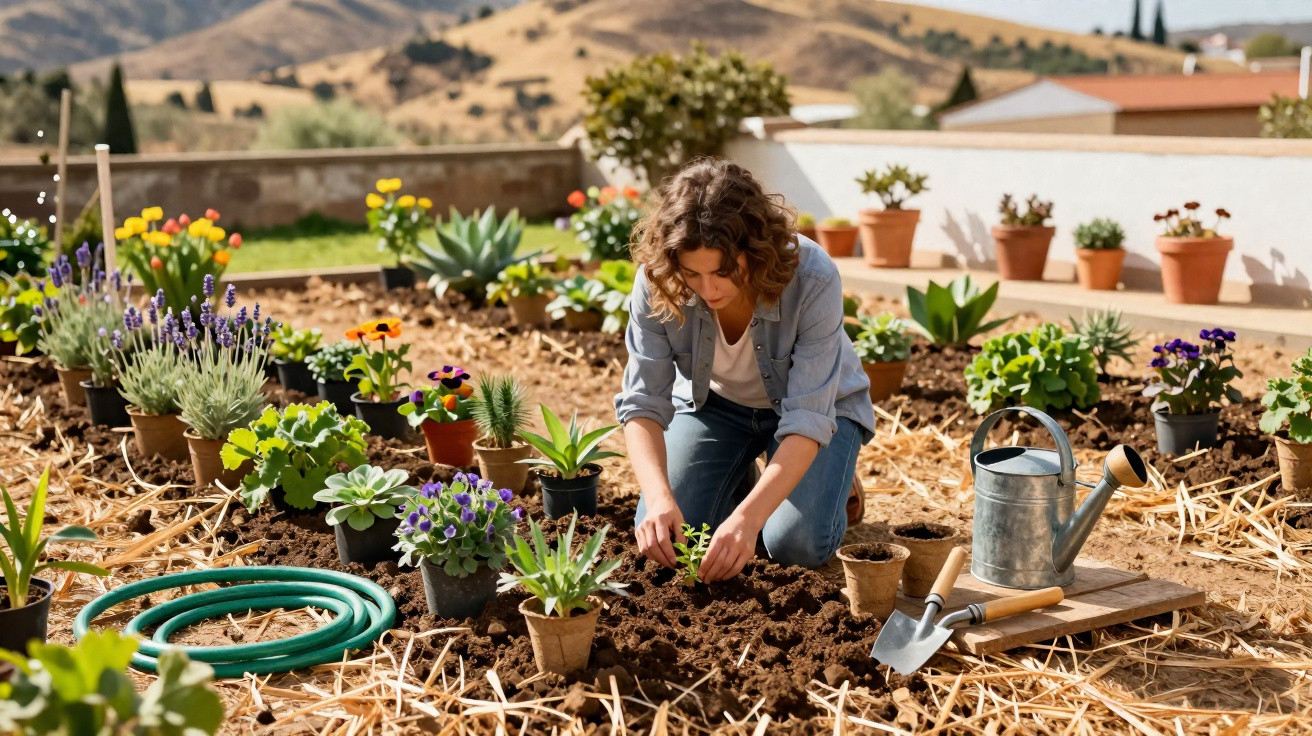
Across large parts of Europe and North America, summer temperatures now spike sooner, local water restrictions bite earlier, and lawns can be crisp and brown by June. Anyone still choosing plants on impulse in late May often ends up hauling watering cans for weeks. By nudging your planting date forward - and committing to five drought-hardy perennials - you can turn a thirsty border into a dry garden that stays colourful and easy to manage.
Why 31 March quietly decides your summer watering bill
The end of March isn’t just a random line in the diary. It lands in the gap between winter rest and rapid spring growth: the sap is on the move, yet the soil generally remains cool and well charged from winter rainfall.
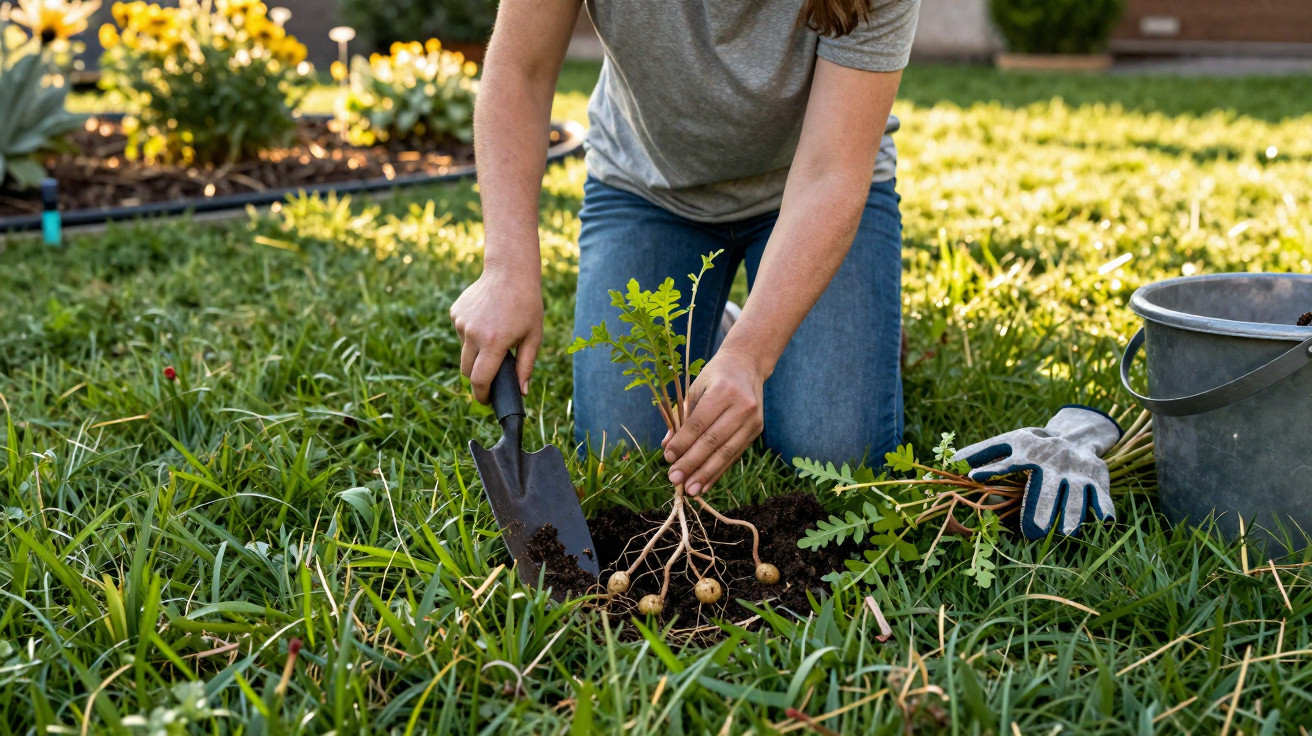
When you get perennials in the ground before 31 March, their roots can establish in naturally moist soil. The tiny feeder roots - radicelles - have time to spread steadily, long before the first proper heatwaves arrive.
Plant in cool, moist soil and the sky does most of the watering for you; plant into heat and you’ll be chained to the hose.
As soon as daytime highs push up towards 25°C (about 77°F) and beyond, newly planted perennials are hit with a double challenge: transplant recovery plus heat stress. On free-draining soils, the only practical way to keep them going is regular watering, often every few days.
Water companies and environmental organisations keep coming back to the same point: real water-saving in the garden begins with timing. Putting plants in during early spring - rather than rushing out for last-minute purchases in May - is one of the easiest changes households can make.
Five “camel” perennials that shrug off drought
Certain plants are built for extended dry periods. Features such as fleshy leaves, silver foliage, deeper root systems and lower moisture loss act like a built-in survival kit. Below are five perennials which, once established, can typically rely on rainfall alone across much of the UK and in many regions of the US.
- Perovskia (Russian sage) – Feathery spires of lilac-blue flowers, finely divided silver-grey foliage, and minimal water demand. It performs best in full sun and poor, stony ground.
- Sedum ‘Autumn Joy’ (Hylotelephium) – Water-storing succulent leaves, plus broad, flattened flower heads that colour up later in the year, supporting bees and butterflies when other flowers are fading.
- Gaura lindheimeri (whirling butterflies) – A strong taproot searches out moisture deep below the surface, powering months of airy white or pink blooms that flutter in the breeze.
- Echinops ritro (globe thistle) – Metallic blue globes carried on sturdy stems; once established it’s perfectly happy in dry soils, including chalky conditions.
- Lavandula angustifolia (English lavender) – A familiar scent, a magnet for pollinators, and a true sun plant that dislikes waterlogged ground even more than it dislikes drought.
All five want full sun and sharp drainage. Let the surface bake, but make sure roots can push down into a loose, open subsoil where a little residual moisture still sits in August.
The underrated backup: hardy geraniums
Hardy geraniums (often called cranesbills) may not shout as loudly as lavender or Russian sage, but in a low-water border they earn their keep. Many cope with partial shade, a wide range of soils and winter cold with very little drama.
They also stitch bare soil together between larger plants, smother weeds by covering the ground, and once settled will often handle short dry spells. Upkeep is straightforward: in late winter, the old foliage can simply be pulled away by hand because fresh growth is already waiting underneath.
The March planting method that cuts summer watering
Selecting drought-tolerant plants is only part of the equation. The way you plant in March plays a major role in whether those perennials can stand on their own by July.
A single careful planting in March can spare you dozens of emergency waterings during a heatwave.
Step-by-step: how to plant for drought resilience
- Soak the rootball – Before planting, submerge each pot in a bucket of water for around 15 minutes, until the bubbles stop. This fully wets the compost, so roots aren’t left in a dry, stubborn plug.
- Open a wide planting hole – Make the hole at least three times the pot’s width. Rough up the sides and bottom so roots can move outward rather than circling inside a tight, compacted pocket.
- Improve heavy clay – Where soil is sticky, blend in roughly 20% coarse sand or gravel. Drainage improves and winter rot becomes less likely, which is especially important for lavender.
- Firm watering at planting – Give each plant a generous “settling in” drink of about 10 litres of water, even if rain is forecast. This pushes soil into close contact with the roots and removes air gaps.
- Loosen the roots – With your fingers, gently tease out the rootball so the roots don’t keep spiralling the way they did in the pot.
- Finish with mineral mulch – Spread a 7 cm layer of gravel, crushed stone or volcanic rock (such as pumice or pozzolana) around the base. This reduces evaporation, keeps the plant’s collar drier, and puts off slugs.
In a sunny, dry border, mineral mulch usually outperforms bark. Wood-based mulches can sit damp against stems through winter and decompose quickly, whereas gravel stays in place and bounces light back onto the plants.
How much water can early planting actually save?
The water-meter difference between planting in March and planting in mid-May can be bigger than most people expect. Consider one gaura as a simple example.
A gaura planted around 15 May, when soil is warming and temperatures are rising, may need watering every two days in a hot July just to get through. Across a typical summer, that can add up to roughly 200 litres more water than the same plant set out in March and allowed to root down properly.
Shift the planting date by a few weeks, and a thirsty border can become a rainfall-only border in its very first summer.
Scale that up across a dozen plants or more and the saving becomes hundreds - potentially thousands - of litres in a single garden. That sort of reduction matters once local councils or counties bring in hosepipe bans or tiered water restrictions.
Is April already too late for a no-watering garden?
If you’re running behind, you haven’t missed your chance entirely. April planting can still work, but you need more realistic expectations. By then, soil is often warmer and drier, leaving less readily available moisture for roots while they establish.
Drought-tolerant perennials planted in April will usually need “rescue watering” in their first summer. In practice, that means monitoring during heatwaves and giving an occasional deep soak when foliage begins to droop, rather than sprinkling a little every day by routine.
For April jobs, good drainage and mineral mulch matter even more. They help rainfall soak in rather than skimming off hard, sun-baked surfaces. Full sun is still essential for these five “camel” plants: in partial shade they can stretch, lose strength, and become more prone to disease.
Designing a dry border that still looks lush
A well-planned structure makes a dry garden look deliberate rather than thin. A straightforward planting arrangement is effective and keeps maintenance manageable.
| Position in border | Suggested plant | Main role |
|---|---|---|
| Back | Echinops, Perovskia | Height, structure, strong silhouettes |
| Middle | Gaura, Sedum ‘Autumn Joy’ | Long flowering season, movement, colour |
| Front | Lavender, hardy geraniums | Fragrance, groundcover, softened edges |
On poor, sandy soils these plants can look settled in very quickly. On heavier ground, mixing in that 20% gravel or coarse sand and forming a slightly raised, gently mounded bed can turn a marginal spot into a dependable dry border.
Year-round care stays modest: a tidy-up in late winter, an occasional cut-back of spent flower stems, and a gravel top-up every few years. The biggest shift is that time and effort move away from constant watering and into short, seasonal jobs.
Key terms gardeners keep asking about
As low-water gardening becomes more common, a few technical terms show up that can sound more intimidating than they are. Two are particularly helpful:
- Evapotranspiration – The combined water loss from the soil surface and from plant leaves. Plants with grey, fine or waxy foliage - such as perovskia and lavender - naturally lose less moisture through their leaves.
- Taproot – A strong main root that grows straight down, enabling plants like gaura to reach deeper reserves of moisture than shallow-rooted bedding plants.
Once you understand these concepts, it becomes easier to pair plants sensibly. For example, mixing deep-rooted perennials with shallower-rooted groundcovers means they draw from different moisture zones, which reduces competition during dry spells.
What a hosepipe-free summer can look like
Picture two neighbouring gardens on a sweltering July afternoon. In one, short-lived bedding plants slump in the heat and the owner races home to keep them from collapsing. Next door, clumps of globe thistle, Russian sage and sedum stay upright, while butterflies crowd onto lavender that hasn’t been watered with a hose for weeks.
The second gardener still has jobs to do: pruning, dividing perennials now and then, and keeping an eye out for pests. The change is the mental load. The planting is designed for the reality of hotter, drier summers instead of constantly battling against it. One choice - planting the right perennials before 31 March and establishing them well - can change the feel of the entire season.

Comments
No comments yet. Be the first to comment!
Leave a Comment