
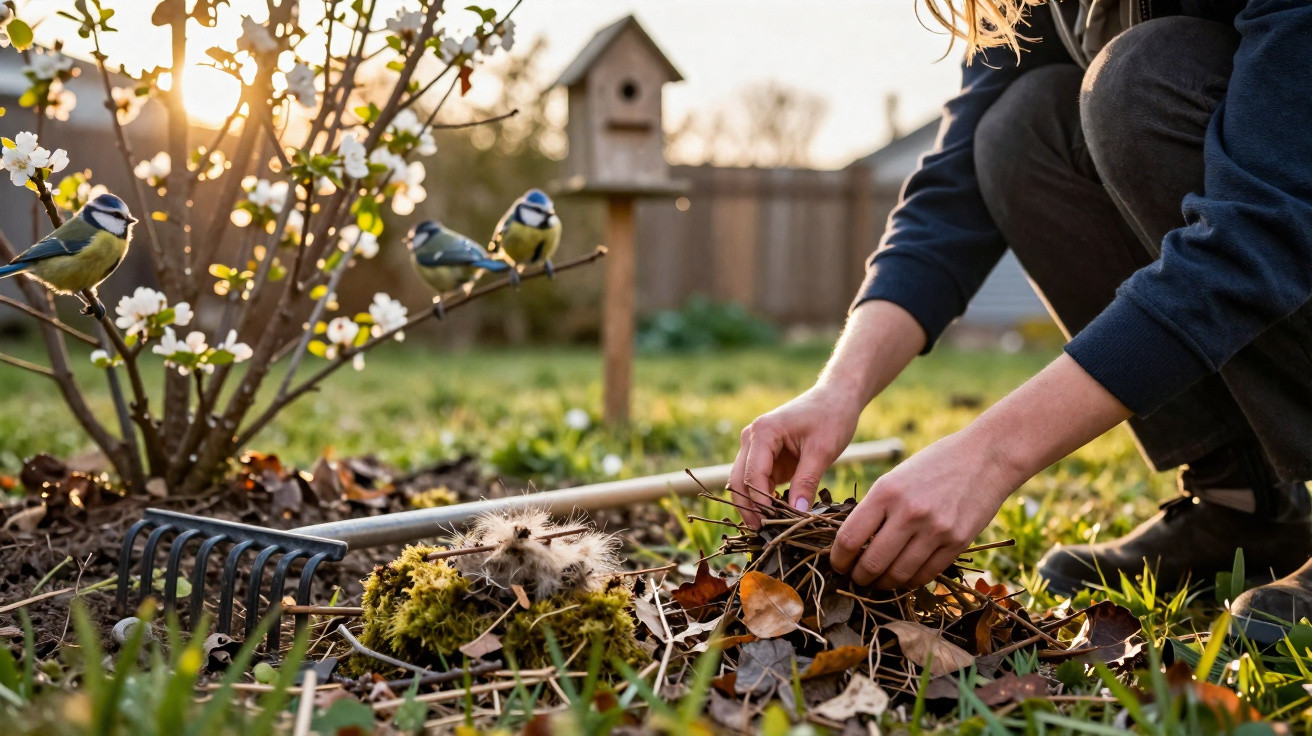
While we’re gathering fallen leaves, sweeping away cobwebs and scrubbing moss off stones, tits are carrying nesting material back and forth for days and nights on end. What looks like “tidy” to us can mean stress and wasted energy for the birds - and, in the worst case, a breeding attempt that fails. If you stick to a few simple rules, you can clean up the garden and still leave a paradise for these small insect hunters.
Why the April clean can become a stress trap for tits
Tits begin the breeding season early. In Central Europe, the main breeding period runs broadly from mid-March to mid-August. The most important building phase is in spring, as days lengthen, pairs form, and a nesting site is claimed - in an old tree, a hole in a wall, or a nest box.
At this point, the birds are working at full tilt. Around mid-April, a great tit can manage an astonishing 500 flights per day, and keep that pace up for roughly 10 to 15 days. Each trip has a purpose: a stem, a piece of moss, a tuft of animal hair, a strand of spider silk. None of it is random.
“While we ‘tidy up’ the garden, we often remove exactly what tits urgently need for nest building.”
For the birds, the implication is clear: the further they have to travel to find suitable material, the more energy they burn - and the riskier the brood becomes, particularly in cool weather or during wet spells.
Please leave these things in the garden
The good news is that tiny changes in what we do can make a huge difference for tits. This isn’t about letting everything run wild; it’s about deliberately leaving certain things alone. The key is a handful of unassuming materials that are treated as “dirt” in many gardens.
Moss - natural insulation
Moss on lawns, stones or old tree trunks irritates many gardeners. For tits, it is incredibly valuable. They pack it into the nest cup and use it like natural insulation. It helps keep eggs - and later the naked chicks - warm, even when the adults fly off to feed.
So leave patches of moss under hedges, along walls, or in quiet corners. If you really want things to look “neat”, you can gather moss loosely into a small pile rather than removing it entirely.
Cobwebs - the invisible binding agent
Cobwebs are often cleared away automatically - in the shed, the carport, under the eaves. To tits, they act like an elastic adhesive. The fine threads help stabilise the nest, fill gaps and hold the structure together without making it rigid and brittle.
Holding off with the broom for a few days or weeks can make all the difference - especially in corners where hardly anyone passes.
Brittle material: twigs, stems and leaves
What ends up in the garden waste sack first is often the basic framework of a tit’s nest:
- fine twigs and small sticks
- dry grass stems
- old leaves and plant remains
Rather than raking every area completely bare, it pays to keep a “tidy wild corner”: a spot where leaves, stems and small twigs are left on purpose. The best place is under hedges or shrubs - birds are already inclined to look for material there.
Animal hair - luxury lining for chicks
If you have a dog or cat, you can help the birds directly. Brushed-out hair becomes the soft inner lining of the nest. The adults raise the young on it so they don’t get chilled and don’t develop pressure sores.
One simple approach: after grooming, stuff the hair into an empty wire suet-ball feeder and hang it in a shrub. Tits will take exactly what they need. One important caveat: if the animal has just been treated for parasites, don’t put the hair out.
More benefits for the garden and vegetable plot
A garden that keeps a bit of “life” in the form of leftover structure gains several advantages. Areas with longer grass, leaf piles or dead wood hold far more insects: spiders, beetles, caterpillars and larvae. Those small creatures are precisely what tits need later, when the chicks hatch.
The birds are genuine allies for anyone growing veg. One pair of great tits can catch between 6,000 and 9,000 caterpillars and other insects over the weeks it takes to raise a brood. Blue tits and great tits are particularly fond of winter moth and related caterpillars - classic pests on fruit trees and shrubs.
“If you support tits, you often save yourself sprays against caterpillars and other pests - the birds do a large share of the work.”
By tolerating moss, cobwebs, stems and leaf litter, you also encourage this form of natural pest control. The payoff: steadier harvests, healthier fruit trees and fewer chemicals in the garden.
The right time for the big garden tidy-up
Timing is the most important lever. During breeding and chick-rearing - roughly from mid-March to mid-August - avoid any radical clear-out. A gentle approach is more than enough at this time:
- keep paths clear so nobody trips
- remove loose branches that could become hazardous
- trim hedges carefully, without cutting them right back
- leave leaf piles and structure-rich corners as undisturbed as possible
You can shift the truly major cut-back to autumn. Once breeding season is over, a thorough prune or heavier raking bothers tits far less. In peak bird season, motorised leaf blowers should ideally be left unused: they don’t just scatter material, they also damage insect habitats and create stress through noise.
Nest boxes help - but only alongside natural materials
Nest boxes are a useful addition, but they are not a free pass. They don’t replace a wildlife-friendly garden. If you put up boxes, place them around 2 to 4 metres high, in a quiet spot, ideally facing south-east so the box doesn’t overheat.
However, if you then remove every cobweb, clear away leaves and moss, and keep every corner clinically clean, you deprive tits of what they need to furnish the interior. A nest box plus natural materials within easy reach is the combination that truly attracts them.
How much “mess” is reasonable in a terrace-house garden?
Many gardeners are trying to balance consideration for neighbours with doing something positive for wildlife. You don’t need a jungle. Even small measures have an impact:
- a single “wild corner” behind the tool shed
- a leaf pile under the hedge line instead of total leaf removal
- a strip of longer grass along the fence
- cobwebs deliberately left in less visible places
If you like, a simple sign such as “We’re helping birds and insects here” can prevent misunderstandings. Neighbours often respond well once they understand the apparent untidiness has a purpose.
Common spring-cleaning mistakes - and how to avoid them
Typical jobs that make life harder for tits include:
- clearing everything out from under hedges and shrubs
- sweeping away all cobwebs in the shed
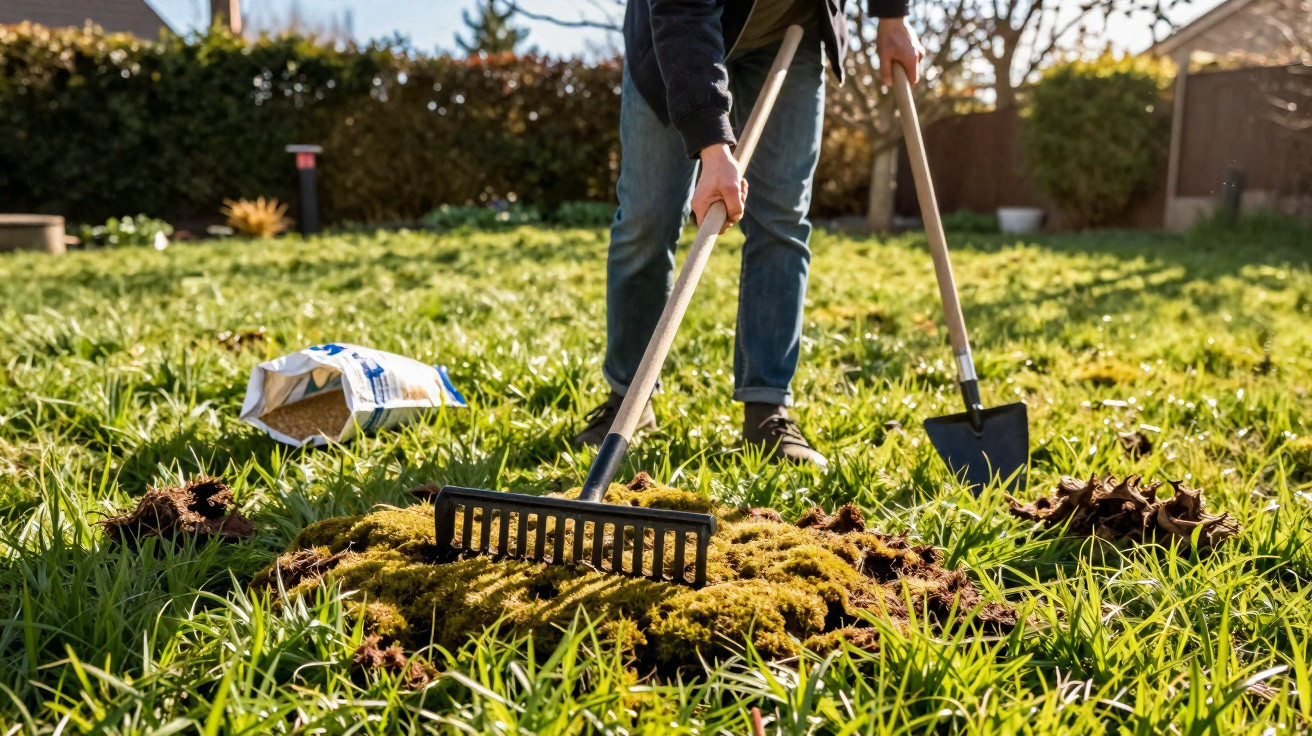
- intensive scarifying of the lawn right in the middle of breeding season
- using leaf blowers in April and May
Small adjustments go a long way: move scarifying to autumn, don’t remove every last leaf - gather some into a corner - and only take down cobwebs where they genuinely get in the way or raise hygiene concerns.
A few extra tips for more garden bird success
If you want to go a step further, plant native shrubs that attract insects and provide cover, such as hazel, hornbeam, hawthorn or blackthorn. These features offer food sources, hiding places and extra nesting opportunities for different species.
It’s also worth taking a hard look at plant protection products. Many “all-purpose” treatments don’t just hit pests; they also reduce the insects that tits rely on. Fewer sprays means more food for young birds - and a more stable local population.
Ultimately, success doesn’t depend on big projects, but on a change in perspective: moss, cobwebs, leaves and animal hair aren’t signs of neglect. They show that a garden is more than a manicured patch of green - it’s habitat, where tits can use their 500 daily flights for their chicks rather than battling the broom.


Comments
No comments yet. Be the first to comment!
Leave a Comment