
Gnats. A fuzz of mould. That soft rot that can wipe out an entire tray by morning. The forums swear by miracle cures, but your wallet is not funding boutique sprays. You’re after one option that acts quickly, smells pleasant, and doesn’t flatten the life in your soil.
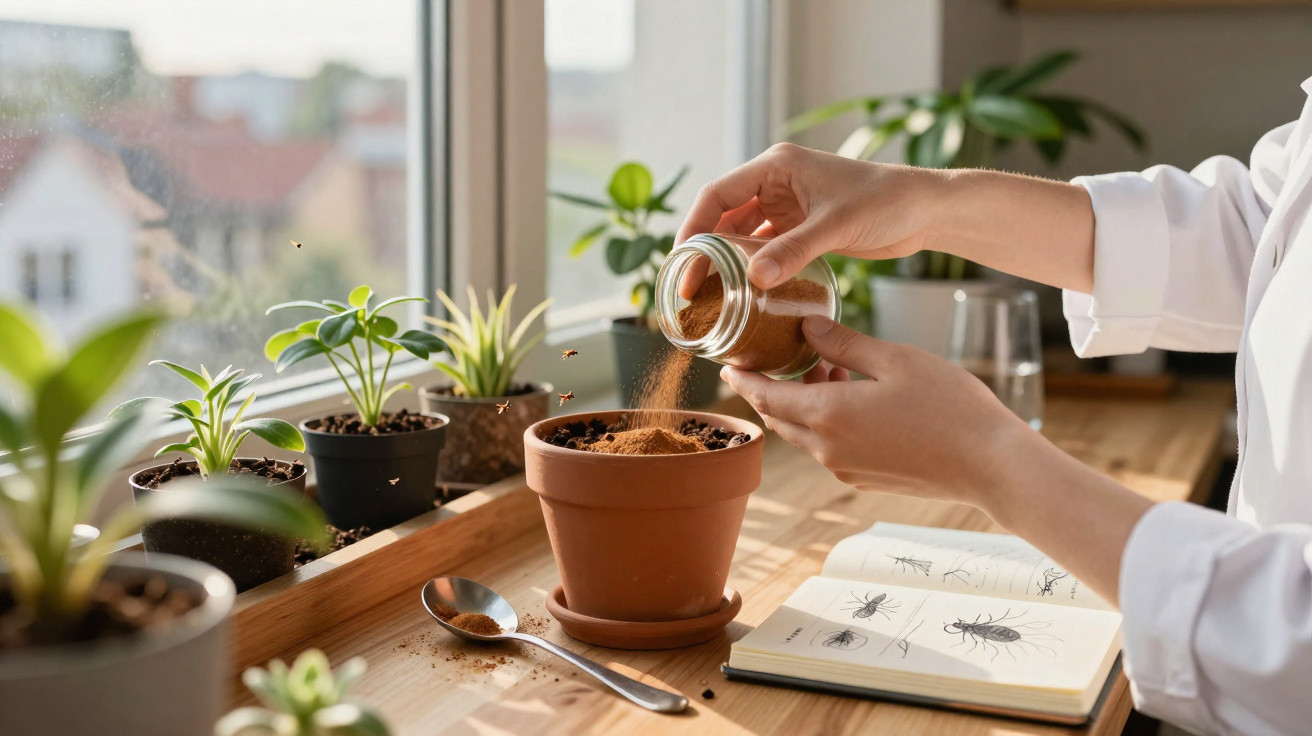
On a Saturday that reeked of damp compost and ripe tomatoes, I bumped into a biologist. She crouched by a basil tray, pulled a jar of cinnamon from her bag, and flicked a whisper of powder over the compost-like a barista dusting a cappuccino. The air seemed warmer and sweeter, and the whole scene oddly steadier. She studied the surface with the patience of a detective, following tiny signs most people never notice. A couple of fungus gnats rose, looped once, then disappeared. At the rim, an ant line fractured as if the signal had dropped. She smiled-science meeting everyday mess-and called it a plaster for living soil.
Why a pinch of cinnamon can throw pests off course
Ground cinnamon contains compounds that many small pests can’t stand, with cinnamaldehyde leading the charge-the same cosy note you recognise by smell. For fungi (and some soil-borne bacteria), it acts like a chemical barrier; for insects such as fungus gnats and scouting ants, it’s disorientating, drying, and generally unwelcome. Cinnamon doesn’t carpet-bomb your soil; it gently steers it. The surface becomes a poorer place to land, feed, and spread spores. It isn’t a miracle powder-just straightforward chemistry used at the right moment.
Imagine a windowsill packed with seedlings. The top of the compost stays wet, the tiny gnats move in, and damping-off starts to feel inevitable. A light cinnamon dusting takes that shiny surface and turns it dull and slightly gritty, like dew drying on sand. In small laboratory tests, cinnamon extracts have slowed fungal growth and interfered with insect chemoreceptors. Many gardeners notice fewer gnat flights the very same day, and stronger seedling survival over the following week. It’s a modest change, but it’s visible and fast enough to feel like progress.
In plain language, here’s what’s going on. The volatile oils lift off quickly, so scent-led pests lose their route. The fine powder adds tiny friction and helps draw away moisture, meaning the top 1.25 cm or so doesn’t stay as friendly to spores. At kitchen-level doses, cinnamaldehyde’s antifungal effect is limited, but it can still help interrupt the cycle right where soil meets air. Realistically, nobody keeps up perfect routines daily-yet when you watch wings dart and then vanish, it’s clear how much the surface layer sets the tone.
How to use cinnamon on soil, step by step
Use ordinary ground cinnamon from the cupboard. Put a pinch into a tea strainer or small sieve and shake a fine veil over the surface-only enough to lightly colour it. Think cocoa on froth, not icing on a cake. For a 15 cm pot, aim for roughly 1/8 teaspoon; for a seed tray, a faint sweep across the cells is plenty. After dusting, water from below or mist gently to settle the powder without blasting it away. Aim for “a dusting”, not “a covering”. Add a little more after heavy watering or once the smell has gone.
The usual mistakes are letting it clump, using far too much, or mixing it down into the compost. Keep it as a top dressing; working large amounts into potting mix can create odd dryness and irritate roots. Don’t hit the surface with a heavy watering can immediately after you’ve applied it-either water first and then dust, or be very gentle. Avoid coating delicate leaves. We’ve all seen a quick fix turn into extra clean-up-slow down, apply lightly, and watch the top layer for the next day. If fungus gnats are the issue, cinnamon plus sticky traps makes a solid one-two.
One more note from the biologist:
“Cinnamon won’t fix an overwatered pot, but it buys you calm while you correct what’s really wrong-moisture and air at the surface.”
- Use a tea strainer to create an even, light cloud.
- Aim only at the top 0.6 cm of compost.
- Let the surface dry out between waterings.
- Add airflow for seedlings (even a small fan helps).
- Swap thick, soggy mulch for a more breathable layer.
Take the tiniest pinch you think might do the job-then halve it.
The limits, the wins, and what to try next
Cinnamon is a gentle push, not a full-scale attack. It’s at its best with fungus gnats, a light bloom of mould, and disrupting ant scouting routes along pot rims or bed edges. It’s far less convincing when an infestation is well established, or when the pests live deeper down and ignore surface signals. If you’re dealing with root aphids or serious thrips, treat cinnamon as a helpful sidekick rather than the main solution. Even so, there’s something powerful about a habit that takes seconds and makes the room smell faintly like a bakery. Cinnamon is a small lever that can feel surprisingly effective. Pass a jar to a neighbour, dust your starter trays, adjust your watering rhythm, and notice how quickly the “surface mood” changes. Small actions, repeated through a season, can be the difference between “Why are my seedlings collapsing?” and “I actually got peppers this year.”
| Key point | Detail | Why it matters to you |
|---|---|---|
| - | Cinnamon’s active compounds (such as cinnamaldehyde) deter fungus gnats and disrupt fungal activity at the soil surface | Quick, low-cost relief without harsh chemicals |
| - | Apply only a fine dusting to the top layer, then adjust how you water | Immediate action that fits into normal plant care |
| - | Works well alongside sticky traps, better airflow, and bottom watering | Improves success rates for seedlings and houseplants |
FAQ:
- Which pests does cinnamon help with most? It’s most useful for fungus gnats, light mould on soil, and interrupting ant scouting trails around the rim of pots or beds.
- How often should I reapply? Every 5–7 days during gnat season, or after a heavy watering that leaves the surface freshly washed.
- Will it harm my plants or beneficials? Not when used as a light surface dusting. Don’t bury it deeply, so roots, microbes, and earthworms aren’t put under stress.
- Does the type of cinnamon matter? Any ground cinnamon is fine. Ceylon is milder; Cassia smells stronger. At garden-level amounts, the difference is small.
- Is cinnamon enough on its own? Often not. For best results, combine it with improved drainage, allowing the top to dry, sticky traps, and clean potting mix.

Comments
No comments yet. Be the first to comment!
Leave a Comment