
Neatly laid gravel paths and driveways can look smart, feel contemporary and seem low-maintenance - at least on paper. In reality, grass and weeds often reappear between the stones after only a few weeks. Anyone who ends up constantly hoeing or reaching for harsh chemicals quickly realises it is tiring, costly and not a long-term answer. That is why garden and landscape professionals rely on an approach that keeps gravel areas almost weed-free for years.
Why so many weeds grow in gravel in the first place
At a glance, gravel looks like a natural barrier. In practice, the layer of stones is often just a thin cap - with loose, nutrient-rich soil underneath where seeds can germinate easily.
Specialists usually point to two main reasons:
- Wind-blown seed and animals: Wind, birds and insects continually carry new seeds onto the surface. They slip down between the stones and end up in the soil.
- Poorly prepared ground: If gravel is simply tipped onto bare earth, the soil beneath stays fertile and damp - ideal conditions for weeds.
"Even a thick layer of gravel won’t stop weeds if the soil underneath remains loose and nutrient-rich."
Even with regular weeding, small root fragments often stay in the ground and grow back. This is exactly where the professional method makes the difference.
The professional trick: lay geotextile under the gravel
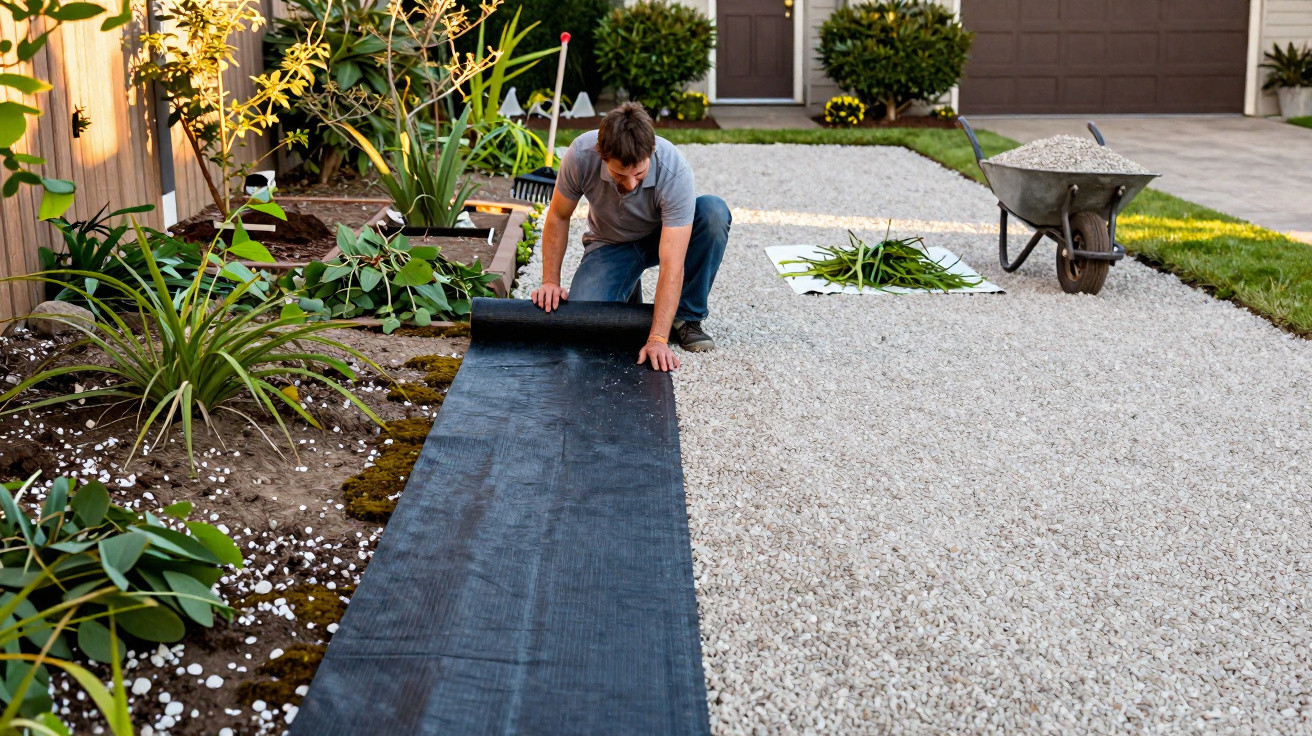
Garden and landscape contractors have used a solution for years that is almost invisible once finished: a geotextile membrane. It sits out of sight beneath the gravel, but drastically reduces the ongoing effort.
Geotextile is a tough, tear-resistant sheet made from synthetic fibres. It allows rainwater to drain through while blocking almost all plant growth. In other words, it creates a physical barrier between the soil and the gravel layer.
"The geotextile stops weed seeds from reaching the soil - without sealing the surface."
Step-by-step guide to a long-lasting, clean gravel surface
If you are building a new driveway, parking area or garden path, you can carry out the professional method yourself. The key is careful, tidy work in several stages.
- Clean the area thoroughly
Remove any existing weeds, including the roots. Deep running roots from ground elder, couch grass or dandelions should be taken out as completely as possible. - Level and compact the ground
The base should be flat, gently sloped and well compacted. This helps the geotextile lie smoothly and prevents hollows where water can pool. - Roll out the geotextile
Lay the strips with no gaps and overlap the edges by about 10 centimetres. At borders and walls, pull the fabric slightly up. Secure it with ground staples or stones so it cannot shift. - Add the gravel
A gravel layer of at least 5 centimetres creates a stable, attractive finish. For heavier use (cars, wheelie bins), it is better to plan for 6–8 centimetres.
The initial effort is a little higher, but over the years it saves a huge amount of time and frustration. Many garden owners report they only need to remove the occasional small seedling that sprouts on top.
Natural alternatives for existing gravel areas
Sometimes you cannot install geotextile - for example, if the gravel is already down or the area is only being used temporarily. In those cases, many people turn to everyday methods that are not permanent but can provide some relief.
Simple household remedies for weeds in gravel
- Boiling water
Pour directly onto the weeds. The heat destroys plant cells and often damages the roots as well. This works best on small areas, such as a narrow path to the front door. - Vinegar solution
A mix of water and household vinegar can dry plants out. Apply only to the target weeds and avoid using it near delicate ornamental plants. Important: in some areas there are legal restrictions on using vinegar outdoors, as it may be classed as a plant protection product. - Use salt very sparingly
Salt harms plants and, over time, the soil too. If it is used at all, treat only very small, clearly defined spots - for instance, joints by a step - and check local rules first. Salt is unsuitable for large gravel surfaces.
All of these approaches need repeating. They are better for occasional, targeted use than as a lasting fix for large areas.
How to slow new weed growth in gravel
Even with geotextile, you cannot prevent every seed from settling within the gravel layer itself. However, a few simple habits can greatly reduce how much takes hold.
These maintenance routines work well
- Rake the gravel more often
Loosening the gravel occasionally with a rake pulls out young seedlings before they establish. - Remove leaves and soil
Fallen leaves and soil trapped between stones gradually form a thin layer of humus - perfect for weeds. Clear away leaves and muddy deposits regularly. - Use thoughtful planting
Around the edges, mat-forming ground cover in adjacent beds can help reduce the number of seeds blowing onto the gravel. It also crowds out weeds within the planted areas.
"If you keep gravel clean, you remove weeds’ source of nutrients - the fine layer of humus that builds up unnoticed."
When the effort is especially worthwhile
Investing in geotextile and proper preparation pays off most on areas you expect to use for many years: driveways, parking bays, patio edges and long garden paths. Every hour you do not spend weeding can translate into real savings over time.
For temporary set-ups - such as a small gravel section for a pool that will be removed later - a simple gravel layer with occasional weeding or hot water is often enough. If you are renting, speak to the property owner before making major changes to outdoor areas.
Risks, limitations and sensible combinations
The professional method has limits too. On steep slopes, water can still wash fine soil material out beneath the fabric, creating wrinkles. In these situations, additional edging supports or gravel stabilisation grids under the stones can help.
Near trees, it is wise not to cover the entire root zone with fabric, so the soil can still breathe properly. Leaving an open ring around trunks and using bark mulch there is a practical solution.
A particularly effective option is combining geotextile with decorative planting. In larger gravel areas, you can cut planting holes where hardy grasses, lavender or perennials can grow. The result is a modern, low-maintenance garden that blends crisp gravel surfaces with living greenery - without a constant battle against weeds.


Comments
No comments yet. Be the first to comment!
Leave a Comment