
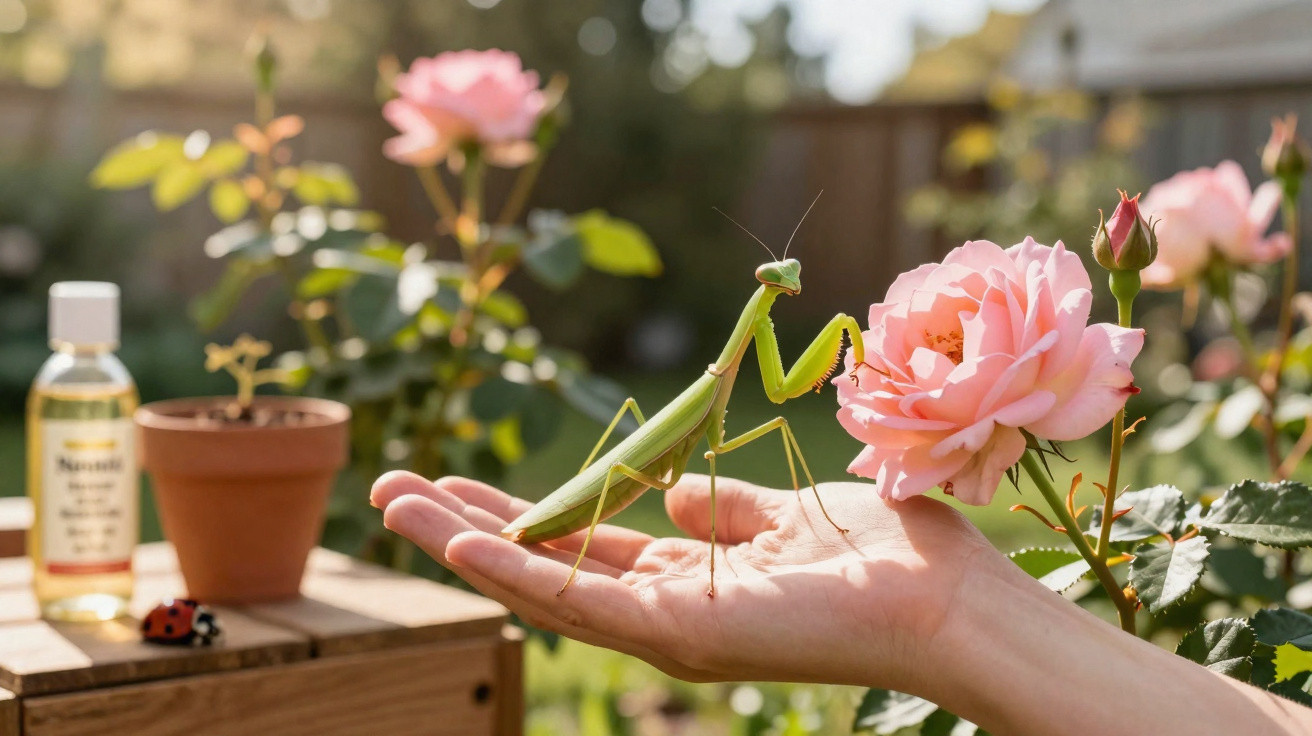
The unexpected presence of beneficial creatures in green spaces brings major advantages for anyone growing ornamental plants at home. Spotting small predators is a sign the ecosystem is in balance, providing genuine protection against the invaders that ruin foliage.
Why does the praying mantis show up in your garden?
This remarkable insect tends to appear where it finds plenty of food in city flowerbeds or indoor pots. It favours thick, leafy growth where it can camouflage with ease, waiting patiently for the right moment to seize prey that threatens the health of your roses.
When this hunter sticks around, it usually means the biological conditions are favourable and there is no trace of harmful poisons nearby. Organic gardens become ideal refuges for these animals, creating a strong living barrier against the unchecked advance of pests that attack new shoots.
How do ladybirds protect entire crops?
A Spanish city released thousands of these tiny insects to tackle severe infestations without using chemical pesticides, discovering that… Read more
What are the biological advantages of this predator?
As a highly efficient predator, it removes a range of common threats by catching grasshoppers, flies and moths directly among the plants. This role greatly reduces the need for constant hands-on interventions, helping to maintain the ecological balance that any rosebush needs to thrive.
Although it may occasionally catch pollinators, its effectiveness at controlling caterpillars and other harmful invaders more than makes up for its presence. It works with surgical precision, removing weaker individuals and delivering a beneficial biological cleaning without leaving residues or polluting the soil.
Below, watch a video from the Canal Lyz Granzotto YouTube channel that explains in detail why it matters to preserve these beneficial insects on plants:
How can you avoid using harsh chemical pesticides?
Uncontrolled use of strong chemical pesticides ends up wiping out the valuable natural protectors that live among leaves and flowers. Before applying any commercial product, it is worth inspecting the branches closely to safeguard these predators and keep the organic defence of the ecosystem alive.
When these artificial poisons are absent, nature can restore its natural order through the usual food chain. Keeping the environment clean attracts new winged allies, strengthening plant resilience and sharply reducing losses caused by severe infestations of insects.
Natural Protection Guide
Pillars of Biological Control
Consider these essential eco-friendly practices for your garden:
- Identify beneficial insects before applying any inputs;
- Avoid broad-spectrum poisons that kill predators;
- Preserve natural habitat to attract protective species.
Which garden pests are removed naturally?
Many plant-eating organisms stop causing economic or aesthetic damage when they meet efficient opponents along the way. This spontaneous biological control helps keep unwanted populations in check, working quietly to protect the integrity of each cultivation without adding costs.
These predators also greatly reduce the spread of vectors that carry dangerous fungal or bacterial diseases. As a result, rosebushes grow stronger and produce lush, fragrant flowers, free from deep marks caused by constant chewing from hungry caterpillars and other threats.
Below are the main harmful insects that are naturally eliminated by these effective garden hunters:
- Chewing grasshoppers;
- Nocturnal moths;
- Invasive flies.
How can you encourage ecological balance in the back garden?
Growing a wide range of flowering species helps attract these impressive sentinels of the plant world. Avoiding toxic substances creates favourable conditions for them to settle in, ensuring constant, sustainable vigilance against rosebush pests.
Maintaining small organic niches strengthens local biodiversity and enhances the home environment in a healthier way. Valuing the spontaneous presence of these predatory arthropods ensures plants grow vigorously, highlighting the essential importance of ecological balance for the preservation of nature.





Comments
No comments yet. Be the first to comment!
Leave a Comment