
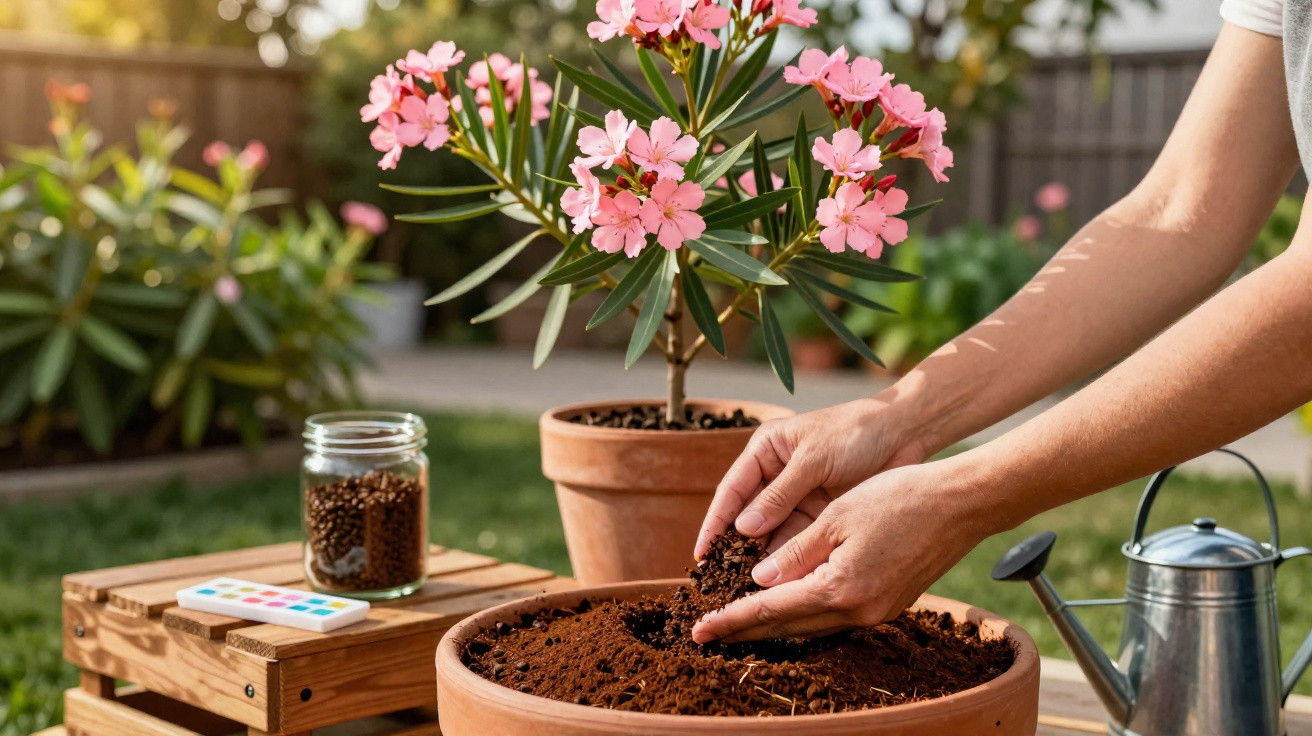
Mediterranean oleander is often described as a tough container plant that thrives in sun and heat. For years, a tip has circulated online suggesting you “feed” it with coffee grounds. It sounds like ideal recycling - but only a few small mistakes can mean the difference between masses of flowers and a plant that is quietly struggling. If you get the method right, the brown powder really can help encourage flowering rather than gradually weakening the shrub.
Why coffee grounds can be a blessing or a curse for oleander
At first glance, coffee grounds look like a free, high-quality fertiliser. Among other things, they contain:
- Nitrogen - important for leafy growth
- Phosphorus - supports flower formation and root development
- Potassium - strengthens the plant and improves resilience
That makes them a reasonable match in principle for oleander, which is considered a heavy feeder. One point is frequently overlooked, however: the pH value.
Coffee grounds are usually around pH 6.5, so they are mildly acidic. Oleander, by contrast, prefers a neutral to slightly alkaline environment - roughly between pH 7 and 8. If you apply too much coffee grounds straight onto the potting mix, the pH can slowly drift into the acidic range.
"A seemingly nutrient-rich soil can still leave oleander starving if the pH value no longer fits."
In that situation the nutrients may be present, but the roots cannot take them up as effectively. The result is classic deficiency symptoms even though you have been diligently “feeding”.
Typical warning signs: how oleander shows you’ve overdone it
If you use coffee grounds, keep a close eye on the plant. Common signs of an imbalance include:
- Yellow leaves, especially on the newer shoots
- Slower growth despite warmth and sufficient water
- Few buds or a noticeably reduced display of flowers
- A dark, crusty surface on the compost in the pot
- A fine layer of mould on the compost, particularly in shaded corners
When several of these show up together, too much coffee grounds has usually ended up in the pot or around the root zone. In other words, good intentions can end up holding your oleander back.
How to use coffee grounds correctly with oleander
Always dry the coffee grounds first
Fresh, damp grounds compact quickly and can start to go mouldy. A better approach is to:
- spread the coffee grounds out on a plate or baking tray
- leave them somewhere airy until they are completely dry
- only use them once dry
Once dried, the material is easier to measure and distribute evenly. That reduces the risk of mould and of a dense crust forming on the surface.
Never tip it on the soil neat
The biggest mistake is dumping a thick layer of coffee grounds straight onto the compost. That speeds up the pH shift and also makes it harder for air to reach the roots. Mixing works far better.
"As a rough rule of thumb: about one tablespoon of dried coffee grounds to around half a kilo of mature compost."
After mixing, spread a thin layer over the surface and work it in gently. A small hand cultivator or a fork is sufficient. The key point is not to dig deeply, so you do not damage the roots.
The right amount and frequency
Even with organic leftovers, restraint pays off. For a strong oleander in a container, it is usually enough to apply:
- Spring to late summer: every two weeks, a thin layer of the compost–coffee-grounds mix
- Autumn and winter (cool location): at most once a month, and very sparingly
Coffee grounds do not replace a complete specialist fertiliser; they are an add-on. A balanced oleander fertiliser provides the baseline nutrition, while coffee grounds contribute an extra organic boost.
What to do if your oleander looks stressed
If the plant starts to look tired, it is worth checking the compost straight away. A dark, hard layer on the surface usually means the dose was too heavy. These steps can help:
- Carefully remove and dispose of the top layer of compost.
- Loosen the root ball without roughly tearing at the roots.
- If the compost is badly compacted, repot into fresh, free-draining compost.
- Avoid using coffee grounds altogether for a few weeks.
- Later, restart with much smaller amounts - always mixed with compost.
At the same time, review your watering routine. Oleander does not like sitting in water. Waterlogging makes the downsides of too much coffee grounds worse, because decomposing material and poor aeration amplify each other.
Drainage, position, fertiliser: what oleander needs as well
Coffee grounds are only a small part of the picture. For truly generous flowering, several factors need to work together:
| Factor | What oleander prefers |
|---|---|
| Position | Full sun, warm, sheltered from wind |
| Compost | Free-draining, more mineral, good water run-off |
| Watering | Plenty in summer, much reduced in winter |
| Feeding | Regularly with a specialist flowering fertiliser or oleander fertiliser |
| Pruning | A light cut after flowering encourages branching |
If you get these basics right, coffee grounds can be used to give a targeted lift rather than masking problems that are really caused by the wrong position or waterlogging.
How the pH value determines whether the coffee-grounds treatment works
The pH value decides whether nutrients are available - or effectively locked up in the compost. Many gardeners judge by leaf colour alone, but a simple test provides clearer guidance.
Basic test strips or drop-test kits are widely available and give a rough indication of your compost’s pH. If the reading is clearly below 7, treat coffee grounds with great caution or avoid them altogether. In slightly alkaline compost, a small organic acidifying nudge can be useful.
"If you know roughly where your compost sits, you won’t use coffee grounds blindly - you’ll use them like a targeted tool."
Practical examples from everyday gardening
For a large oleander in a 40-litre pot, you can mix a heaped tablespoon of dried coffee grounds into a larger quantity of compost about every two weeks. Then spread that mix around the root area. At the same time, you can keep using your usual liquid feed in the watering can.
If the shrub is in a heavier, loam-rich compost, it is worth improving the mix first with sand, expanded clay, or lava grit. Only once the root zone is well aerated do organic additions such as coffee grounds deliver benefits without putting the roots under strain.
Risks, limits and sensible alternatives
Coffee grounds contain small residual amounts of caffeine. At normal garden doses this is not a major issue for oleander, but with very intensive use it can affect microorganisms in the compost. If you drink several strong coffees a day and tip it all into the same pot, you can overwhelm the system quickly.
As alternatives, well-rotted compost, horn shavings, or specialist slow-release fertilisers for Mediterranean plants are all sensible options. They provide a steadier nutrient supply, while coffee grounds are better treated as a bonus: helpful when used deliberately and in moderation, but risky when relied on as an all-purpose solution for every plant.
Ultimately, the most reliable guide is careful observation of your shrub. If it responds with dense, dark green foliage and plenty of flowers, your mix of compost, water, fertiliser and coffee grounds is working. If it looks drained, the cause is rarely just one factor - coffee grounds may be the last straw, or it may be the nudge that balances missing nutrients. What matters is the dose.





Comments
No comments yet. Be the first to comment!
Leave a Comment