
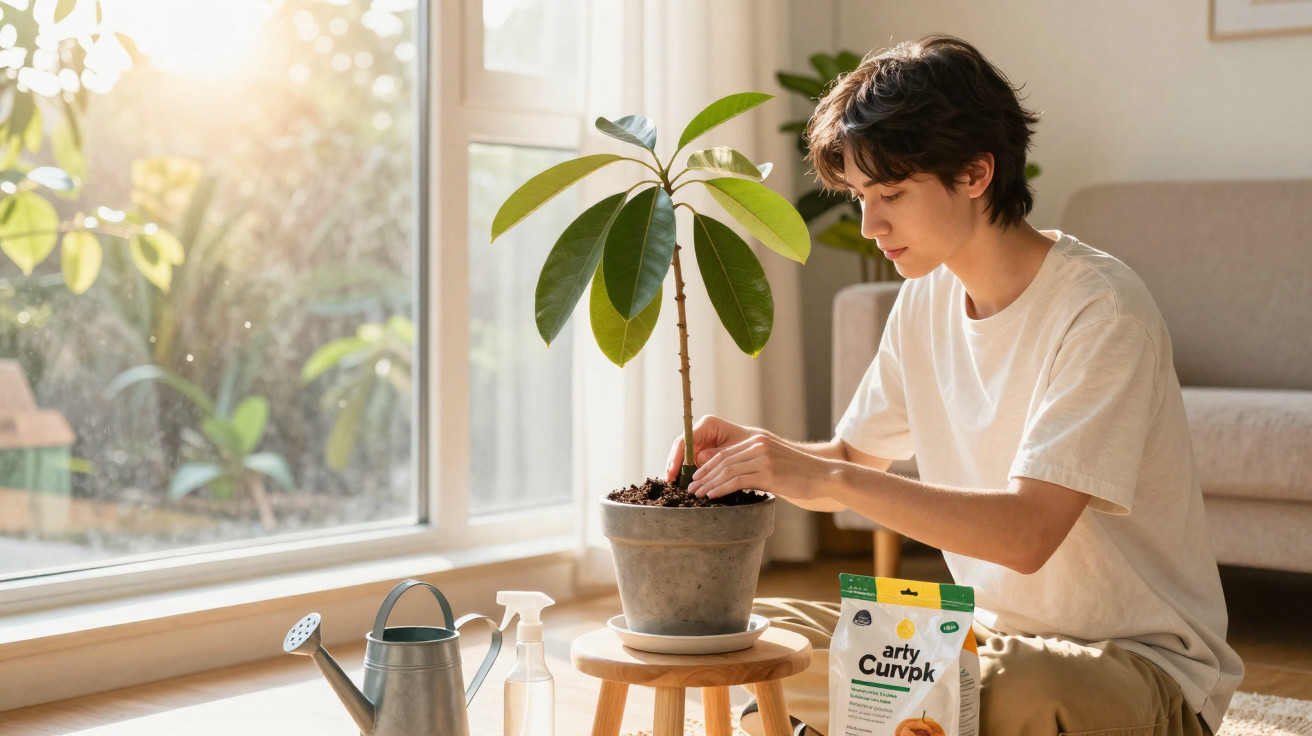
From a stone sprouting in a glass on the windowsill to a sturdy indoor tree is a long journey. If the conditions are wrong, an avocado tree can slowly decline without you noticing. With a few targeted tweaks to the pot, light, watering, nutrients and pruning, the plant can stay healthy for years - even if it never produces fruit.
Why your young avocado tree often dies in a flat
Avocado trees originate from warm, humid regions of Central and South America. In many homes, though, they end up by a north-facing window in dry air from central heating - sometimes waterlogged, sometimes left bone-dry for weeks. The result is predictable: leaves drop, growth stalls, or the plant quietly fades away.
"If you only germinate the stone but don’t provide the right conditions afterwards, you’ll usually lose your little avocado tree in its first winter."
The solution comes down to five simple but decisive basics: starting well with the stone, choosing the right pot, providing lots of light without heat stress, watering with control alongside gentle feeding, and a bit of pruning. These are also the points where most mistakes are made.
Mistake 1: Getting the stone and first pot wrong
Plenty of avocado projects fail right at the beginning. A damaged or shrivelled stone rarely has the energy to develop into a robust young plant. A better choice is a fresh stone from a truly ripe avocado - plump and unmarked.
How to make germination work
- Clean the stone thoroughly, removing all traces of fruit
- Germinate at room temperature, around 20–25 °C
- Water method: suspend the stone halfway in a glass of water using toothpicks
- Soil method: push it into a loose, slightly moist potting mix
- Cotton wool method: rest it on damp cotton wool, then transfer to soil later
Many people underestimate the waiting time of three to eight weeks. The plant is only ready for a pot once a strong root has formed at the bottom and a small shoot tip is visible at the top.
The first pot shapes what happens next
A pot that is too small or too compact can cause roots to rot or dry out. Aim for a pot about 20–25 cm in diameter, with drainage holes and a drainage layer of clay pebbles or coarse stones. On top, use a loose, nutrient-rich houseplant compost.
"The stone should remain half visible, with the roots spread wide through the compost - that way the young plant won’t topple over and won’t rot away."
After around four to five months, the young plant is usually sturdy enough to move into a slightly larger pot. If you skip this step, growth is often noticeably held back.
Mistake 2: A spot that’s too dark - or sun burning through glass
An avocado tree thrives in bright light, but not in scorching sun magnified through a window. A north-facing window is too dim; an unshaded south-facing window in midsummer can be too hot.
The best place in the living room
- Bright windows facing east or south-east are ideal
- A west-facing window can work well if the sun is lightly filtered (for example with a blind)
- Avoid icy draughts, such as right next to balcony doors
- Don’t place the pot directly on a hot radiator
The most suitable temperature range is about 18–25 °C. The plant can cope with short-term changes, but prolonged cold or dry heat will weaken it significantly.
Humidity: the factor most people overlook
Avocado trees are used to relatively humid climates. In dry, heated air, leaf edges often curl and turn brown. You can boost humidity with a few straightforward measures:
- Mist the leaves regularly with soft water
- Stand the pot on a tray filled with damp clay pebbles
- Group plants together to create a small, moister microclimate
"Brown leaf edges are often not a sign of disease, but simply a cry for help caused by dry air and heat stress."
Mistake 3: Watering by instinct instead of checking the compost
Many avocado trees die from well-meant care: too much water. The compost is kept constantly wet, the pot sits in a saucer with leftover water, roots are starved of oxygen and start to rot.
How to find the right watering routine
- Test with a finger: let the top 1–2 cm of compost dry slightly
- Then water thoroughly until water runs out of the bottom
- Tip away any water left in the saucer after a few minutes
- Water less in winter because the plant grows more slowly
Hard tap water with lots of limescale often leads to yellowing leaves (chlorosis). Better options include tap water left to stand, filtered water, or rainwater.
Common warning signs
| Symptom | Possible cause |
|---|---|
| Limp leaves, compost dusty-dry | Far too little water |
| Yellow leaves, compost constantly wet | Waterlogging; root rot risk |
| Brown, curled edges | Dry air, heat, sometimes too much fertiliser |
"If you watch the compost rather than the calendar, you prevent most watering mistakes with an avocado tree."
Mistake 4: No nutrients - or the wrong fertiliser
An avocado tree grows relatively quickly. In a pot, however, it has only limited access to nutrients. Without feeding, the plant can look pale, and new growth stays thin and weak.
Feeding properly from spring to autumn
From March to October, growth is strongest. During this period, a liquid feed for green houseplants or citrus plants works well, given roughly every two weeks with the watering. Don’t exceed the dosage on the bottle - it’s better to stay slightly below it.
In winter, a light feed every four to six weeks is enough - or none at all if the plant is kept cooler and is resting more. Too much fertiliser in the darker months often causes brown tips because the plant cannot fully use the nutrients.
Mistake 5: Never pruning, never repotting
Many young avocado trees turn into a long, thin stem with a few leaves at the top. Without pruning, the growth stays spindly and unstable. At the same time, roots become tightly bound over the years if the plant is never given a larger pot.
Pruning for a bushier avocado tree
As soon as the young avocado tree reaches about 15–20 cm tall, a first prune is worthwhile. Remove or pinch out the top just above two to three pairs of leaves. This encourages the plant to form side shoots.
You can repeat this “topping” on new shoots once they have grown longer. Over time, this creates denser, bushier growth instead of a bare pole.
Don’t forget to repot
Every two to three years, the tree benefits from a larger pot and fresh compost. When repotting, it helps to:
- Go up by just one pot size, rather than jumping to an oversized container
- Add a proper drainage layer again
- Remove some old, depleted compost without stripping all roots completely bare
"Regular repotting with fresh compost is like a restart for an avocado tree - more space, more air, new nutrients."
Typical problems and how to respond quickly
Most avocado trees don’t collapse overnight; they send signals for weeks.
- Yellow leaves: often too much water, too little light, or very hard water
- Brown tips: dry air or overfeeding
- Fine webbing under leaves: spider mites encouraged by dry heated air
- Sticky patches and white specks: scale insects or mealybugs
Spider mites and lice-like pests can often be tackled with a lukewarm shower in the bathroom, followed by wiping the leaves with a diluted soft-soap solution. Afterwards, it’s important to place the plant somewhere brighter and slightly more humid so the pests don’t immediately return.
Realistic expectations: why fruit indoors is rare
Social media is full of photos of avocado trees bearing fruit in living rooms. In reality, plants grown from stones in Northern European homes only fruit in exceptional cases. Even under ideal greenhouse conditions, it typically takes five to ten years before a tree flowers at all.
For most hobby growers, it’s more rewarding to treat the project as a decorative, home-grown houseplant. With good care, you can enjoy a striking green presence in your living room for years - and watch it develop, from the first stone in a water glass to a respectable little tree.
If you avoid the five mistakes described above, you’ll create the foundations for a long-lived plant: a thoughtful start in the right pot, a bright spot that doesn’t overheat, controlled watering with soft water, measured feeding, and a little shaping through pruning and repotting. That way, your young avocado tree won’t remain a short-lived kitchen experiment, but becomes a lasting, tropical-looking houseplant that visibly adds more green to everyday life.


Comments
No comments yet. Be the first to comment!
Leave a Comment