
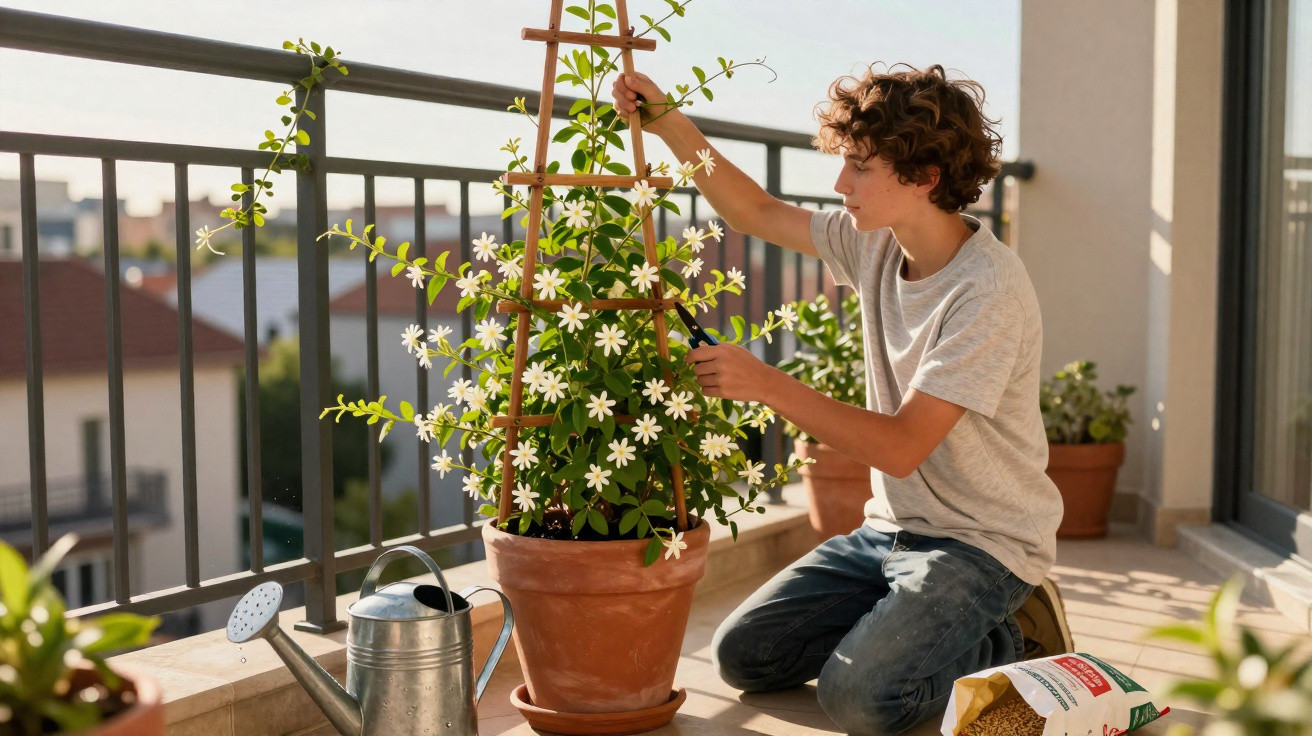
Creating a fragrant green corner on a balcony starts with choosing the right climbing plants. Growing poet’s jasmine in deep planters is an excellent way to cover wooden structures, delivering thick coverage with a highly aromatic result.
How do you plant poet’s jasmine in deep planters?
To get decorative planting right from the outset, choose a planter that is both very deep and sturdy. The container must comfortably accommodate the plant’s root system, providing the support needed for the vigorous growth of flowering stems that will dress your pergola.
Soil preparation is just as important as selecting the right planter for successful vertical growth. Use a mix that is rich in organic matter and has a very free-draining texture, helping to prevent excess water from building up around the roots.
Which is the most fragrant climber to grow in a pot?
Growing aromatic plants can transform any space, but one particular plant stands out for its intense scent and stunning balcony flowering… Read more
What is the ideal spot for the plant to thrive?
For abundant, ongoing flowering, poet’s jasmine needs to be placed where it receives direct sunlight. Full sun throughout the day strongly encourages healthy production of new pink buds.
In shaded positions or low light, the plant tends to put most of its energy into leaf growth instead. This seriously reduces the sweet fragrance in the area and dramatically lowers the number of white flowers that typically appear during winter.
Below, watch the video from the Mania de Flor YouTube channel to better understand the essential care for this climber:
What care is needed for watering and feeding?
Your watering routine should keep the compost moderately moist, especially when the plant is grown in a standalone container. It’s important to water thoroughly whenever the top layer feels dry, ensuring water runs freely out through the drainage holes in your planter.
To boost both appearance and the distinctive scent, feeding should be high in phosphorus in the periods leading up to bud opening. This nutrient supports strong plant development and ensures abundant flowers, while organic additions provide ongoing soil maintenance.
Nutrition and Growing Guide
Essential elements for poet’s jasmine
- Use an NPK fertiliser high in phosphorus before the flowering season.
- Apply organic feeding with worm castings for regular upkeep.
- Water deeply whenever the soil surface is dry.
How do you carry out training pruning correctly?
Because it grows extremely fast, training pruning is essential to guide the stems. As this species does not have natural tendrils for anchoring, its branches must be manually directed over a trellis or the pergola support.
This targeted cutting also helps open up the centre of the shrub by removing dry or damaged parts. With this extra care, air can circulate properly and sunlight reaches the inner structure, encouraging fresh shoots and flowers.
Follow these key practical steps to prune for cleanliness and structure on your climber:
- Use sharp, clean secateurs to make the cuts.
- Remove dry branches and old leaves right at the base of the plant.
- Loosen the soil around it to improve aeration in the free-draining mix.
How can you stop the climber from becoming invasive?
In open spaces or gardens without regular attention, poet’s jasmine can spread too far and smother other native plants. For that reason, keeping it confined in deep planters is an excellent way to limit root spread and keep growth fully under control.
Regular checks and tying in new stems are simple habits that prevent future problems outdoors. By sticking to this preventative home-gardening routine, you can enjoy a beautiful, safe structure and an absolutely spectacular perfume across the whole balcony.
Comments
No comments yet. Be the first to comment!
Leave a Comment