
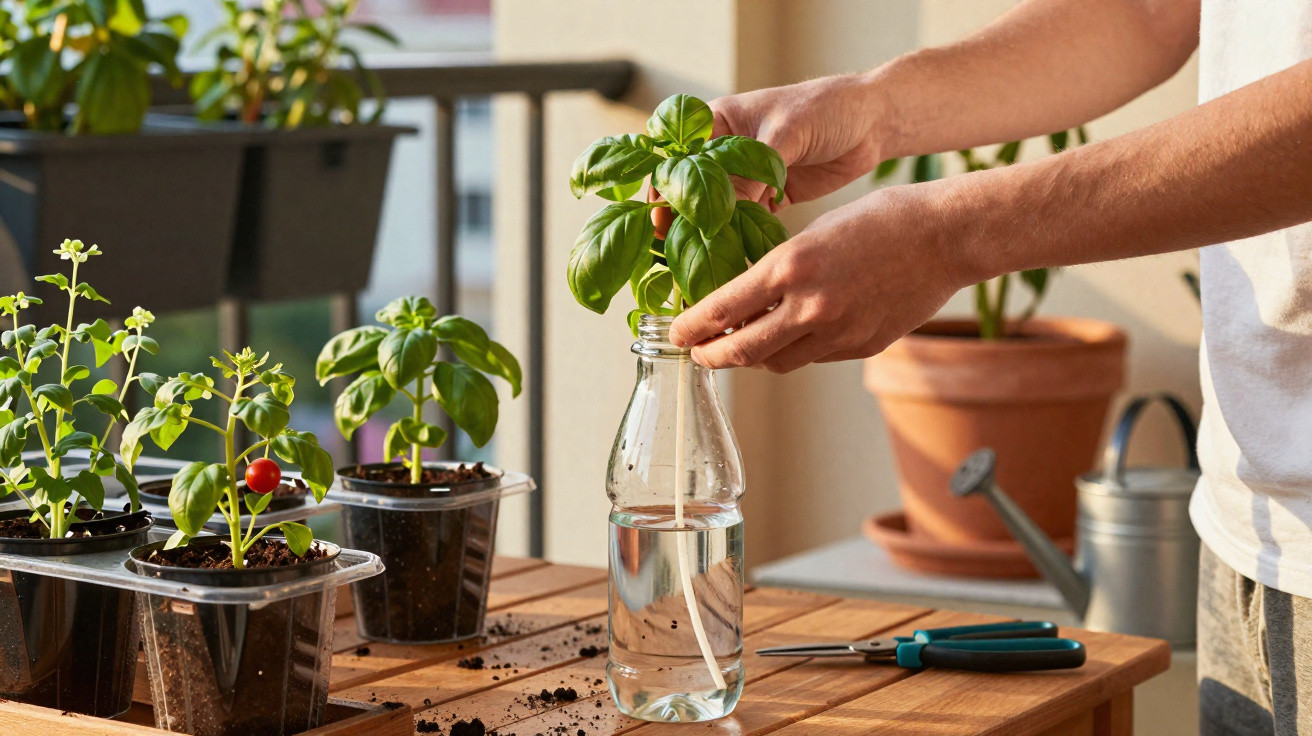
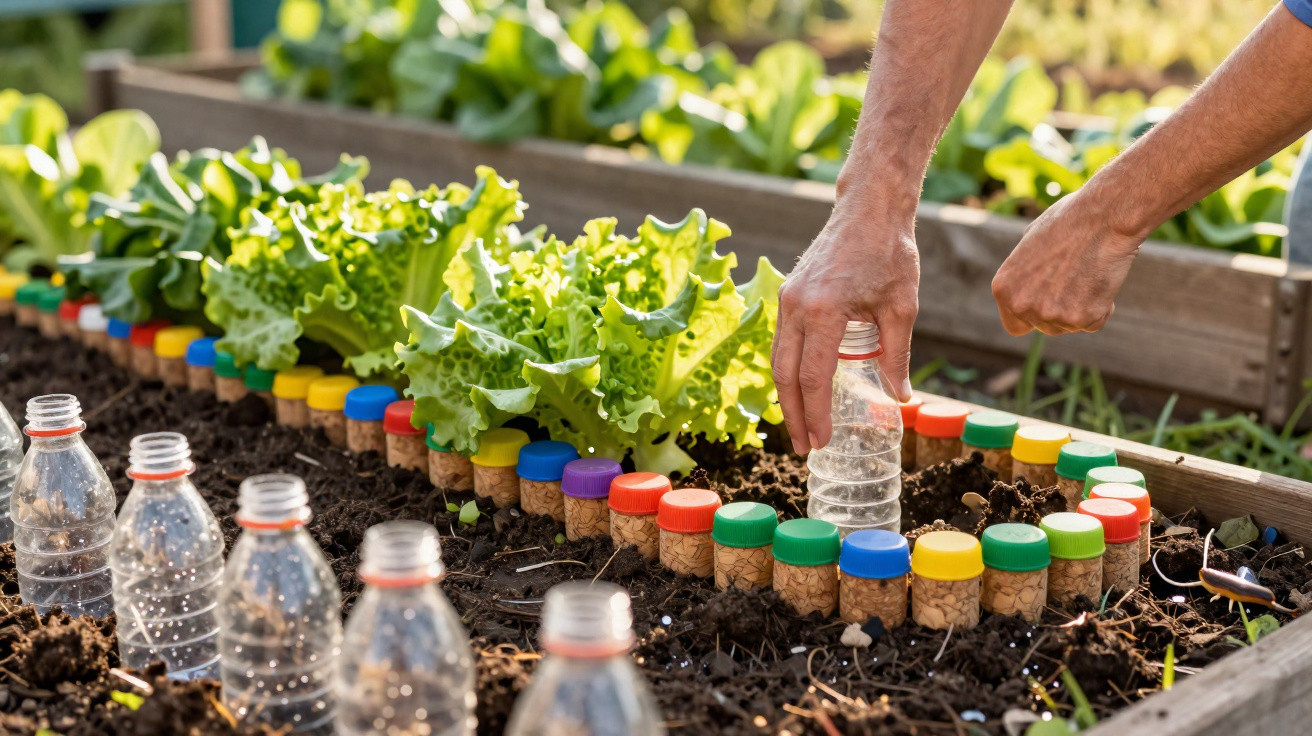
Turning a PET bottle into a self-watering pot is a straightforward way to cut down on forgotten watering and keep the soil damp for longer. The idea mirrors drip irrigation, putting water and regularity at the centre of everyday care.
How does this self-watering system work in a pot?
The concept is simple: water is stored in the lower section, while a cotton wick carries moisture up into the compost little by little. This creates a steadier supply, reduces the swings between drought and overwatering, and supports capillary action and balance inside the pot.
By keeping the reservoir separate from the soil, the bottle can deliver water with more control than a rushed watering can. It performs best when the plant benefits from continuous moisture without becoming waterlogged, combining independence and practicality in your routine.
Before you put it together, it helps to know what each part does:
- 🧴 PET bottle: becomes both the pot structure and the water reservoir.
- 🧵 Wick/cord: moves moisture from the base up into the soil through capillary action.
- 💧 Reservoir: holds water for slow release over several days.
- 🌱 Compost/substrate: absorbs moisture gradually, preventing sudden ups and downs.
- 🪴 Inverted fit: keeps the bottle neck pointing down inside the base.
How to assemble the PET bottle pot step by step
Cut the bottle in half, make a hole in the cap, and thread a cotton cord through it. Then slot the neck section upside down into the base, aligning the structure and the water path.
Next, pour water into the bottom half and add compost to the upper half, making sure the cord reaches both sections. Moisture then climbs steadily, and the plant stays supplied with more control and consistency between top-ups.
Which plants does this system usually suit best?
This kind of self-watering tends to work best for ornamental plants and potted vegetables that prefer stable moisture in the compost. In those cases, the slow release helps prevent sudden drying out, maintaining vigour and regularity as the plant grows.
🌿 Gradual moisture suits many plants
Not every species wants water at the same pace. Potted ornamentals and vegetables often do well when the compost stays moist without becoming waterlogged. By contrast, plants from dry climates need far more caution with continuous systems.
That’s why this model is most effective when a plant’s needs match a steady, moderate supply of water.
On the other hand, cacti and succulents are poor candidates for this approach, because they need the compost to dry out more between waterings. For them, constant moisture can hinder rather than help, affecting drainage and adaptation to the pot.
In practice, the choice is usually clearer like this:
- indoor ornamental plants often benefit from consistent moisture;
- vegetables in small pots tend to respond well to the system;
- cacti and succulents need drier conditions and less continuous supply;
- the species’ natural behaviour should guide how you use the reservoir.
How can you adapt the idea for larger pots?
When the pot is bigger, the fix is to enlarge the reservoir or add more than one wick. This spreads moisture more evenly instead of concentrating it in a single area, improving reach and distribution through the compost.
It also helps to use larger containers and thicker cords, while always testing the moisture rate before leaving the plant for several days. With roomy pots, a gradual adjustment usually brings more security and efficiency to the setup.
A few simple tweaks can make a big difference:
- increase the size of the bottle or the lower reservoir;
- use two cords when the soil area is very wide;
- check whether the whole surface is getting moisture evenly;
- adjust the model to suit the size of the plant and the pot.
How to use this trick day to day without getting maintenance wrong
The key is to watch the plant closely in the first few weeks, topping up the water without letting the reservoir sit empty or the system become waterlogged. This approach fits well with other self-watering pot ideas, as long as you keep adjusting and paying attention.
Ultimately, a PET bottle works well when the build matches the plant type and the container size. With the right wick, reservoir, and observation, the system provides more independence and practicality in day-to-day care.

Comments
No comments yet. Be the first to comment!
Leave a Comment