
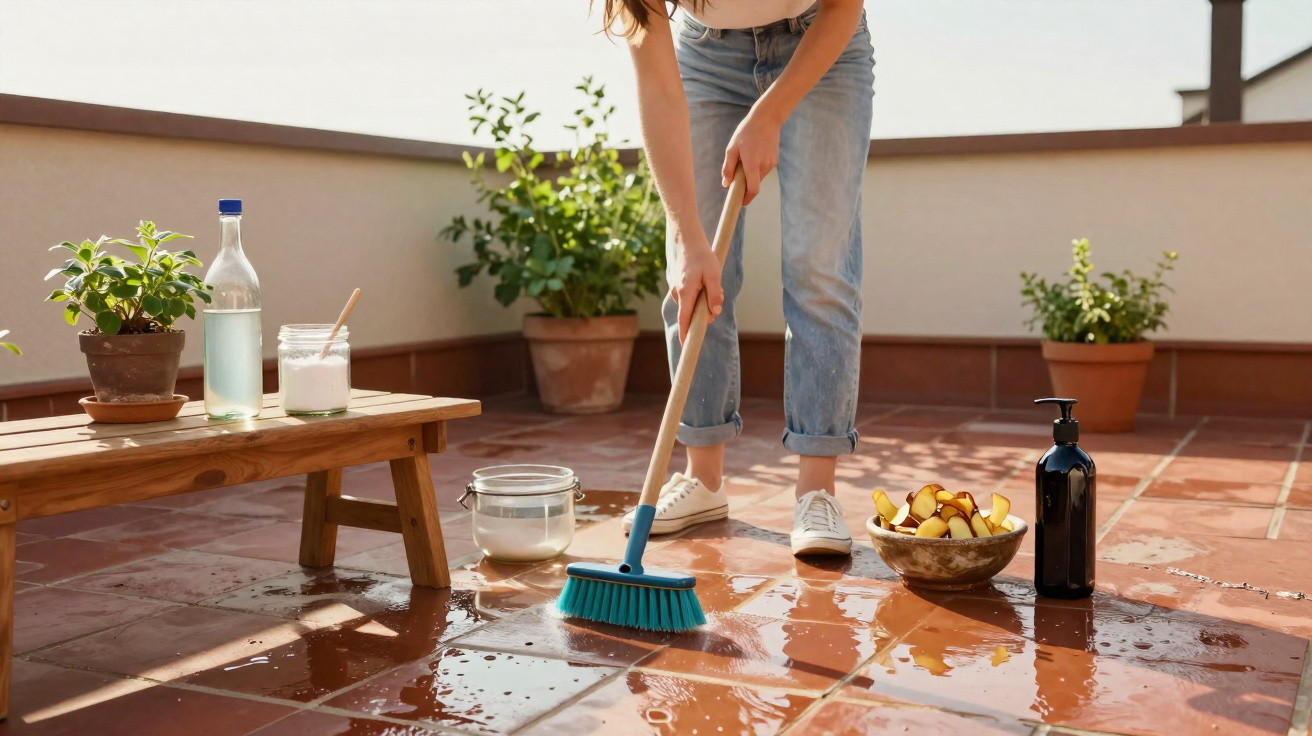
After the first warm days of the year, many people step out onto the terrace and get a nasty surprise: what still looked reasonably cared for in autumn now seems dull, stained and, in places, even slippery. The knee-jerk reaction is often to reach for aggressive chemical cleaners from the DIY shop. Yet the outdoor area can be cleaned with simple household remedies - gentler on surfaces, kinder to the environment and easier on the wallet.
Why harsh chemicals do more harm than good on a terrace
Chlorine-based cleaners may work quickly, but they come with serious downsides. Their highly corrosive action can attack joints, bleach surfaces, make materials brittle and ultimately end up in the soil or the drains. With natural stone, concrete paving slabs or delicate jointing compounds in particular, there is a real risk of permanent damage.
Anyone who scrubs with aggressive products every spring risks the terrace ageing far faster than it needs to.
There’s also a practical issue: moss and surface growth will return if the underlying causes - damp, shade and dirt - remain unchanged. A far better approach is to combine natural cleaning agents with regular upkeep.
Five natural helpers for a terrace that looks newly laid
1. White vinegar: the classic solution for green growth
White vinegar - often sold as vinegar cleaner or household vinegar in supermarkets - is one of the most effective household remedies for terrace cleaning. Its acidity lifts limescale, algae and green surface growth without attacking most materials.
- Mix vinegar and warm water in a 1:1 ratio
- Apply generously to dirty areas using a watering can or spray bottle
- Leave for 15–30 minutes (avoid doing this in direct, hot sunshine)
- Scrub firmly with a stiff brush or scrubbing broom
- Rinse thoroughly with clean water
Take care with marble, limestone and very sensitive natural stone: use a weaker mix and test it first in an inconspicuous spot.
2. Bicarbonate of soda / baking powder: gentle abrasion for stubborn marks
If moss and grime have worked deep into the pores of concrete or stone, vinegar alone often isn’t enough. Bicarbonate of soda (or ordinary baking powder) has a mild abrasive effect and helps lift deposits - without scratching the surface like a wire brush might.
How to use it:
- Lightly dampen the affected areas
- Sprinkle bicarbonate of soda or baking powder generously over the top
- Add a little water to form a paste-like layer
- Leave for 10–20 minutes
- Scrub in circular motions with a firm brush
- Rinse off with plenty of water
This method often produces surprisingly good results, especially on oil residue from barbecues or dark stains on concrete slabs.
3. Black soap: gentle cleaning with a protective film
Liquid black soap made from plant oils is a popular all-purpose cleaner in many homes. On a terrace it provides a thorough yet mild clean - ideal for regular maintenance and lightly soiled surfaces.
How to use it:
- Add a few tablespoons of black soap to a bucket of hot water
- Apply to the terrace with a scrubbing broom or mop
- Leave for a few minutes
- Brush again, then rinse with water or simply wipe over lightly
Its degreasing power removes dust, light moss residue and everyday dirt. At the same time, it leaves behind a thin protective film that makes slabs less prone to new soiling.
4. Potato cooking water: using leftovers to tackle moss
A little unusual, but surprisingly effective: the cooking water from potatoes. The starch it contains helps to loosen moss and green growth.
Used correctly, it works like this:
- Pour the still-hot, unsalted potato water over the affected areas straight after cooking
- Leave for 10–15 minutes
- Work over with a brush
- Rinse with water so no sticky residue remains
This approach is best for smaller terraces, or for targeting corners where moss tends to build up.
5. Washing soda: a power option for heavily soiled areas
Pure washing soda (sodium carbonate) is noticeably stronger than bicarbonate of soda and should be used with respect rather than fear. It breaks down stubborn deposits, old grease residue and dark layers of grime on robust surfaces such as concrete or rough stone slabs.
Only use washing soda where the surface is genuinely heavily soiled - and always wear gloves.
Application guidance:
- Dissolve about 1–2 tablespoons of washing soda in 1 litre of hot water
- Apply the solution and leave it to work for 10–20 minutes
- Keep it away from plants - washing soda is strongly alkaline
- Scrub thoroughly
- Rinse very well with water until no residue remains
This method is not recommended for polished natural stone, wood or delicate tiles. In those cases, milder options such as black soap are the better choice.
How to keep the terrace cleaner for longer after the spring clean
Understanding what causes moss and dirt
Moss thrives where it stays damp and shady, and where organic material builds up. Dense trees, sheltered edges of buildings or areas near gutters can create ideal conditions. Common contributors include:
- Leaves left to sit and rot
- Pollen, soil and dust collecting in joints
- Constant moisture from drip edges, leaking gutters or plant pots
If you keep these factors in mind, you can take targeted action: keep drainage points clear, check gutters, and position large planters so they don’t continually release water onto the same patch.
Routine beats a big scrub: small steps, big impact
The most effective tactic is not letting dirt sit for months in the first place. A simple mini schedule saves a lot of effort later.
| Interval | Task |
|---|---|
| Weekly | Sweep and remove leaves and loose soil |
| Monthly (in season) | Light wipe-over with warm water and a little black soap |
| Spring / autumn | Deep clean with vinegar or bicarbonate of soda, depending on the surface growth |
Stick with these straightforward habits and you’ll reach that point - where everything looks green and slippery - far less often.
Common mistakes when cleaning a terrace
A frequent problem is using a pressure washer incorrectly. Too much pressure, held too close to the surface and repeatedly aimed at the same spot can wash out joints and roughen the slab surface. The result: dirt clings even faster afterwards.
Other issues crop up when:
- Cleaning products are used at far too high a concentration
- Salts for ice and snow are spread too generously
- Harsh products run into borders and damage plants
Lower pressure, a greater distance, and - where possible - combining a brush with natural cleaning agents is the better route. It may take a few minutes longer, but it protects both the terrace and the environment.
Which household remedy suits which type of terrace
Not every surface tolerates every remedy equally well, so it pays to consider the material:
- Concrete and paving slabs: cope well with diluted vinegar, bicarbonate of soda and, in moderation, washing soda
- Ceramic and porcelain tiles: generally hard-wearing, but be mindful of the joints; only use vinegar diluted
- Natural stone (e.g. limestone, sandstone): be very cautious with acids; favour black soap and bicarbonate of soda
- Wooden decking: avoid aggressive alkalis or strong acids; use a mild soapy solution and apply a suitable care oil afterwards
If you’re unsure, test any method on a small, hidden area first. That way you can avoid discolouration or dull patches.
Extra tips for a safer, well-kept terrace
Families with children and older people in particular should take slippery deposits seriously. Damp mossy areas can quickly become a trip hazard. After cleaning, it’s worth checking steps, edges and transitions - dirt tends to collect there most.
Anti-slip mats are useful at busy access points or by the terrace door. On smooth tiles, a specialist anti-slip coating from a trade supplier may also be a sensible option.
If you enjoy barbecuing or spending long summer evenings on the terrace with friends, it helps to do a quick “mini clean” straight afterwards: wipe away grease splashes around the barbecue with a little black soap, give drink spills a quick brush, and remove food scraps. That way you won’t have to battle last year’s hardened stains in spring.
In the end, a few well-chosen household remedies, a bit of elbow grease and a dose of routine are enough to turn a terrace into a clean, safe and inviting favourite spot for spring - without aggressive chemicals.

Comments
No comments yet. Be the first to comment!
Leave a Comment