
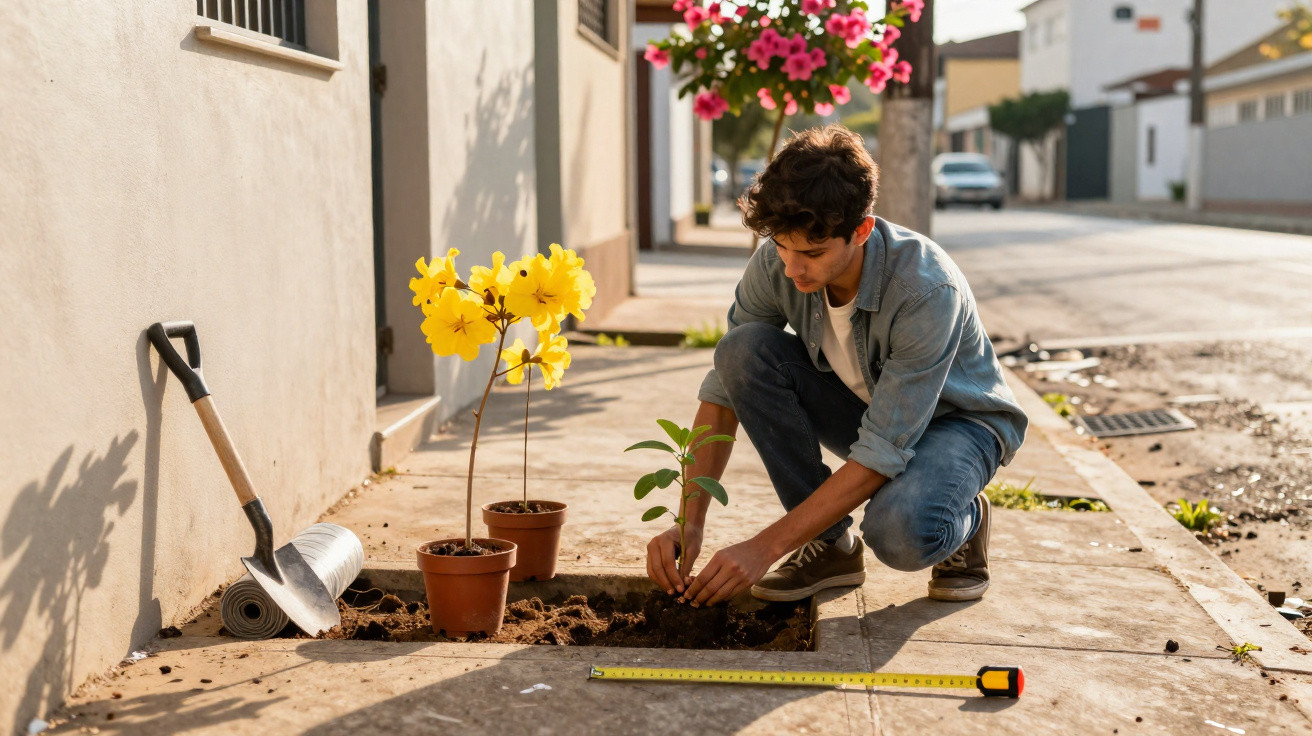
Choosing a tree for the pavement takes more thought than simply wanting shade or attractive blossom. The wrong species can heave up concrete slabs, interfere with pipework and turn street tree planting into a real problem for the street.
Why do some trees break up the pavement?
Trees with shallow, wide-spreading and vigorous root systems tend to chase water and space close to the soil surface. Over time, those roots can lift concrete paving, distort the footway and create a risk for pedestrians.
Urban tree planting covers trees in both public and private parts of a town or city, including streets, squares and parks. That is why the chosen species must suit the available space in terms of overall size, canopy shape, root behaviour and safety.
Before you plant, check the following:
- Roots: choose species with deeper roots that are less aggressive.
- Size: smaller trees are less likely to clash with overhead cables and building façades.
- Pavement: keep a clear route for pedestrians and wheelchair users.
- Overhead cables: tall or broad canopies need proper set-back and skilled pruning.
- Local council: check local rules before you dig the planting pit.
What are the 3 best trees for narrow pavements?
On streets where space is tight, the safest choices are trees with a controlled size, a manageable canopy and roots that are less likely to cause trouble. Surinam cherry, dwarf yellow ipe and crape myrtle stand out because they combine beauty, moderate shade and good urban adaptation.
Even so, no tree should go in without checking the pavement width, the electricity network, nearby pipework and municipal rules. A good outcome depends as much on the species as on the correct planting pit, early watering, training the canopy and carrying out formative pruning.
Why is Surinam cherry a good option?
Surinam cherry is well suited to small urban spaces because it stays moderately sized, forms a dense crown and usually has less aggressive roots when managed properly. As well as light shade, it produces fruit that attracts birds, making the pavement feel more lively and pleasant.
The right tree prevents cracked paving.
The choice should take roots, canopy and clear space into account. Compact species reduce conflict with concrete, boundary walls, gates and overhead cables. Even then, planting must follow each city’s local council requirements.
For Surinam cherry, keep at least 1.5 metres away from boundary walls, gates and any known pipe runs, and ensure there is a good permeable area around the trunk. On streets with low overhead cables, training and pruning helps prevent the canopy from pushing over cables and building façades.
It is a good match when the resident wants:
- A fruiting tree of small to medium size.
- Roots that are less aggressive than large, shallow-rooted species.
- Moderate shade for residential pavements.
- More birds and improved visual appeal along the street.
When should you choose dwarf yellow ipe or crape myrtle?
Dwarf yellow ipe is an ornamental choice for anyone who wants striking flowering without opting for a tree that becomes too large. Its reduced size works better on small pavements, provided there is room for the canopy, a permeable planting pit and a safe distance from overhead cables.
Crape myrtle, also widely used in urban tree planting, is valued for its controlled size, showy flowering and roots that tend to be less problematic. For that reason, it is often selected for narrow streets, house frontages and places where large trees would be excessive or risky.
In practical terms, consider these set-backs:
- Surinam cherry: at least 1.5 metres from walls, plus a clear pedestrian route on the pavement.
- Dwarf yellow ipe: about 2 metres from walls and pay extra attention to overhead cables.
- Crape myrtle: around 1.5 to 2 metres from buildings and driveway entrances.
- Lamp posts and corners: ask the local council before planting near these points.
How can you plant without causing future problems?
Just like choosing the perfect tree for small gardens that will not break up paving, these species perform best when planting respects space, drainage and ongoing maintenance. The right tree needs prepared soil and regular follow-up.
Before planting, confirm municipal rules, the minimum clear width for access, the presence of pipes and the height of the overhead network. With a suitable species, safe set-back and well-executed pruning, the pavement gains shade, beauty and comfort without becoming a source of damage to the concrete.
Comments
No comments yet. Be the first to comment!
Leave a Comment