
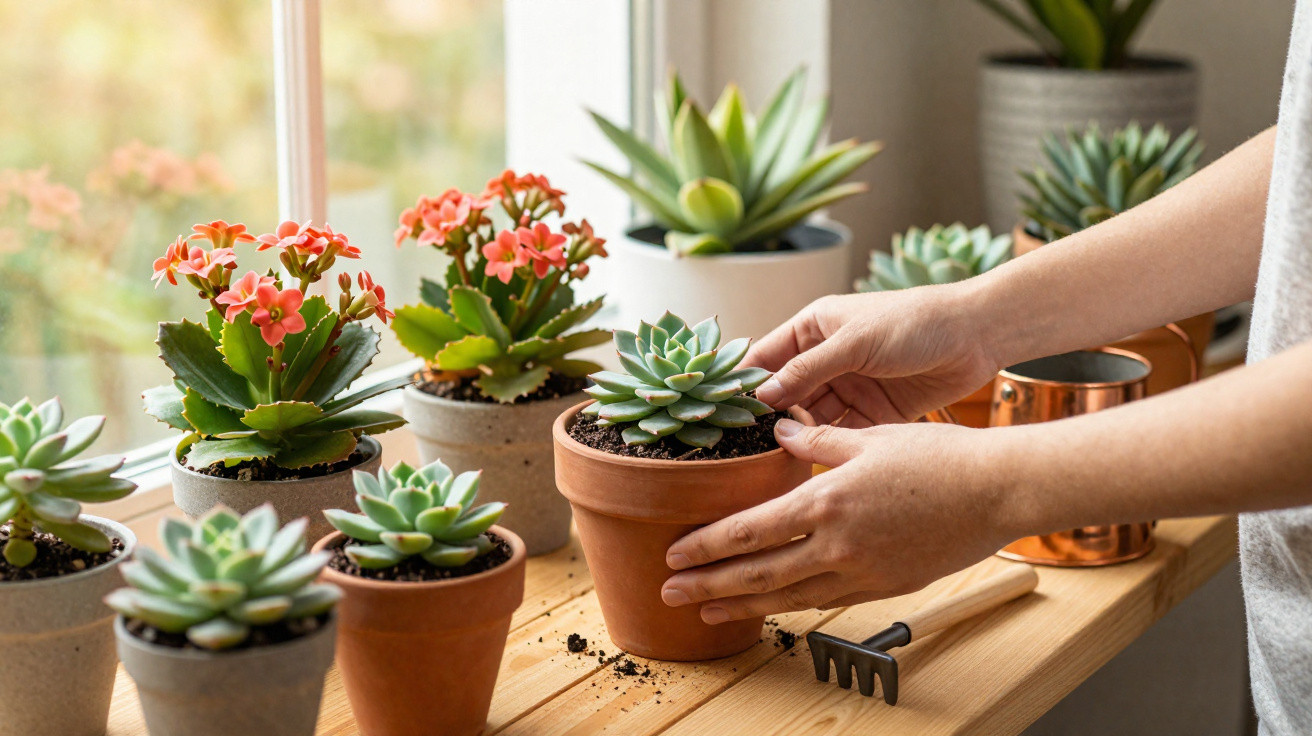
Among indoor plants, few draw the eye quite like succulents with flowers. They’re straightforward to look after, bring colour for much of the year, and suit everything from compact flats to homes with a garden-provided they get enough light, watering is kept in check, and the potting mix is properly prepared.
What are the main characteristics of succulents with flowers?
Succulents that flower for long periods store water in their leaves, stems, or roots, which helps them cope well with dry spells. With this internal reserve, they can still put energy into forming buds even where the air is low in humidity and temperatures shift slightly.
Light is another defining factor: most need a bright spot, with indirect sun or a few hours of direct sun each day. In too much shade, they often become leggy, lose their colour, and flower less, while also being more prone to fungal issues due to poor airflow.
What should the soil be like, and what is the basic care for flowering succulents?
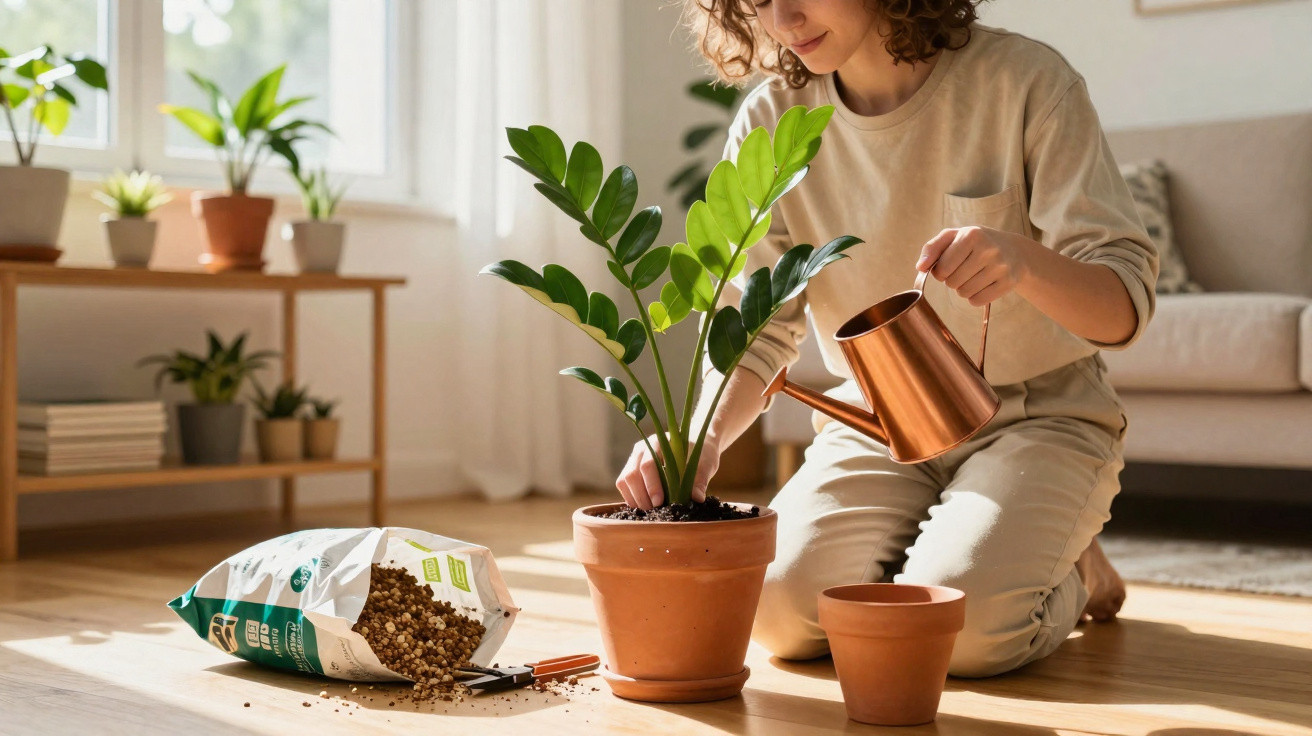
For these plants, the right growing medium must be free-draining, as waterlogged compost rots roots and can ruin developing flower buds. In pots, mixes commonly include coarse sand, perlite, grit, or horticultural charcoal to help water run through quickly and keep oxygen reaching the roots.
Alongside the compost, a few simple everyday habits help keep growth steady. Here are practical points to keep the routine easy to manage:
- Moderate watering: wait until the potting mix is almost completely dry before watering again.
- Effective drainage: choose pots with drainage holes and add a layer of gravel or broken pot shards at the bottom.
- Light feeding: use a balanced fertiliser a few times a year only, always at a low dose.
- An airy position: favour places with good air movement and avoid sudden temperature swings.
Which succulents flower for longer at home?
Some species stand out for long-lasting blooms and are easy to find in garden centres, supermarkets, and local markets. They work well in smaller collections, letting you mix leaf shapes, colours, and flowering times across the year.
Kalanchoe
Kalanchoe, also known as “fortune flower”, is one of the most popular succulents for indoor spaces. It produces clustered blooms in red, yellow, orange, pink, or white that can last for weeks, and it prefers bright conditions, infrequent watering, and good ventilation.Echeveria
Recognised for its neat, symmetrical rosettes, echeveria sends up flower stalks above the plant, carrying pinkish, orange, or yellow blooms. It does best with filtered sun, shallow pots, and allowing the compost to dry well between waterings to keep leaves firm and colours strong.Jade plant
The jade plant has thick, glossy leaves and can be trained as a small potted shrub. With a few hours of sun daily and more controlled watering, it often produces white or pale pink flowers in late winter and early spring.Aptenia
Aptenia, sometimes called “dew” or “heart”, grows as a creeping plant that spills over borders and works well in hanging containers. Its vivid fuchsia or violet flowers appear frequently in spring and summer, particularly in sunny outdoor areas.Easter cactus
The Easter cactus, although a cactus, is widely sought after among flowering succulents. It has flattened segments that cascade in hanging pots, with red, pink, white, or orange blooms appearing around Easter after a spell of shorter days and dark nights.
How can you keep flowering succulents blooming all year with simple care?
To extend flowering in these five species, it helps to combine strong light, restrained watering, and small, periodic feeds. Spots near windows, enclosed balconies, or outdoor areas sheltered from rain are often enough to keep a steady rhythm of new growth and blooms.
By watching how each plant responds-leaf colour, firmness, growth pace, and the appearance of buds-it becomes easier to fine-tune your routine and avoid overdoing it. That way, building a collection with kalanchoe, echeveria, jade plant, aptenia, and Easter cactus is a practical route to frequent colour in living rooms, balconies, and gardens, with minimal effort and plenty of decorative impact.
Comments
No comments yet. Be the first to comment!
Leave a Comment