
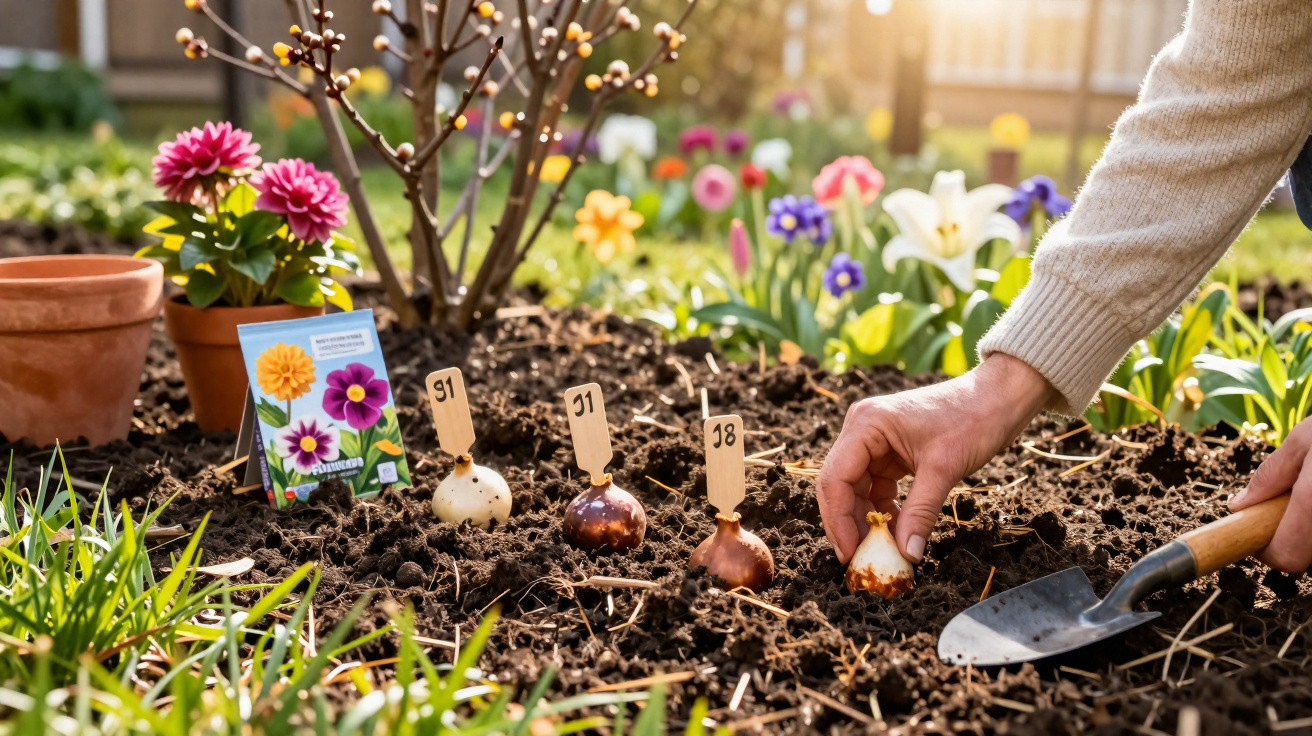
With four carefully chosen bulb and tuber plants, you can avoid that dull gap in the border.
Many amateur gardeners know the feeling: the first spring flowers have finished, roses are still only showing leaf buds, and colourful summer perennials are nowhere near ready. If you do not plan ahead in March, it is common to be left looking at largely empty beds right through to July. A straightforward planting plan built around four selected bulbs and tubers can close this lull surprisingly easily - carrying you from early summer right into autumn.
Why March is the key window for summer-flowering bulbs and tubers
Across much of German-speaking Europe, March is usually the point where winter begins to loosen its grip and spring starts to take over. The hardest frosts ease, the soil thaws, and ground temperatures slowly rise. That is exactly the moment seasoned gardeners use to get summer-flowering plants into position.
"If you only plant summer-flowering plants at the end of April or in May, you often push flowering back into midsummer - and waste valuable weeks of colour."
A lot of tubers and bulbs need several weeks to root, put on strong growth and form flower buds. If they go in too late, they fall behind the season. From the outside, it can look as if the garden is simply not “getting going”.
The simple approach is to start four varieties in March that complement each other both in timing and appearance. The result is an almost continuous run of flowers from early summer through to autumn - even in small gardens or on a balcony.
The four key plants for an uninterrupted flowering summer
In practical terms, these four choices consistently prove their worth:
- Dahlias - bold, long-flowering performers for borders and containers
- Begonias - dependable colour for shade and partial shade
- Lilies - elegant, structural plants with intense fragrance
- Peonies - a long-term investment in abundant blooms for the years ahead
Each plant plays a different role in the overall garden picture. Together, they plug both time gaps and empty spaces, so that once the spring display ends there is no sudden “dead air”.
Dahlias: a burst of colour from June to October
Dahlias are among the most popular summer flowers for good reason. Their range of shapes and colours is enormous - from small pompons and simple open blooms to dramatic cactus forms.
A practical March routine:
- Bring tubers out of winter storage or buy fresh ones.
- Pot them up in loose compost, with the shoots or growing points facing upwards.
- Keep them bright, frost-free and slightly moist (for example in an unheated conservatory or by a cellar window).
- Move them into the border or large containers once the risk of frost has passed (often around mid-May).
If you start them early in March, you can expect the first flowers from June depending on your area. Tubers planted straight outside without pre-sprouting usually take noticeably longer and often only hit their stride in high summer.
Begonias: the answer for shady corners and north-facing balconies
Shady spots are often seen as problem areas. This is exactly where tuberous begonias excel. They cope with limited direct sun and keep flowering as long as they are watered consistently.
How to plant them in March:
- Lay the tubers shallowly in trays or pots, with the slightly domed side facing up.
- Cover lightly with loose compost; the top should remain just visible.
- Position: bright and frost-free, but not in harsh midday sun behind glass.
- Keep the compost evenly moist, while avoiding waterlogging.
Begonias are ideal for window boxes, hanging baskets and the front edge of shaded borders. Because they can flower almost continuously from early summer to autumn, they reliably smooth out the colour pauses other plants often create.
Lilies: tall flower stems as focal points and gap fillers
In a border, lilies read like living exclamation marks. Their upright stems and often strongly scented flowers rise above lower perennials and neatly occupy empty spaces.
For March planting, follow these basics:
| Criterion | Recommendation |
|---|---|
| Planting depth | 2–3 times as deep as the bulb is tall |
| Soil | deep, loose, well-drained; no waterlogging |
| Position | sun to partial shade - “head in the sun, feet in the shade” |
| Flowering period | depending on the variety, from May to late summer |
By mixing different types of lily, you can extend the flowering season over many weeks. Early varieties bridge the gap after spring bulbs, while later ones carry the display on until autumn asters take over.
Peonies: March as the starting point for years of blooms
Peonies do not always solve the immediate flowering gap in their first year. They often take two to three years to reach full strength. Even so, planting in March is one of the most worthwhile long-term moves you can make in an ornamental garden.
"A well-established peony can stay in the same spot for decades and deliver a small firework display of large, often fragrant blooms every spring."
Key points for planting:
- Do not plant too deep - the “eyes” (shoot buds) should sit only a few centimetres below the soil surface.
- Choose a site with free-draining, nutrient-rich soil; avoid waterlogging.
- Peonies prefer stability - they resent being moved later on.
Planting one or more peonies now will not instantly fill this season’s gap, but it does ensure that the same gap becomes smaller year by year.
How this planting plan closes the garden’s “colourless” phase
What matters is combining the four plants intelligently. In terms of timing, they hand over like runners in a relay:
- Spring bulbs such as tulips and daffodils provide colour through April/May.
- Early lilies and pre-started dahlias take over in June.
- Begonias keep balconies and border edges blooming from early summer well into autumn.
- Later dahlias and lilies keep going until the first frosts.
This mix cuts down the typical “quiet weeks” when very little seems to happen in the garden. Even compact spaces benefit: a single pot of dahlias, a window box of begonias and a few lily bulbs in a perennial bed can noticeably lift the overall look.
Practical tips: location, soil and reducing risk
To make the plan work, everyday details matter more than expensive specialist varieties. Three things count most: frost protection, drainage and watering habits.
- Keep an eye on frost: March can still bring overnight cold snaps. Pre-sprouted tubers should stay protected until the danger has passed; lily bulbs usually tolerate light cold once in the ground.
- Prevent waterlogging: Dahlia and begonia tubers in particular rot easily if they sit in wet compost for long periods. Drainage holes and a drainage layer in pots make a real difference.
- Water regularly, but moderately: Newly planted bulbs must not dry out, but they do not need constant soaking. A simple finger test in the soil helps avoid mistakes.
If you are unsure, start with a handful of plants and build up over the next few seasons. Many gardeners create their flowering relay step by step, rather than trying to force everything in a single year.
Why the effort in March pays off over time
March planting can feel underwhelming at first: outdoors it is still cool, and the season is only just gathering pace. That is precisely why it works. Jobs done now repay you many times over - visually and financially.
Bulbs and tubers are often cheaper than buying plants already in flower during summer. Many types, including lilies and peonies, will sit in the ground for years with minimal attention. Even dahlia tubers can be lifted, stored over winter and restarted again the following March.
If you use this head start consistently, early summer looks very different: instead of pale, empty borders after spring, a new wave of flowers rolls straight in. That is why more and more amateur gardeners opt for a modest push in March - so June, July and August are not spent staring at bare beds.




Comments
No comments yet. Be the first to comment!
Leave a Comment