
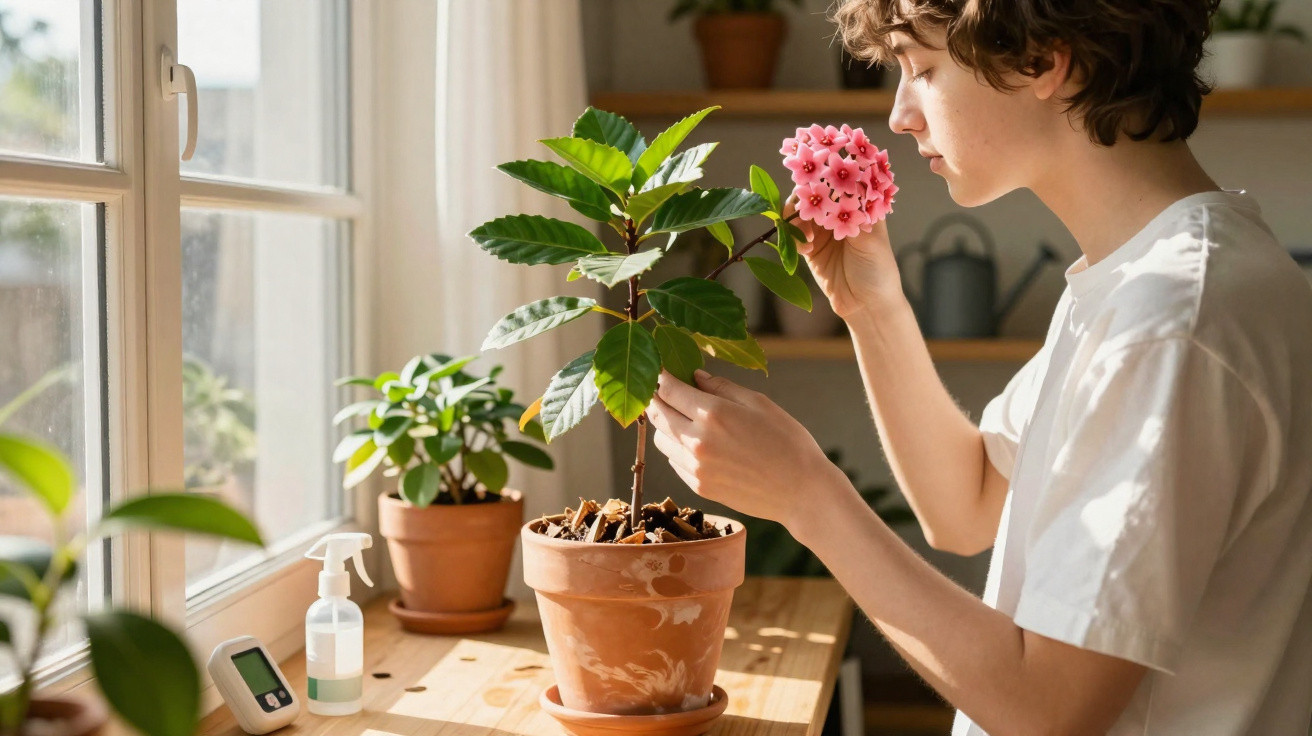
The wax plant is a charming choice for growing in compact indoor spaces, and it often brings back fond memories of grandparents’ old gardens. This climber stands out for the remarkable delicacy of its firm leaves and for its beautiful clusters of fragrant flowers.
How does Hoya carnosa behave in the wild?
Native to tropical parts of Asia and Oceania, the species scientifically known as Hoya carnosa grows as an epiphyte. In other words, it develops supported on tree trunks or on rocks, sending out aerial roots to anchor itself.
Understanding this natural habit is key to getting home cultivation right for this distinctive plant. In its native habitat, once it has secured a strong hold, it drapes elegantly from forest branches, forming an impressive green cascade filled with star-shaped blooms.
Here are five outstanding varieties of this plant that are especially valued for the unique beauty of their foliage:
- Hoya obovata: Rounded leaves with lovely pale speckles scattered across the surface.
- Hoya Red Baton: Noted for producing very ornamental flowers in darker shades.
- Hoya Bella: Forms a dense, trailing framework that can resemble a fern.
- Hoya nummularioides: Shows small clusters of flowers that release a strong, wonderful fragrance.
- Hoya kerrii: Became world-famous thanks to its distinctive heart-shaped leaves.
How do you choose the ideal pot for growing?
Unlike many other houseplants, wax plants prefer to grow in snug containers. They can produce lush foliage even with limited space around the roots, because they are used to narrow crevices in nature.
For that reason, avoid going overboard with pot size when you move your young plant into its long-term container. Pots that are too large hold on to too much moisture and can encourage root rot, which can seriously undermine the health of this beautiful trailing plant.
Below is a YouTube video from the channel Spagnhol Plantas that explores the points covered in this section in more depth:
What is the secret to the ideal substrate?
Because they are epiphytes, the roots need excellent airflow and efficient drainage after watering. Never use pure potting soil on its own, as it tends to compact and retain excess liquid, which is highly harmful to the survival of this species.
Golden tip
Aeration is everything
To recreate the forest environment, make a mix that is loose and chunky. Coarser, rustic materials help prevent compaction and keep the roots healthy.
You can repurpose simple materials or choose high-quality ready-made succulent mixes with similar properties to make day-to-day care easier.
The key is to prepare a non-compacting substrate by blending high-quality, rustic components in equal parts. This combination lets water run through freely after each watering, keeping moisture at the right level without waterlogging the plant’s sensitive root system.
These are the best components to use when putting together this airy growing mix:
- Fine-grade pine bark to ensure good aeration.
- Crushed charcoal to support overall soil health.
- Coconut chips to retain the ideal moisture level in a balanced way.
What are the light and watering needs?
To grow well and look its best, this species needs a spot with plenty of bright, indirect light. Direct exposure to the strongest sun should be avoided, as it can scorch the plant and leave the leaves looking yellowed and faded.
Watering should be moderate, always waiting until the growing medium shows the first signs of drying. Overwatering reduces root oxygenation, so keeping a steady balance is essential for strong growth on your balcony.
Here are a few essential points about placement and moisture to keep the foliage looking its best:
- Choose a bright position in partial shade.
- Allow only gentle sun early in the morning or late in the afternoon.
- Check with your fingers that the substrate has dried before watering again.
How do you encourage heavy, fragrant flowering?
The main secret to getting this plant to flower abundantly is the regular use of foliar fertilisers designed specifically to trigger blooming. This type of feed is easily absorbed by both the leaves and any exposed roots, supplying all the essential nutrients required by the plant’s metabolism.
Simply dilute a small amount of the product in water and mist it evenly during the coolest parts of the day. With this consistent routine, your pot will receive the right stimulus to produce starry flower clusters that leave the whole space looking highly decorative and wonderfully fragrant.
Read also: The most fragrant flower to grow on the balcony: how to care for it and make it bloom
Comments
No comments yet. Be the first to comment!
Leave a Comment