
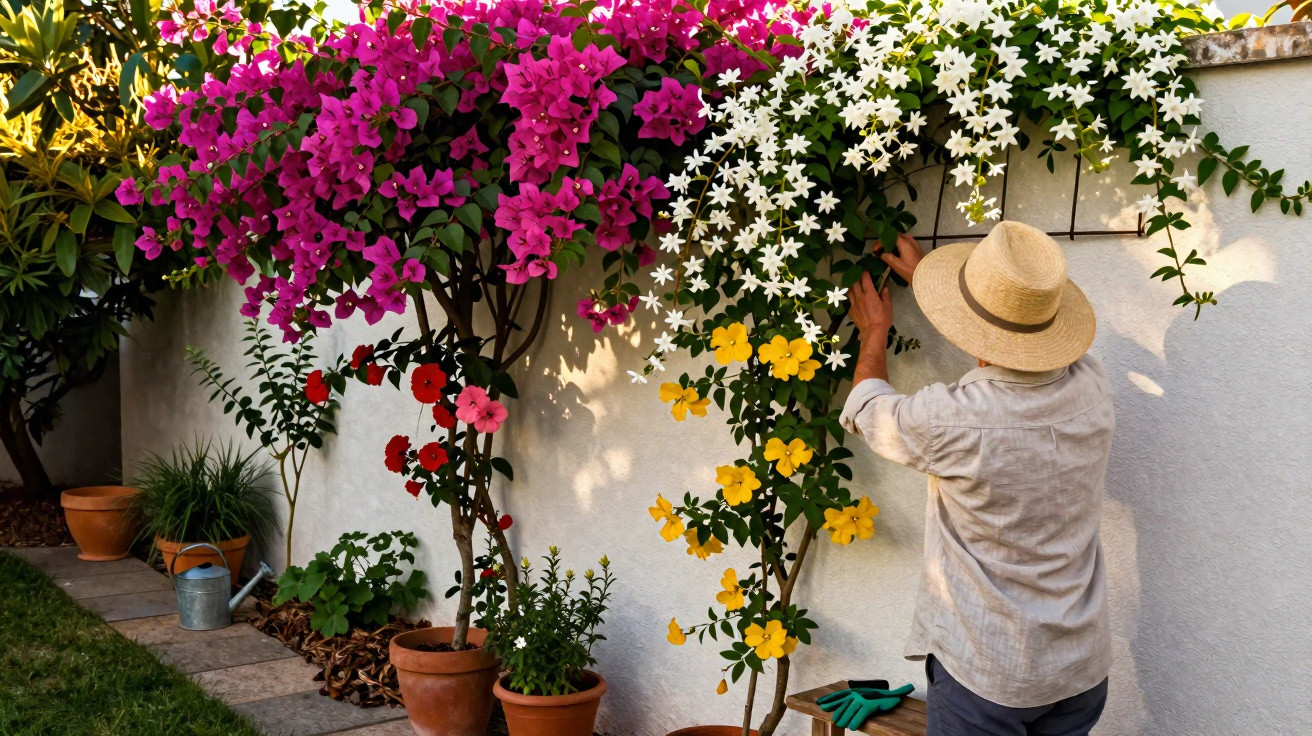
Turning plain boundary walls into green, flower-filled screens has become an increasingly popular approach in the gardens of houses and flats. Flowering climbers provide coverage, colour and a cooler feel while using very little ground space. With the right choice, they can keep a wall in bloom for many months, and may even help take the edge off the heat around nearby areas.
Which flowering climbers keep a wall garden in flower for longer?
Among the flowering climbers commonly trained over walls, a few stand out for extended blooming: bougainvillea, climbing frangipani jasmine, dipladenia (or mandevilla), bleeding-heart vine and star jasmine. In the right spot, they can create a thick layer of foliage and flowers that lifts the look of frontages, balconies and back gardens.
Before planting, it pays to check your local climate, how much sun the wall receives, and what support you can provide-such as railings, fencing or tensioned wires. All of these climbers do best in free-draining soil, with regular feeding and early training using ties in the first few years, which helps them cover evenly and produce more flowering shoots.
How does bougainvillea deliver long-lasting colour on walls?
Bougainvillea is one of the most widely used long-flowering climbers on walls, recognised for its vivid bracts that look like petals. In warmer areas it can bloom for almost the whole year, with the strongest display in spring and summer, provided it gets around 4 to 6 hours of direct sun each day.
It prefers fertile soil that never sits waterlogged, and once established it copes better with watering that’s slightly less frequent. Light pruning soon after the main flowering flushes encourages fresh growth and more blooms. Training the main branches horizontally can also prompt side shoots, helping the wall look fuller and more colourful.
What do dipladenia, bleeding-heart vine and star jasmine need on a wall?
Dipladenia, also known as mandevilla, produces trumpet-shaped flowers-most often white, pink or red-and in mild or warm climates it can flower almost year-round. It suits full sun or bright, light shade, likes soil kept gently moist, and responds well to fertiliser higher in phosphorus and potassium. A tidy-up prune that removes weak stems helps keep the plant strong.
Bleeding-heart vine is valued for its hanging clusters of flowers, which look particularly effective on tall walls and well-lit balconies, with filtered sun or a few hours of direct sunlight. Star jasmine, meanwhile, offers dense evergreen growth plus fragrant white or cream flowers. These appear heavily in spring and can return at other times, as long as the plant has good light, well-fed soil, and a post-flowering prune to refresh the growth.
- Dipladenia: well suited to pergolas and walls in warmer regions, with almost continuous flowering.
- Bleeding-heart vine: best for tall structures where the drooping clusters can be shown off.
- Star jasmine: a strong choice if you want fragrance and dense coverage in a short time.
Watch a video on the Cultivando YouTube channel that explains how to care for Dipladenia:
How to train wall climbers for dense, long-lasting coverage
When planting, place young plants about 30 to 50 centimetres away from the wall, so the roots have room and air can circulate. After that, adding supports such as wire runs, trellis panels or ropes makes it easier to guide new growth and stops the plant from concentrating only at the top.
One useful approach is to mix species with different flowering periods on the same wall, creating a living display that shifts through the seasons. With planned light levels, controlled watering, regular feeding and well-timed pruning, these five climbers can turn simple structures into living, flower-covered walls that stay fresh-looking for many months in a row.
Comments
No comments yet. Be the first to comment!
Leave a Comment