
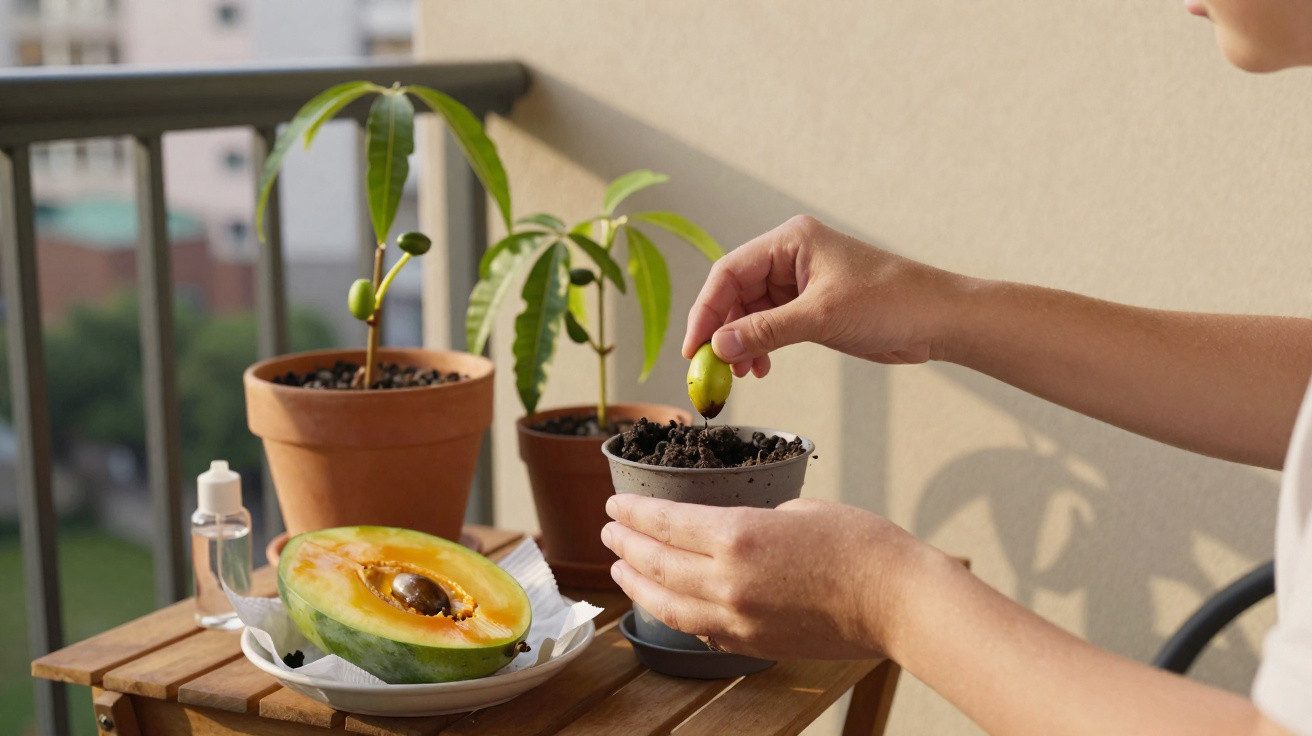
Planting a mango stone at home has become a familiar pastime for people who want to bring fruit growing into everyday life. As well as being straightforward to do, it lets you follow the whole journey from germination through to a strong young plant, noticing the plant’s pace, the time it takes to develop, and the right moment to transplant it to its final position.
How do you start planting a mango stone at home?
To plant a mango stone with a good germination rate, begin by picking a ripe, sweet, healthy fruit with no signs of rot. Once you’ve eaten the flesh, wash the stone thoroughly under running water to remove any residue and lower the risk of fungus during the early stages.
Next, carefully remove the “hard shell” that surrounds the inner seed, using a knife and taking care not to damage what’s inside. Within the fibrous casing sits an elongated, whitish seed, which can be briefly disinfected in a mild solution of water with a few drops of household bleach or a fungicide-then rinsed well before you move on to germination.
How do you germinate a mango stone with and without kitchen roll?
After cleaning, you can either pre-germinate the seed in damp kitchen roll or place it straight into the potting mix. For the kitchen-roll method, wrap the seed in moist sheets, put it in a partially closed plastic bag, and keep it somewhere bright but out of direct sun until roots appear, usually in about 7 to 20 days.
If you prefer to plant it directly in a pot, choose a spot that is bright but sheltered from strong sun for the first few weeks. As the shoot appears and gains strength, increase light exposure little by little, avoiding sudden changes that could cause wilting or scorch on the young leaves.
What is the ideal potting mix and the step-by-step for planting the stone?
If you want to plant the mango stone straight into a pot, you’ll need a well-drained potting mix that holds moisture without letting water sit in the container. A light, balanced blend supports root development and helps reduce the risk of the seed and early roots rotting.
A simple, effective mix for a pot is:
- 1 part sifted topsoil;
- 1 part washed builders’ sand or coarse sand;
- 1 part well-rotted organic compost or worm castings.
Use a pot with drainage holes and, if possible, add a layer of small stones at the base. Lay the seed on its side a few centimetres down, then cover it with around 2 to 3 cm of potting mix. Water lightly and regularly, keeping the soil consistently moist-but never waterlogged-to encourage a strong, healthy shoot.
How long does it take for a mango tree to grow and produce fruit?
How quickly a mango stone develops into a productive tree depends on the climate, the variety, the soil, and ongoing care. With favourable conditions, the seedling may reach 20–40 cm within a few months and, once it has rooted well, it can be moved into the garden or into a larger pot positioned where it gets plenty of light.
In general, a mango tree grown from seed takes about 4 to 8 years to bear fruit-faster in warmer regions and slower in colder ones. It’s common for the plant not to replicate the original fruit’s characteristics exactly due to natural cross-pollination, which makes growing one an interesting way to observe differences in flavour, size, and fruiting season over the years.

Comments
No comments yet. Be the first to comment!
Leave a Comment