
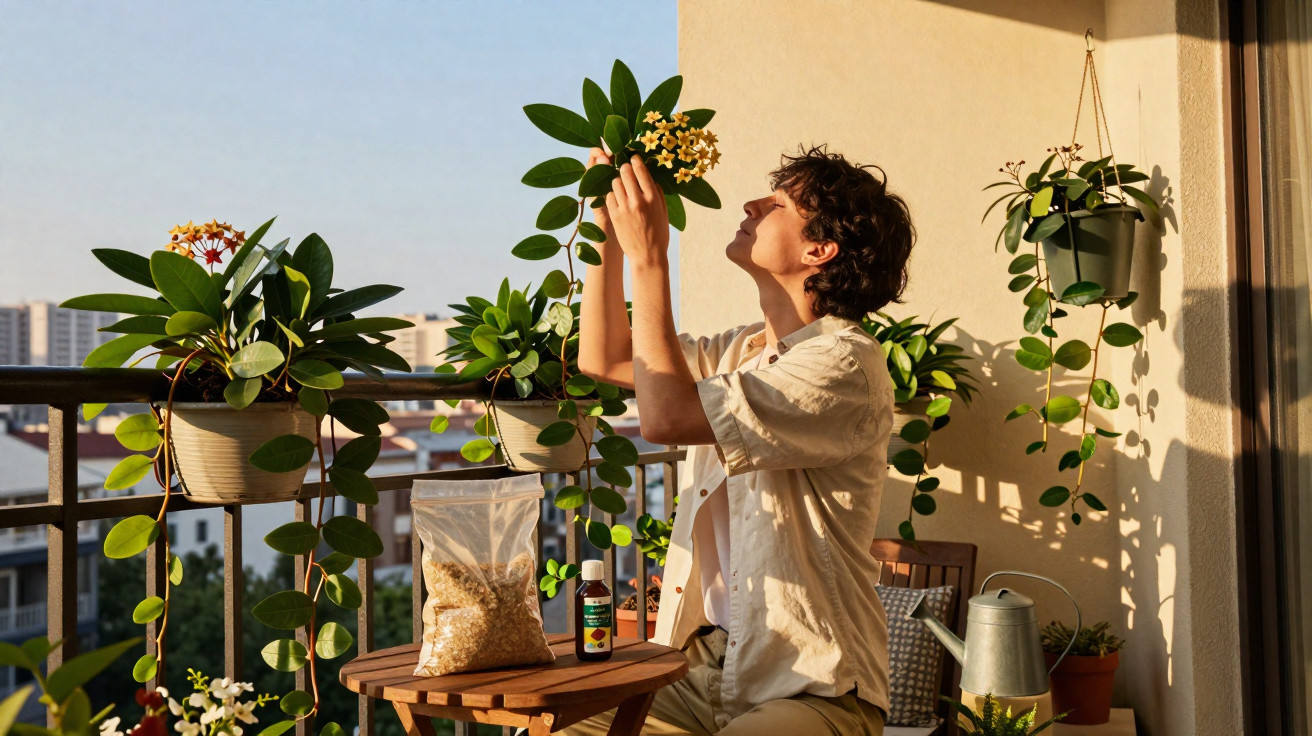
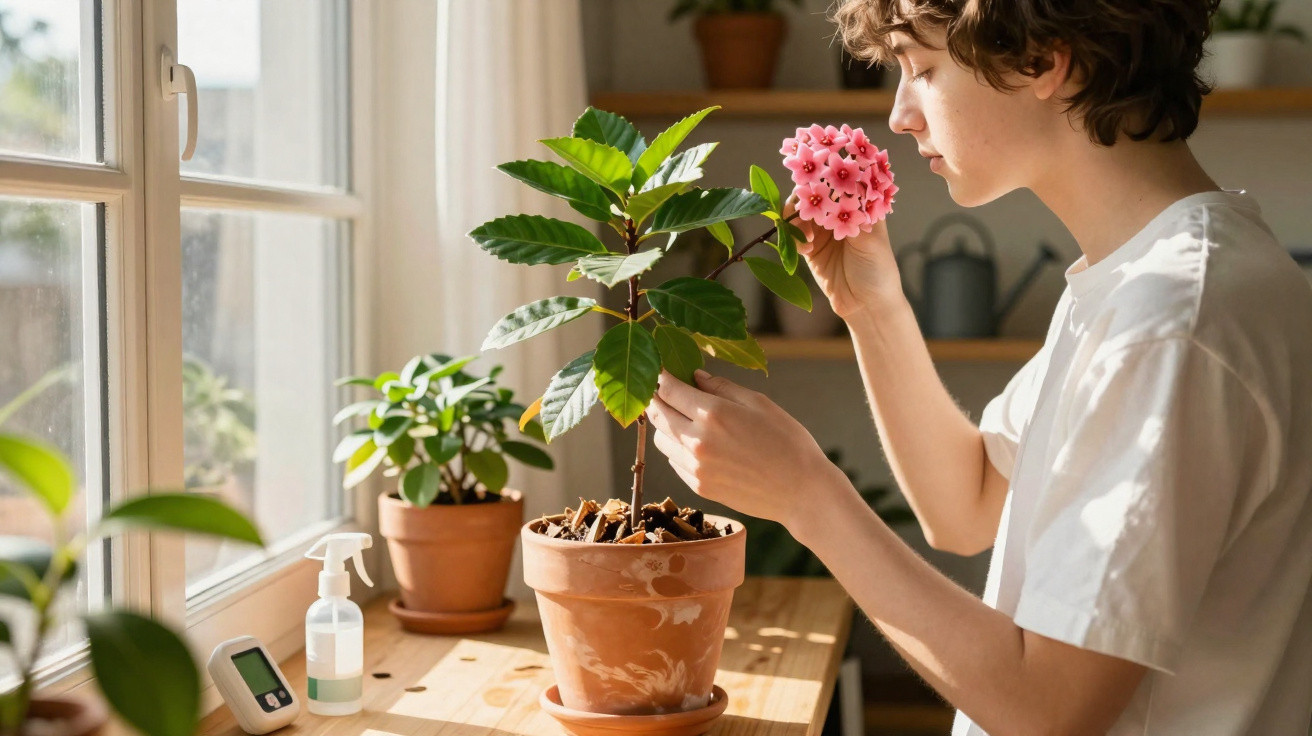
Having a cosy, sweet-smelling balcony is high on the wish list for many modern flat dwellers. The striking wax flower is an ideal option for anyone who wants an exotic-looking plant paired with a genuinely fuss-free care routine.
How do you choose the ideal spot to grow wax flower in a flat?
This species does best in a position with bright, indirect light throughout the day. The best place is sheltered from strong winds, yet it still needs good airflow so the epiphytic climber can develop with full, healthy vigour.
Keeping it out of harsh midday sun helps prevent leaves from turning yellow or scorching. Placing the pot in well-chosen corners of the balcony provides the light it needs to encourage clusters of flowers that are exceptionally beautiful and notably long-lasting.
Some varieties stand out and offer distinctive traits for collectors:
- Hoya carnosa: Features classic green leaves and very resilient, waxy flower clusters.
- Hoya obovata Splash: Has rounded foliage decorated with charming, scattered silver speckles.
- Hoya bella: Shows compact, trailing growth with delicate blooms that release a strong fragrance.
- Hoya kerrii: Became globally famous for its thick, heart-shaped leaves.
- Hoya nummularioides: Produces small flower clusters with an extremely powerful, sweet scent.
What is the secret to the perfect substrate for Hoya carnosa?
Because it grows as an epiphyte in nature, its roots require constant, high levels of oxygen. Using ordinary compost that compacts can hold back the plant’s progress and increases the risk of serious root rot when there is overwatering or prolonged rain.
The best mix should combine fast-draining materials such as fine pine bark, charcoal, and coconut chips. This blend closely mirrors tropical forest conditions, keeping the right level of moisture without holding excess water in the chosen container.
Below is a video from the Spagnhol Plantas YouTube channel that explores the points discussed in this topic in more depth:
How do hanging pots help the plant grow?
Hanging pots are an excellent choice because they allow the climber’s stems to grow freely and trail downwards. This vertical set-up creates a beautiful cascading effect, makes better use of balcony space, and helps keep the leaves protected from potential pests that move along the ground.
Gold Tip
A Necessary Snug Fit
Did you know wax flowers prefer slightly tighter pots to grow better? In the wild, they attach themselves in small spaces on tree trunks or within rock crevices.
For that reason, avoid moving your plant into an overly large container, as the build-up of damp compost can suffocate the roots.
Another excellent approach is to use a structured metal mesh support to guide upward growth. As the stems climb the wired cylinder, they anchor securely and form a lush green sculpture filled with perfume and strong visual elegance.
Choosing the right container brings clear day-to-day advantages:
- Improved water drainage through the hanging pot’s bottom holes.
- Better aeration, helping prevent diseases caused by harmful fungi.
- Easier handling and regular foliar feeding on the leaves.
How do you feed for flowering to encourage a striking fragrance?
To nourish the plant properly, foliar fertilisers that are high in phosphorus are essential. This type of feed supports ongoing production of new flower buds, helping your Hoya carnosa to bloom with maximum intensity during the warmer seasons.
Alongside monthly foliar feeding, adding slow-release fertiliser to the substrate every three months provides balanced essential nutrients. This steady supply strengthens the entire plant structure and boosts the sweet scent that perfumes the area at the end of each afternoon.
Here are some practical tips for applying nutrients correctly:
- Dilute the foliar fertiliser in water, strictly following the label directions.
- Apply the solution during the coolest parts of the day for protection.
- Mist both the upper and underside of every leaf.
What daily care keeps your balcony consistently fragrant?
The basic routine mainly calls for moderate attention to watering without soaking the pot. The right time to water again is when the surface layer of the substrate shows clear signs of dryness, which helps avoid water stress that can be harmful to leaf development.
Monitoring growth and removing dry leaves keeps the plant tidy and vigorous. Spending a few minutes each week on these simple tasks rewards residents with a genuine natural display, turning even a small flat into an incredibly fragrant and relaxing retreat.
Read also: The most fragrant flower to grow on the balcony
Comments
No comments yet. Be the first to comment!
Leave a Comment