
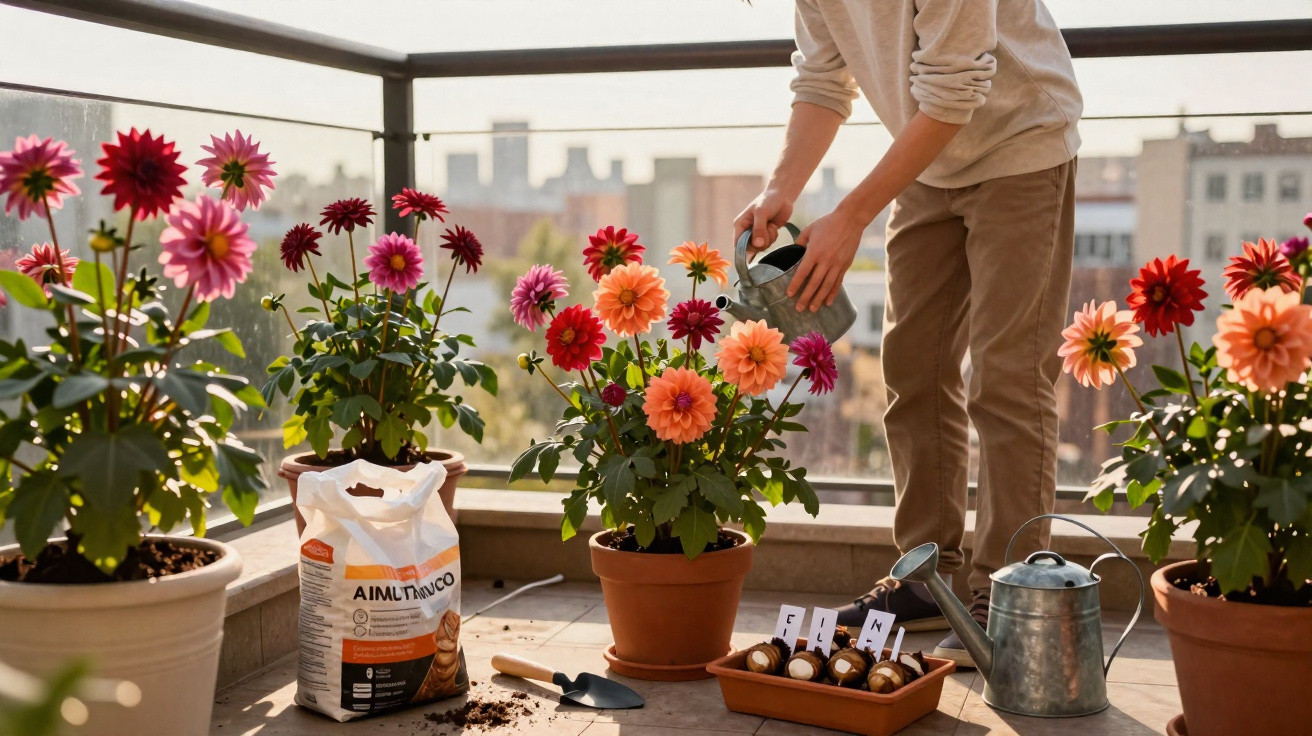
A compact, colourful outdoor corner is high on the wish list for many people living in today’s cities. Choosing the right species can turn a home space into a flower-filled retreat without complicated maintenance or demanding too much time from anyone who wants beauty in a practical way.
How did the dahlia become the perfect plant for balconies?
Native to Mexico, the dahlia won admirers worldwide thanks to its impressive versatility and its ability to cope well with being grown at home. In the past, the Aztecs used the plant for medicinal purposes and as food, eating the underground parts that support the whole plant with real vigour.
Today, miniature varieties have become especially popular because they fit neatly into apartment pots. They stay a manageable size and last well, holding dense, tidy growth while flowering continuously for long stretches on any sunny balcony that receives the essential natural light.
These standout traits of this Mexican flower bring several benefits to your home:
- Variety of colours: The petals come in many vibrant shades and appealing forms.
- Compact habit: Miniature types are small enough to thrive in modest containers.
- Loves the sun: It grows very well with direct sunlight every day.
- Strong structure: Its underground tubers store vital energy for future cycles.
- Long-lasting: Ornamental flowering can continue for months, keeping things cheerful.
What are the basic requirements for sunlight and watering?
To encourage abundant blooms, the dahlia needs plenty of direct light each day. Ideally, give it around four to five hours of full sun, either in the morning or afternoon, so the plant doesn’t become weak or lose its vigour.
Watering should be restrained, only when the top layer of compost clearly starts to dry out. Too much moisture is a serious risk, as stagnant water can rot the tubers quickly-so it is essential to grow it in a fully free-draining pot.
Below is a video from the YouTube channel Spagnhol Plantas that explores the points covered in this section in more depth:
How do the right soil and feeding help the flowers?
Healthy growth relies directly on a growing medium that stays loose and un-compacted, allowing roots to establish easily. Blending in coarse builder’s sand and organic matter greatly improves drainage, creating the ideal conditions for essential nutrients to reach the plant.
Fertilising secret
Complete nutrition
Using a targeted fertiliser that contains twelve nutrients suits the needs of modern dahlias very well. Wood ash provides the potassium required to strengthen the tubers and support physical resilience.
Applying a foliar feed or granular fertiliser once a month keeps the growing medium enriched throughout the entire growth cycle. With this steady care, new flower buds are encouraged to open, turning simple pots into genuine visual displays that enhance your space in a wonderful way.
To get the compost mix right, keep these key elements in mind:
- Use coarse sand to ensure excellent drainage.
- Add rich organic compost to nourish the roots.
- Include wood ash to supply pure potassium.
How does this species’ mysterious dormant period work?
Unlike other annual plants that die off completely once flowering ends, the dahlia enters a deep dormant phase. This natural resting stage worries many beginners, leading them to mistakenly believe the plant has died due to lack of attention.
During this particular cycle, the entire top growth dries out as nutrients move downwards. The underground tuber remains alive and healthy in the soil, storing the energy it needs to sprout strongly again once the rest period ends in the next season.
Look out for the clear signs that this dormancy is beginning:
- Gradual yellowing of the green leaves.
- Complete drying of the upper stems and branches.
- A total stop in the production of new buds.
What are the correct ways to store the tubers?
Once the stems have dried, you should lift the tubers carefully from the soil. Brush away any remaining compost and store them in ventilated boxes filled with sawdust or shredded paper to prevent a build-up of moisture in the chosen storage spot.
Dusting the tubers with wood ash or ground cinnamon works as an excellent protective natural fungicide. Keep the containers in a cool, shaded place until the first shoots appear-this is the precise sign that it is time to replant safely.
Read also: Mexican flowers ideal for anyone looking for practicality in the garden
Comments
No comments yet. Be the first to comment!
Leave a Comment