
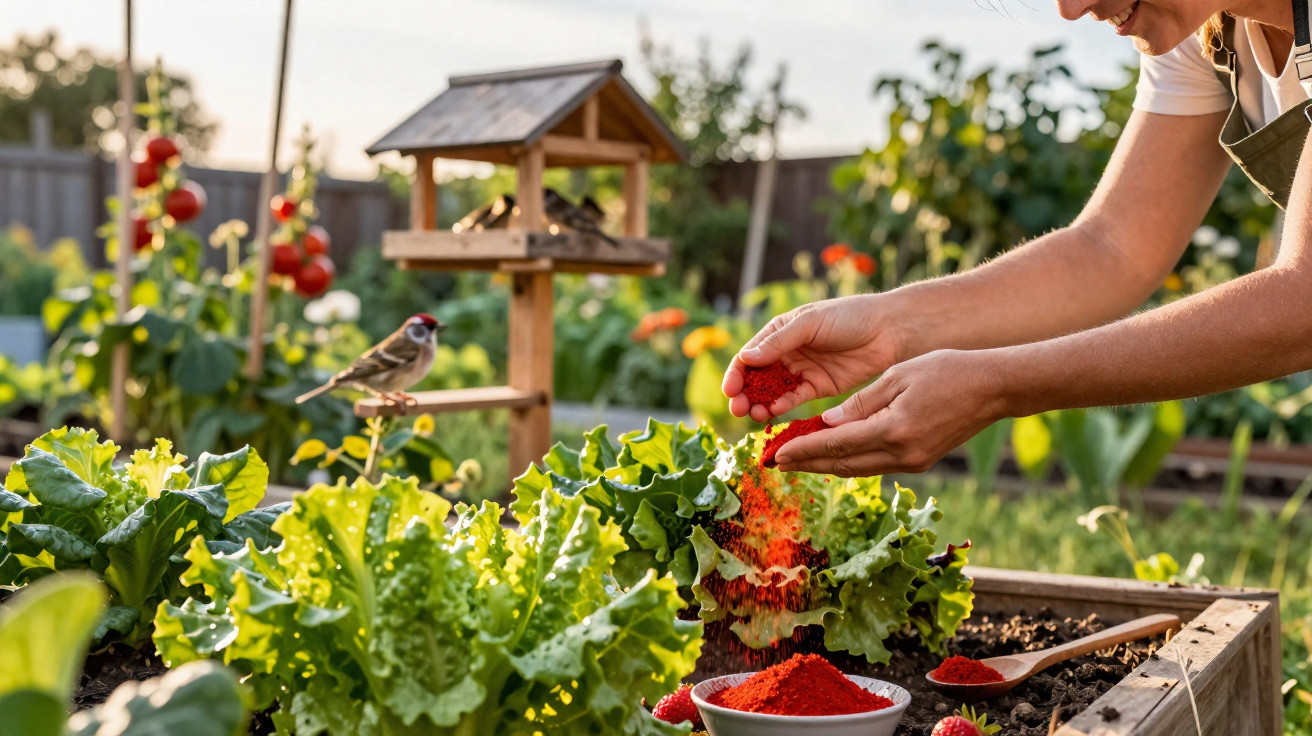
British gardens in June tend to become busier, and a key part of that seasonal routine is looking after the birds that drop in. Alongside blooming borders and the usual maintenance at this time of year, one practice has been getting noticed: using red chilli powder in the garden to protect bird food, helping to stop opportunistic animals from eating what has been put out for birds.
Why is red chilli powder used in the garden in June?
As summer arrives in the UK, birds step up their search for food, particularly during nesting and while caring for chicks. At the same time, accounts of falling numbers of birds in domestic gardens have become more common, associated with fewer insects and a reduction in green spaces.
Against that backdrop, gardeners have started topping up birds’ diets and using red chilli powder in the garden so that squirrels, foxes and rodents do not take most of the food. Birds do not experience the heat of chilli in the same way as mammals, which typically avoid spiced food and move on to other sources.
Watch a video on the YouTube channel Life in the Garden about using natural repellents and everyday household ingredients to protect your plants from pests and insects:
https://www.youtube.com/watch?v=kS1z6T6_tO4
How can you use red chilli powder in the garden without harming birds?
In practice, red chilli powder in the garden is usually used by mixing small amounts straight into the food offered to birds. The aim is to make the taste off-putting to opportunistic mammals, while keeping it appealing for birds, which do not register the spiciness in the same way.
Several common items used in home bird feeders can be boosted with red chilli, as long as quantities are kept moderate and hygiene is taken seriously:
- Dried insects, such as larvae and mealworms;
- Fat blocks, suet or bird “fat balls”;
- Chopped fruit, such as mashed apple and pear;
- Small portions of bread or cooked rice, only as an extra.
Some gardeners also use hot sauces, spread in a thin layer so the food’s texture is not changed too much. It is also advised to favour hanging feeders that are easy to clean, helping to reduce contamination from droppings and built-up scraps.
What extra precautions matter when feeding birds with red chilli?
Although it is a straightforward tactic, red chilli powder in the garden should not replace birds’ natural foraging for insects, wild seeds and native berries. Supplementary feeding is intended as short-term support, especially in more difficult periods, rather than the only source of food.
Specialists also highlight feeder hygiene and matching the food provided to the season, avoiding too many household leftovers. Clean water-refreshed frequently in drinking dishes and small fountains-is another essential measure for keeping birds healthy.
How else can a gardener help birds beyond using red chilli?
Red chilli powder in the garden is only one tool for supporting birds in urban and suburban areas, and it does not, by itself, address habitat loss. Planting native species that produce flowers, fruit and seeds across the year creates a more dependable setting with richer natural food.
Avoiding pesticides, leaving more “wild” corners with less closely cut lawn, and putting up nest boxes in safe positions all help by attracting insects, providing shelter and supporting breeding. Combined with taking part in citizen-science projects that monitor birds, the garden becomes a small refuge-where red chilli simply acts as an extra ally to help ensure the food truly reaches those that need it most.
Comments
No comments yet. Be the first to comment!
Leave a Comment