
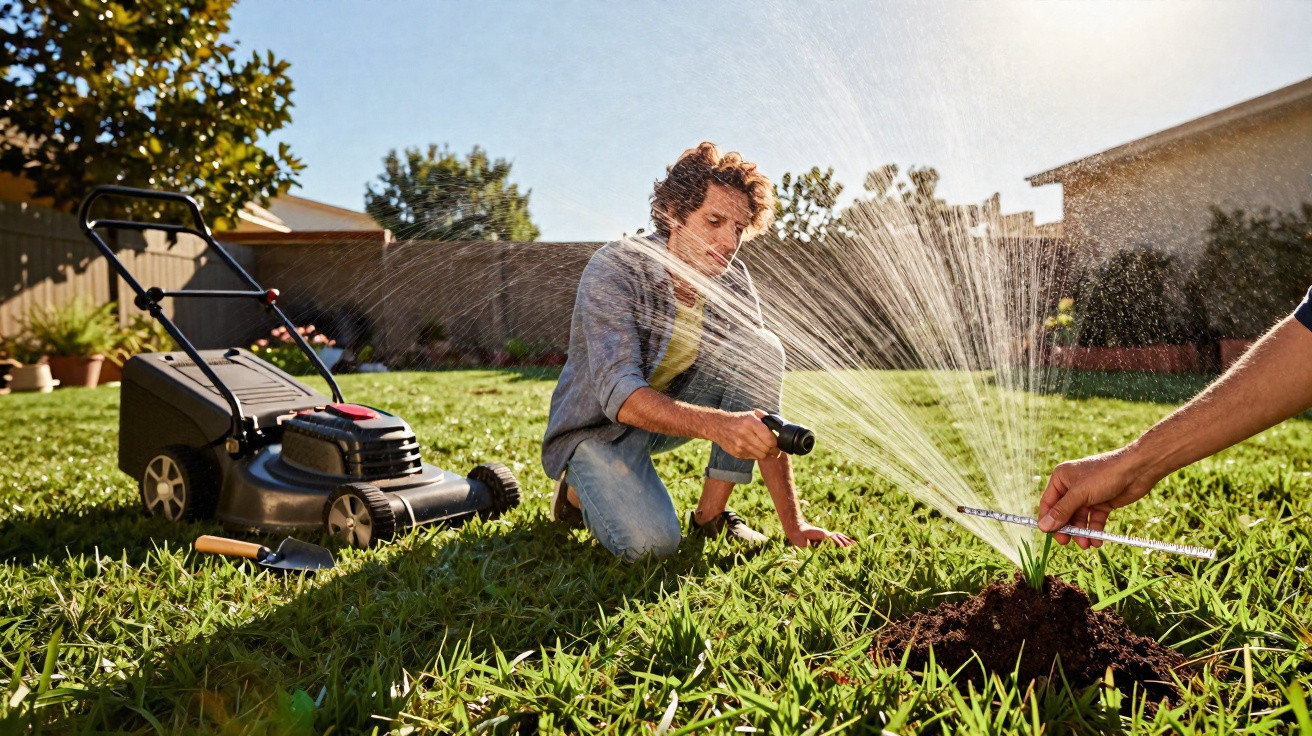
Keeping a back garden looking its best through the hottest times of year calls for smart tactics to prevent heat stress. Many people end up with dry, yellowing grass, without realising that a few small changes to everyday care can bring back the garden’s natural vitality.
How does intense heat affect your lawn’s health?
During severe heat, evapotranspiration speeds up and the blades lose water fast, leaving the soil exposed. Once the plant cover weakens, shallow roots can be badly harmed, which stops them taking up the key nutrients needed for leaf recovery.
Mowing the grass too close removes the protective layer that helps the ground hold moisture, making heat stress worse. With that basic care missing, the soil is left in direct sunlight, leading to a yellowed appearance and a drop in the lawn’s natural resistance.
What is the real Australian secret to a lawn that lasts for years?
To keep the garden looking perfect for a long time, specialists revealed that the big key is to never… Read more
Why is the one-third rule vital in summer?
Following the well-known one-third rule helps you avoid harsh cuts that strain the plant in the hottest months. By removing only the top portion, you ensure the lawn keeps enough leaf area to carry out photosynthesis in a healthy way.
This mowing approach also helps the soil retain moisture and shields the plant crowns from direct sun. When you stick to this limit, growth stays balanced, supporting excellent lawn recovery and reducing the unwanted dried-out look.
Below is a video from the STIHL Brasil channel on YouTube with valuable tips on this type of care:
What are the essential tips for watering grass properly?
Correct summer watering requires consistency and enough volume to reach the deeper layers of soil. Light, surface-only watering encourages shallow roots, which are extremely vulnerable to Senegalese heat and undermine proper hydration of the vegetation.
Providing the right weekly amount helps keep the soil moist and healthy at the ideal depth for plant development. This helps leaves stay green, prevents the dreaded yellowing, and strengthens natural defences against stress.
Efficient Irrigation Guide
Water parameters in summer
Follow these practical recommendations to hydrate your lawn properly:
- Apply about 15 litres of water per square metre each week;
- Check penetration by digging a small section to assess deeper moisture;
- Do the footstep test to confirm whether the ground genuinely needs watering.
How can you maintain your lawn properly without harming the roots?
Setting the mower cutting height correctly is a crucial step in protecting the plant base. In areas with full sun, keeping the height between 4 and 5 centimetres provides the shade needed to preserve nutrients and soil vitality.
In shaded spots, it is better to leave the blades longer, ranging from 5 to 7 centimetres. This sensible adjustment ensures each part of the garden gets the right treatment, leading to more uniform growth and a far more resistant lawn.
The main tools and techniques needed to achieve this are:
- Using brushcutters/strimmers to reach awkward corners and obstructed edges;
- Mowing weekly to prevent an excessive build-up of old leaves;
- Reusing the cuttings as a protective organic mulch over the soil.
What are the secrets to keeping the soil healthy all the time?
Applying organic fertiliser works as an excellent rebuilder of soil structure worn down by high temperatures. Spreading it with suitable sprayers or by hand encourages essential microbial activity, replacing the minerals the grass needs to grow strong.
The footstep test is also a practical, highly useful way to monitor real ground conditions. If the vegetation springs back quickly after you step on it, that indicates the soil is holding the right level of moisture and the garden remains protected.



Comments
No comments yet. Be the first to comment!
Leave a Comment