
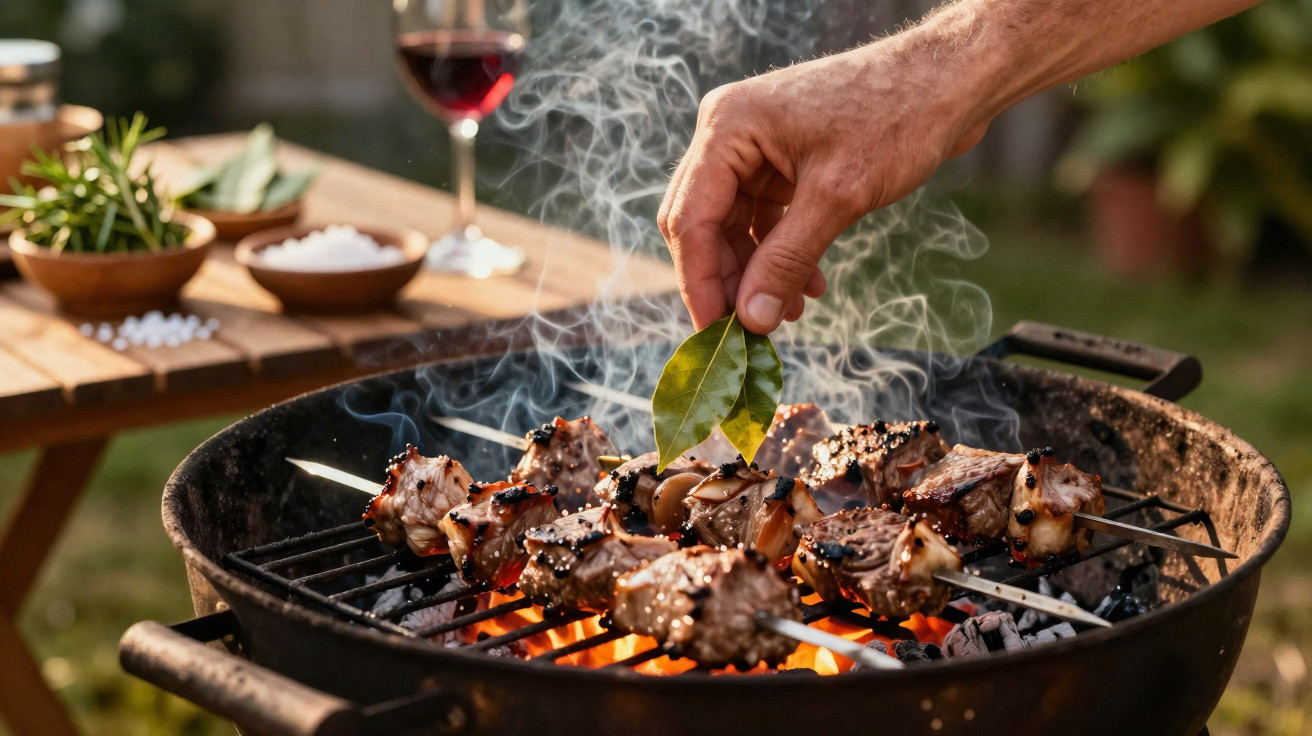
A scene is becoming a regular feature in back gardens: the barbecue cook steps up to the grill, tosses a few bay leaves straight onto the hot coals and, within seconds, the scent spreads through the air. It’s a simple, low-cost trick that claims to lift the flavour of the meat without changing anything about the usual method.
The aromatic secret that rises straight from the coals
As soon as a bay leaf hits glowing charcoal, its essential oils - such as cineole and eugenol - vaporise almost instantly. That release creates a lightly perfumed haze that drifts around the meat on the grill and leaves a delicate note on the surface of the cuts.
It’s similar to the effect of aromatic woods used for smoking, just on a smaller scale. Bay acts as an aroma booster, and a few details can completely change how your barbecue turns out.
- Number of leaves: a small amount gives a gentle perfume; too many make the smell overpowering.
- Distance from the coals: the closer the smoke is to the meat, the stronger the aromatic effect.
- Type of barbecue: models with a lid hold on to the scented smoke more effectively.
- Dried leaves: they create cleaner, subtler smoke than fresh, damp leaves.
When to throw bay leaf onto the grill
Timing is what makes it work. If the bay leaf goes onto the coals too early, the aroma disappears before the meat starts to brown. If it goes on too late, the smoke barely reaches the cuts and the effort is wasted. The key is to follow the pace of the fire.
A practical approach is to add bay in stages throughout the barbecue. That way, the fragrance stays steady and accompanies the cooking, especially for larger, fattier pieces - like ribs and picanha - that need longer over the grill.
Other herbs that can join in over the coals
Bay isn’t the only option. Other aromatic herbs - and even fruit peel - can be placed directly on the coals. The idea is to use ingredients rich in essential oils to build a background aroma that suits each type of meat, fish or vegetable on the grill.
Herbs that enhance the barbecue
Simple pairings for each type of meat
Rosemary brings resinous notes and works particularly well with lamb, chicken and pork. Thyme has an earthy, lightly citrusy scent, ideal for vegetables, fish and poultry. Sage, by contrast, is more intense and really comes into its own with pork cuts.
Dried oregano evokes oven roasts and suits a whole chicken and pork loin. Orange, lemon or tangerine peel adds freshness and balances fattier meats, creating a pleasant contrast.
Each herb has its own character, and the fun part is trying combinations without overthinking it. The important thing is not to overdo it, so the aroma complements the meat instead of masking the natural flavour of the cuts, which should remain the star of the barbecue.
Why this trick is worth trying at your next get-together
Picture a Sunday barbecue with family, or an early-evening catch-up with friends. That different smell coming from the barbecue quickly becomes a talking point before the meat even reaches the table. A bay leaf delivers exactly that extra touch without making life harder for the person at the grill.
Cost matters too: a small handful of dried leaves - which you probably already have in the kitchen - can change the whole experience without stretching the budget. It’s the sort of simple tip that makes it seem as though there’s a closely guarded secret behind that beautifully scented meat.
Mixing herbs to create your own signature
If you want to take it further, tie small bundles with kitchen string and drop them onto the coals at key moments - when the main cuts go on and when you turn the meat. Pairing bay with rosemary feels more rustic; bay, thyme and lemon brings brightness; and bay, sage with orange peel adds intensity.
In the end, what looks like a minor detail becomes a small signature of the barbecue cook. The bay leaf shows how a humble cupboard ingredient can shift the whole experience for everyone gathered around the grill, without gimmicks or complicating the cooking.
Did you enjoy learning this trick? Pass it on to that friend who loves running the barbecue and will want to try it next weekend.




Comments
No comments yet. Be the first to comment!
Leave a Comment