
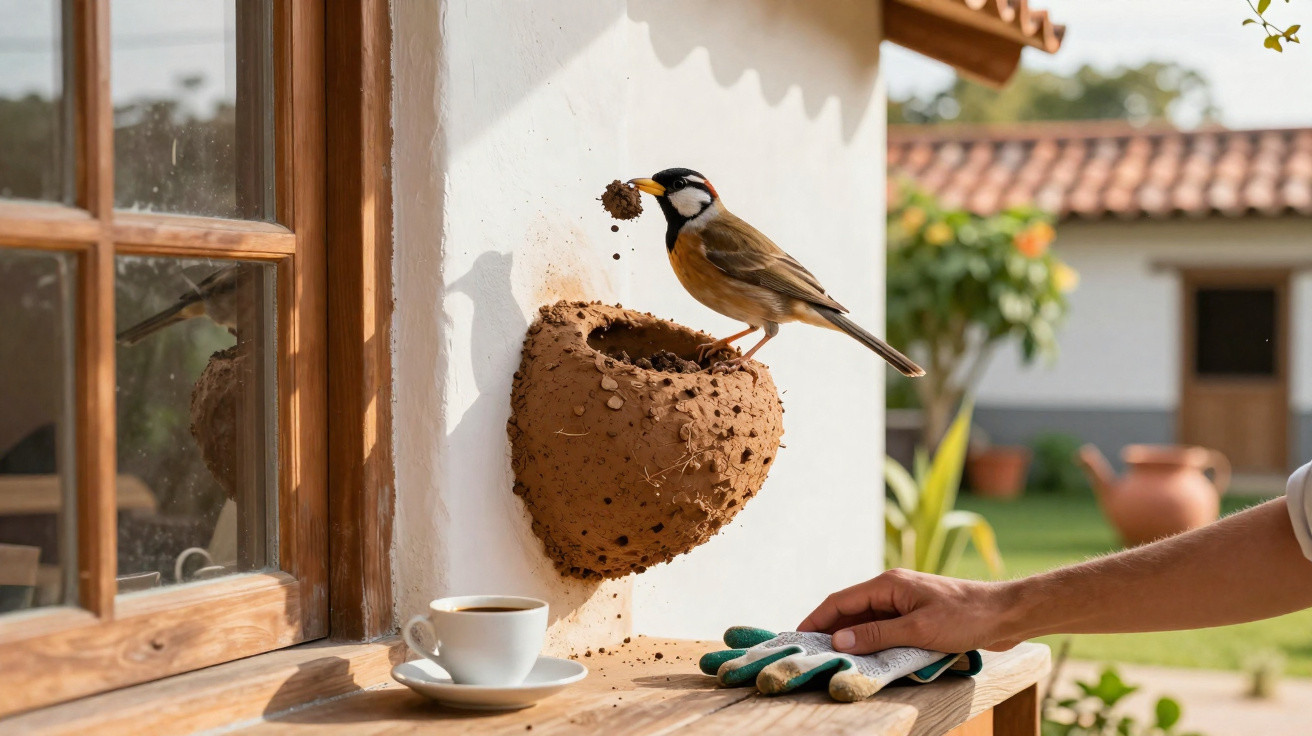
Rufous hornero nests built close to home almost always catch the eye, both for the care that goes into the structure and for the symbolic meaning people attach to it. In back gardens, gardens and on balconies, this kind of mud construction usually suggests the area provides shelter, a solid base, food nearby and little disturbance - valuable clues for anyone who watches wildlife closely.
What does a newly built mud nest say about the surroundings?
A mud nest does not appear at random. The rufous hornero selects sites according to stability, safety and easy access to mud, grasses, insects and suitable perches. When the bird chooses to build on a wall, post, tree or under the eaves, it is reacting to very real conditions in that immediate microhabitat.
In most cases, that is good news. Seeing a rufous hornero often points to a healthy supply of small invertebrates in the soil, a degree of stability in the space and surroundings the pair can keep under watch. Rather than signalling anything negative, it tends to indicate a living garden with the resources needed for breeding, foraging and rest.
Is there any superstition connected to this bird?
Superstitions about the rufous hornero are long-standing and differ from place to place. Some people take the nest as a sign of luck, household prosperity and protection for the home. There is also a popular belief that the direction of the entrance can foreshadow wind, rain or a change in the weather, although it is not a dependable rule.
These ideas grew out of everyday familiarity with a bird that is easy to notice in both rural and urban landscapes. Because the rufous hornero builds a tough shelter and often returns to favourable areas, its image of steady work, a bonded pair and staying power has encouraged positive folklore far more than any notion of danger.
What should you do if one appears in the garden or on the roof?
The most sensible approach is not to interfere. A newly finished nest may still need shaping, the mud needs time to dry properly, and the pair will be coming and going frequently - so sudden movement and nearby building work can be highly disruptive.
- Do not handle the structure, even if it looks dry on the outside.
- Avoid pruning, pressure-washing and loud noise within a few metres.
- Keep dogs and cats away from the base of the wall, tree or balcony.
- Watch from a distance, ideally without flash and without getting closer day after day.
If the nest is in an awkward spot - for example, on a gate used constantly or on equipment - it can help to block off that route for a few days. The rufous hornero may abandon sites with too much disturbance. Protecting the area at this stage improves the chances of egg-laying, incubation and successfully rearing the chicks.
Why is this presence often seen as a good sign?
When wildlife chooses a residential space for nesting, it is responding to signs of ecological suitability. The rufous hornero needs material to gather, edges for landing, a reasonable field of view and prey available on the ground. A garden with these features is usually more functional for birds, insects and the small ecological processes that play out daily.
For the people living there, the benefits can be straightforward:
- more opportunities to watch birds in the garden and a routine more connected to the local breeding cycle;
- greater appreciation for trees, borders, hedges and areas of damp, exposed soil;
- a sharper sense of rainfall, wind, breeding season and wildlife movement;
- the presence of a native species that is highly adapted to living alongside people.
How can you live alongside this visitor without disrupting the natural cycle?
Living with a rufous hornero is usually simple: keep your distance, maintain relative quiet and look after the garden with care. Cutting back on heavy insecticide use, leaving some damp soil and keeping helpful vegetation nearby does more than any attempt to attract the bird artificially.
When a mud nest shows up at home or in the garden, the most consistent message comes less from superstition and more from an ecological reading of the place. It means there is enough shelter, resources and stability to support a delicate stage of reproduction. For anyone tuned in to nature’s rhythms, it is often one of the most positive signs a domestic space can offer.
Comments
No comments yet. Be the first to comment!
Leave a Comment