
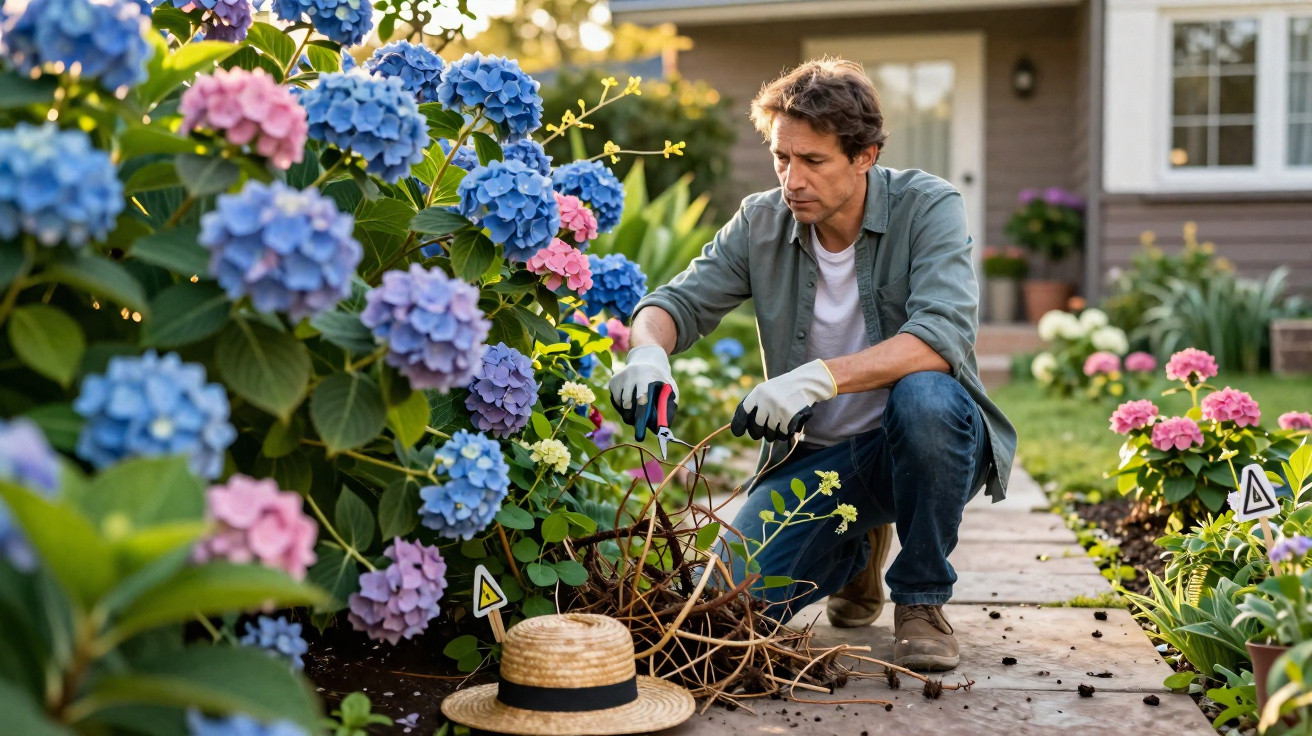
In the world of gardening and home landscaping, the species you choose has a direct impact on soil balance, healthy growth and the overall look of your green space. Alongside ornamental flowers and fast-growing plants, some species can seem harmless while actually behaving invasively, putting the garden’s biodiversity at risk. With that in mind, understanding the influence of hydrangeas and other plants prone to uncontrolled growth is essential for keeping cultivation balanced.
Why can hydrangeas and other plants hide risks in the garden?
Hydrangeas are widely used in landscaping projects thanks to their vibrant colours and strong ornamental appeal. However, when planted alongside other species, they can end up competing for nutrients and bed space. In home growing, conditions such as over-watering, very fertile soil and a lack of pruning can encourage messy, uneven growth that disrupts the garden’s balance.
From a landscaping perspective, hydrangeas can also develop in an aggressive way when they are not properly managed, casting shade over smaller plants. Mixing species without a clear plan may create imbalance in the growing medium and reduce the diversity of the green space.
- Manage watering to prevent excessive moisture in the soil.
- Prune regularly to keep plant growth balanced.
- Plan appropriate spacing between ornamental species such as hydrangeas.
What makes a plant “killer” in home landscaping?
In the garden, certain plants earn the popular label of “killer” because of rapid growth and the ability to dominate space, harming neighbouring species. This tends to happen when there is little or no control, allowing roots to spread and disturb the soil’s equilibrium.
Hydrangeas, despite being ornamental, can be mistaken for this type of behaviour because their colours draw the eye and can disguise their expansive development. Without proper upkeep, attractive plants can turn into a source of imbalance in home landscaping.
- Invasive roots that undermine the planting bed.
- Fast growth without pruning control.
- Excessive competition between plants for nutrients.
How can you stop plants spreading through the garden?
Preventing plants from spreading across a garden depends on consistent maintenance practices such as pruning, soil management and landscaping planning. Species like hydrangeas need particular attention so they do not take over areas beyond what was intended.
Using natural barriers and keeping fertilisation in check can help limit disorderly growth. In addition, monitoring hydrangeas as they develop ensures their colours and structure do not overwhelm the wider green space.
- Carry out seasonal pruning to limit expansion.
- Use physical edging or boundaries in the planting bed.
- Control nutrients in the soil to avoid excessive vigour.
Which signs show that colours and growth are out of control?
When hydrangeas grow too vigorously and their colours spread across the garden in a chaotic way, it often points to insufficient management. The same pattern can be seen in other plants that compete for sunlight and space.
In landscaping, warning signs such as excessive shading, exposed roots and a reduction in biodiversity indicate that balance is being lost. Ongoing observation helps prevent the garden from losing its aesthetic and practical harmony.
- Fewer smaller species surviving in the planting bed.
- Plants expanding without control.
- Hydrangeas becoming the dominant visual feature of the space.
How do you keep a balance between beauty and safety in the garden?
A balanced garden relies on landscaping planning, choosing the right species and regular maintenance. Hydrangeas can be valuable for their appearance when properly controlled, supporting harmony between colour and biodiversity without harming other plants.
The key is continuous care, including pruning, soil control and monitoring growth. This keeps the green space attractive, safe and functional, ensuring no single species becomes dominant or damages the garden ecosystem.

Comments
No comments yet. Be the first to comment!
Leave a Comment