
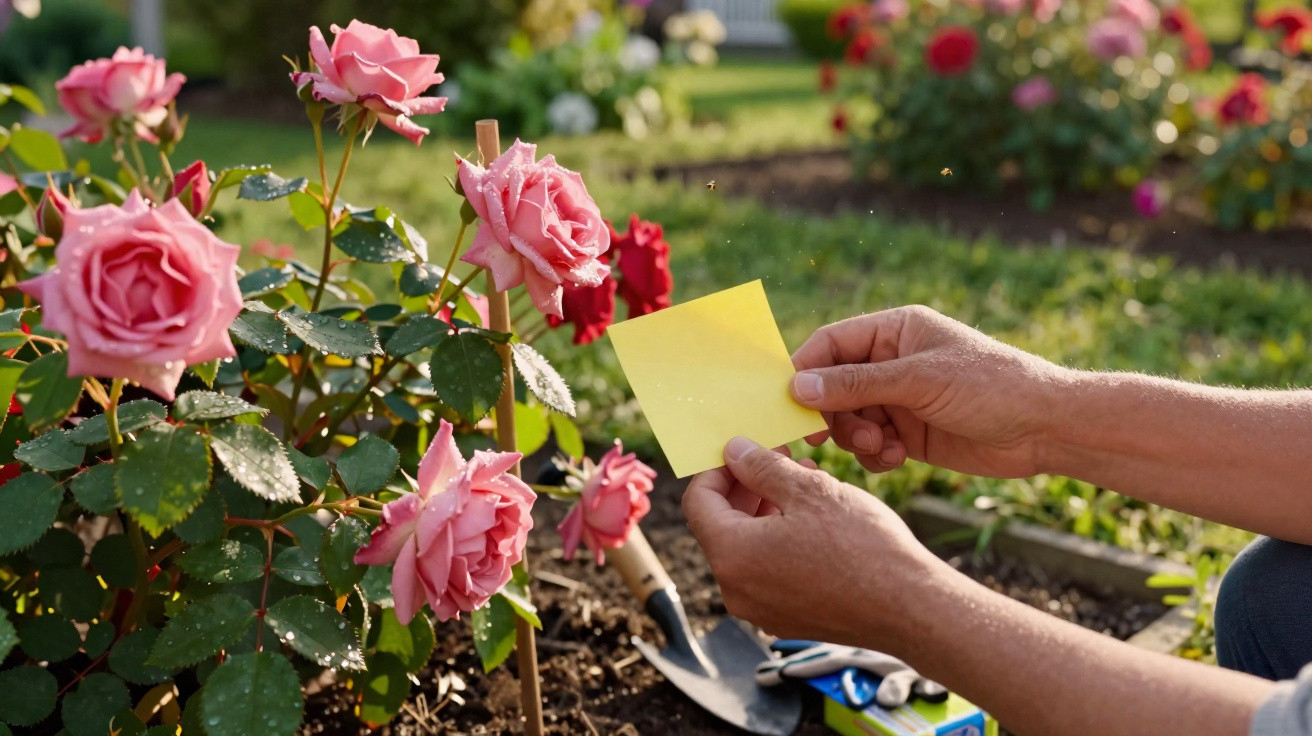
Growing rose bushes at home calls for steady protection against opportunistic pests that often go after fresh shoots in the warmer seasons. Using yellow cards strategically is an excellent ecological option for monitoring flying insects before serious damage sets in.
How do yellow cards work in the garden?
These devices rely on the visual pull of their bright colour, which attracts a range of harmful flying species. The insects head towards the coloured surface and end up stuck to the sticky trap attached directly to the branches of the rose bush affected.
This approach makes ongoing biological monitoring easier, without immediately resorting to heavy chemical pesticides in the back garden. It also helps you spot the early stages of an aphids problem in a completely clean and sustainable way.
Using them correctly brings clear benefits for the health of your blooms:
- Colour attraction: the yellow shade naturally draws pests in.
- Mechanical capture: the special glue traps insects on contact.
- Preventive protection: helps stop excessive build-up on new shoots.
- No poison: avoids the use of toxic chemical products.
- Visual control: makes it easy to count what has been caught.
Which pests are controlled with this trap?
This trap is highly effective against small insects that commonly attack home flowerbeds and potted plants. Tiny flying species such as whitefly struggle to get free from the sticky surface after the first direct contact.
Other sap-sucking invaders that are frequent in domestic growing spaces are also affected by this simple, low-cost solution. As part of integrated management, it removes adult thrips, preventing them from continuing to damage the leaf cells of your cherished planting.
Below is a video from the YouTube channel Plantas Sem Mistério Andrew Fogtman that explores the points covered in this topic in more depth:
When should you put yellow cards on rose bushes?
The best time to place these cards is at the start of the flush of new leaves and stems. This vegetative growth stage attracts hungry parasites looking for soft tissues to feed on and begin a dangerous infestation in the home garden.
Intense heat
Watch out for hot days
In months with higher temperatures, insect metabolism speeds up sharply, increasing reproduction rates. Positioning sticky traps preventively avoids unpleasant surprises and shields new flower buds.
Sunny, dry days call for extra vigilance from urban growers because they significantly accelerate the breeding cycle of these tiny insects. Early checks help ensure the rose bush stays strong and healthy, producing striking flowers without suffering a relentless attack.
Look out for clear signs that show it is time to act in the rose bed:
- Visible ants climbing up the main stems.
- Young leaves beginning to wilt or show small distortions.
- Small shiny or sticky spots on the upper surface of the foliage.
Where should you place the traps for maximum efficiency?
Installation should be planned near the spots most attractive for feeding to the flying pests you have identified. Securing the adhesive cards directly on higher branches helps catch insects quickly as they search for the tender, juicy shoots of a developing rose bush.
Avoid placing the devices too low down or completely hidden by dense foliage. The visibility of the yellow colour is the key factor for the full success of this ecological, smart management of urban pests.
Key recommendations for positioning yellow cards correctly:
- Keep the cards level with the newest growth.
- Make sure leaves do not fully cover the sticky surface.
- Replace the traps once they become clogged with dust or debris.
How does monitoring prevent severe damage to rose bushes?
Early identification of invasive species allows the grower to respond quickly before the problem gets out of hand. Knowing what type of insect is circling the pot helps you plan efficient actions that protect the overall health of your flowering rose bush.
As a result, the rose bush grows vigorously without severe deformities caused by constant sap-sucking on new shoots. Adopting this straightforward preventive method changes your care routine, bringing more beauty and vitality to your home garden in a fully ecological and clean way.
Read also: a reason not to wash the balcony with a hose in Greece
Comments
No comments yet. Be the first to comment!
Leave a Comment