
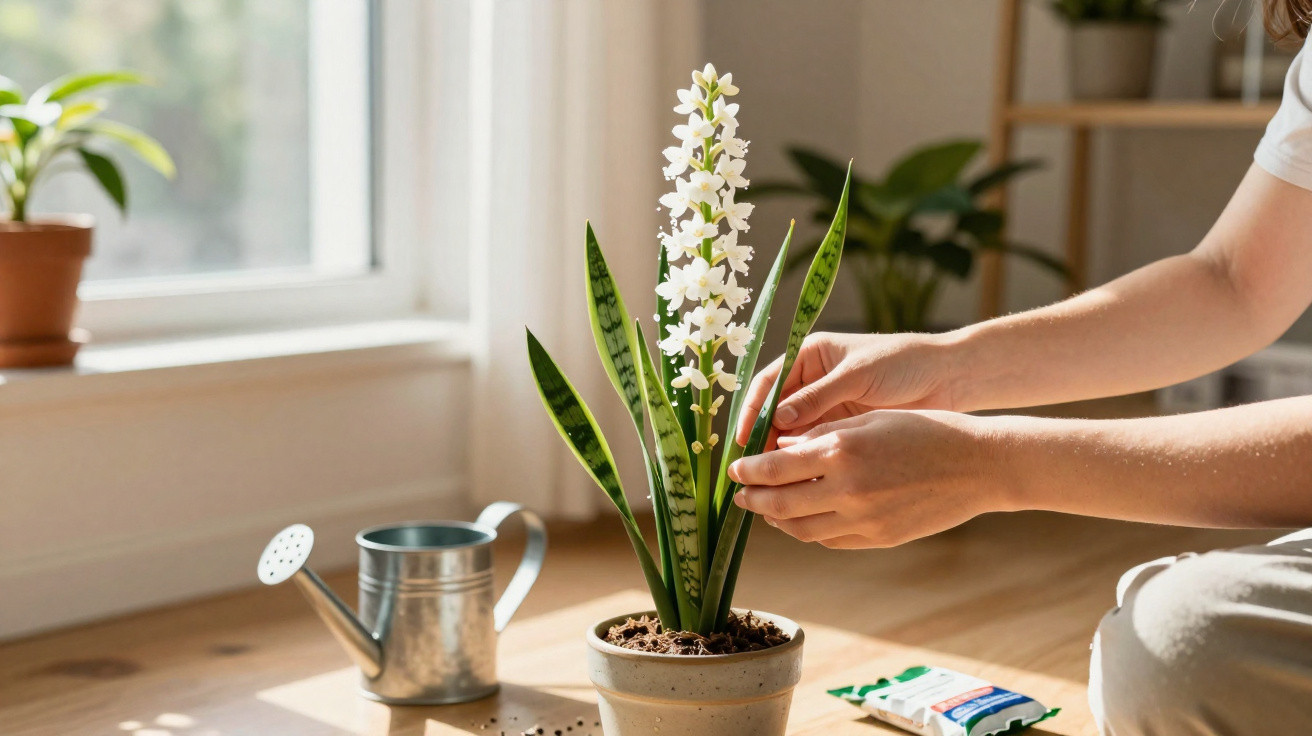
Saint George’s sword can bloom, even though this is unusual indoors. On mature plants, a mix of plentiful light, roots that are slightly snug in the pot, and well-spaced watering can encourage a tall, fragrant flower stalk to appear.
What does Saint George’s sword need to produce flowers?
Flowering is most likely on adult, well-established specimens, rather than on plants that have just been divided or repotted. A touch of stress can play a part, but that means consistency and controlled watering-never allowing the plant to collapse or harming its roots.
Although it copes with lower light, it generally grows and flowers better with bright, indirect illumination. Placed near a window and shielded from the harshest sun, it receives enough energy to support its leaves, build reserves and, potentially, form flower buds.
The conditions that most support blooming are:
- Light: plenty of bright, indirect light near a protected window.
- Pot: a container only slightly larger than the root mass.
- Watering: only after the compost has dried out.
- Maturity: adult, established plants are more likely to bloom.
- Balance: severe stress weakens the plant and does not guarantee flowers.
What are the flowers of Saint George’s sword like?
Dracaena trifasciata is an African species grown mainly for its upright, rigid leaves. When it does flower, it produces small, pale blooms clustered along a stem that rises from between the leaves, reaches a considerable height and often surprises anyone familiar only with its foliage.
The flowers are typically off-white or pale green, narrow and delicate in shape. They release a sweet fragrance that is more noticeable at night and may produce sticky drops of nectar, which can collect on the stalk, on the leaves or on a nearby surface.
How can you use a tight pot and sparse watering without harming the plant?
Pick a pot with drainage holes that is only slightly larger than the roots, and use a very free-draining compost. The plant can stay slightly snug, but roots warping the pot, slow drainage or stalled growth suggest it is time for repotting.
Mild stress does not mean neglect
Let the compost dry out, but do not abuse the roots
A slightly close-fitting pot can suit mature plants, as long as drainage remains unobstructed.
Drooping leaves, rotten roots or a distorted container point to imbalance, not ideal flowering conditions.
Water thoroughly, then wait until the compost dries before watering again, adjusting frequency to warmth and light levels. Keeping the compost constantly damp raises the risk of rot, while extreme droughts weaken the plant instead of promoting healthy flowering.
To keep the right balance:
- use a pot with clear drainage holes and a compost designed for succulents;
- water until it runs from the bottom and discard any excess from the saucer;
- wait for the compost to dry before watering again;
- keep the plant close to a window with lots of bright, indirect light;
- repot only when the pot is misshapen or drainage is compromised;
- do not force severe wilting in an attempt to trigger flowering.
Why do overfeeding and frequent repotting get in the way?
Too much fertiliser can lead to salt build-up in the compost and mainly encourages new leaves, without ensuring flowers. Repotting or dividing too often also breaks the plant’s period of stability: it must rebuild roots before it can channel reserves into reproduction.
Use a balanced, diluted feed only during active growth, following the label, and stop if you see scorched tips or crusting on the compost. Moderation protects the roots and prevents the pursuit of flowers becoming a routine of excesses.
To avoid disrupting an established plant:
- avoid strong feeds or repeat applications at very short intervals;
- do not apply fertiliser to completely dry compost;
- do not change the pot simply because the roots fill the container;
- repot when drainage is poor, roots are damaged or the pot is distorted;
- keep care consistent while the flower stalk is forming.
What should you do with the stalk after the flowers fade?
If you are looking for guidance on caring for Saint George’s sword indoors, focus on light, drainage and correct watering. Blooming is an occasional event, so no trick can guarantee that every houseplant will produce flowers regularly.
Once all blooms have faded, cut the stalk close to the base with clean scissors, taking care not to nick the leaves. Wipe away any nectar residue with a damp cloth and continue normal care so the plant can restore reserves and carry on growth.
Comments
No comments yet. Be the first to comment!
Leave a Comment