
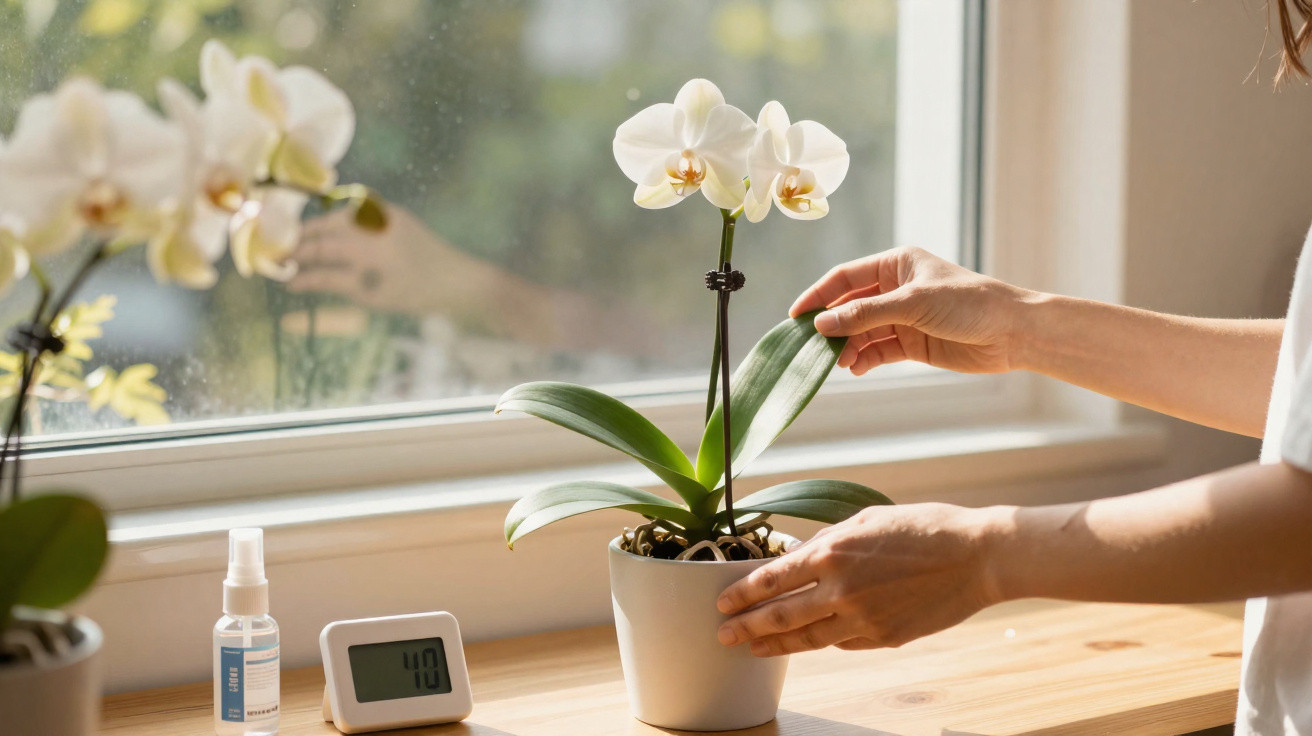
Losing its blooms does not mean an orchid is dying. This is part of the plant’s normal cycle, particularly in popular indoor types such as Phalaenopsis. After a strong flowering spell, it is typical for the spike to be left with no buds, with only green leaves and visible roots remaining. At this point the orchid rests and stores energy so it can produce a fresh flower spike later on.
Orchid without flowers: is it dying?
Many people mistake the end of flowering for the end of the orchid’s life, and either throw the pot away or place it somewhere unsuitable. In reality, the gap between one flowering and the next can be lengthy, and it depends on light levels, temperature, watering, nutrition and the traits of the variety being grown.
Once you understand this rhythm, growing becomes more predictable and far less frustrating. You start to treat the plant as a long-term companion rather than something to discard after the first flush of flowers, which encourages steadier care throughout the year.
Watch a video on the YouTube channel Vida no Jardim covering essential care, suitable potting mixes and the fertilising needed to help orchids flower again:
https://www.youtube.com/watch?v=kS1z6T6_tO4
How does the right light help an orchid to flower?
Light is crucial to an orchid’s overall performance. Orchids do best in bright conditions, but without harsh direct sun hitting the leaves. Too much exposure can lead to yellowing patches or scorch marks, which weakens the plant and can delay the formation of new flower spikes.
A practical approach is to keep the pot close to a bright window, softening the light with a sheer curtain. Where possible, transparent pots can also help by allowing more light around the roots. Wiping dust from the leaves improves how efficiently they use the available light and helps the plant look noticeably more vigorous.
Essential care: watering, temperature and fertilising?
Watering frequency is a common stumbling block: the mistake seen most often is keeping the growing medium constantly wet, which leads to root rot. Instead, wait until the roots look more silvery-grey, or until the mix feels almost dry to the touch, before watering again-either by watering through or by a quick soak.
Temperature affects flowering too, as small differences between day and night can act as a natural trigger for new buds. While the plant is growing, orchid-specific fertilisers used sparingly supply phosphorus and potassium to support firm, colourful blooms. A few simple habits make it easier to keep everything balanced:
- Avoid waterlogging: ensure the pot drains well and all excess water runs out.
- Watch the roots: green suggests recent moisture; silvery-grey indicates it is time to water.
- Manage temperature: a slightly cooler night-time environment encourages spike development.
- Fertilise carefully: always follow the manufacturer’s dosage to avoid burning the roots.
How to recognise a flower spike and keep an orchid healthy for years?
As the orchid comes out of its resting phase, new growth appears that may become either roots or a future flower spike. Typically, a spike has a slimmer, more tapered tip and grows towards the light. Once it has reached a few centimetres, you can support it with a small stake and gentle clips so the weight of the flowers does not bend or snap the stem.
Keeping the pot stable-without sudden moves or strong draughts-reduces the chance of buds dropping early. With plenty of bright indirect light, measured watering, slight temperature variation and balanced feeding, an orchid can flower repeatedly over the years, proving that the “just leaves” period is simply quiet preparation for the next display of blooms.

Comments
No comments yet. Be the first to comment!
Leave a Comment