
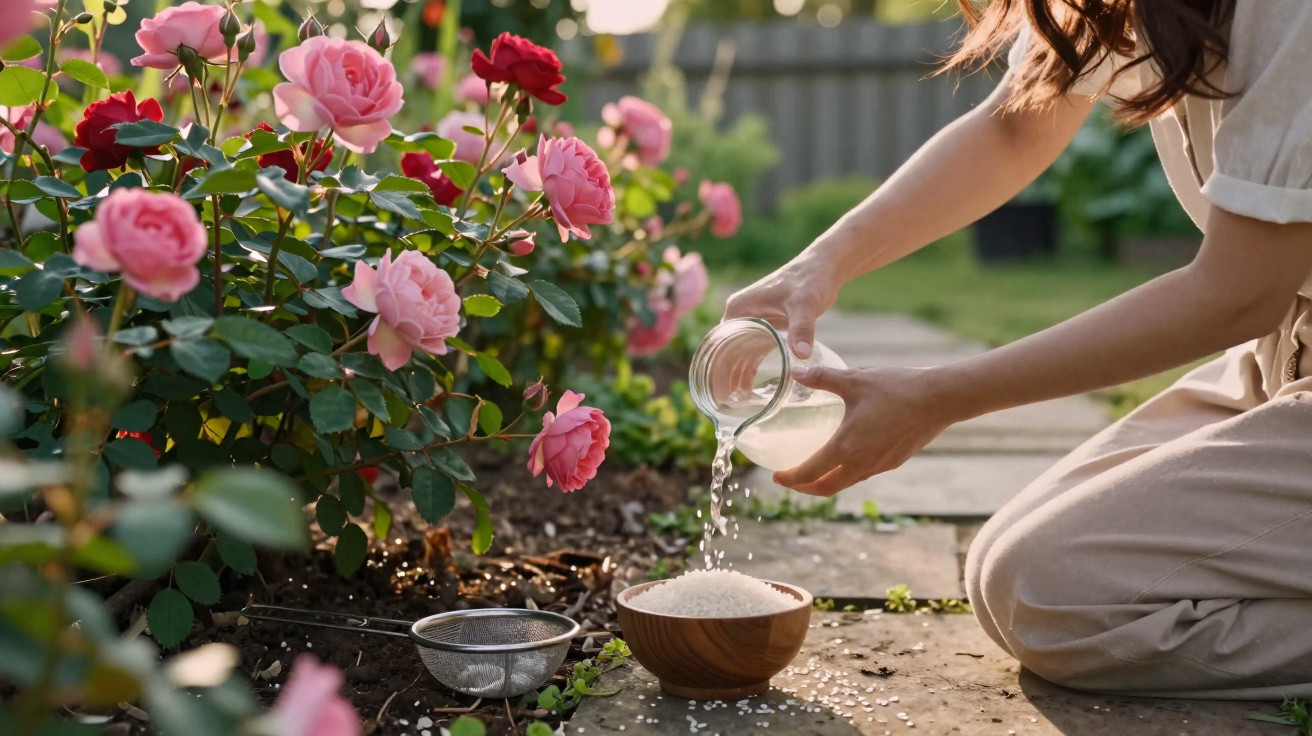
Growing roses in a home garden often comes with a familiar frustration: at certain times of year, the rosebush simply stops producing blooms. Among the home remedies explored to help the plant recover, one particular grain has become popular because, when soaked, it releases useful nutrients into the water. Used sensibly, this approach can encourage fresh shoots and support the return of flowers.
Which grain is used to encourage a rosebush to flower?
The grain most commonly mentioned for this type of care is uncooked rice, especially ordinary white rice. When left to soak, rice releases starch and traces of minerals such as phosphorus and potassium, which are involved in processes linked to the development of roots, leaves and flower buds.
On top of that, microorganisms naturally present in the environment can feed on the starch, creating a solution rich in compounds that interact with the soil. It does not replace standard fertilising, but it can work as a simple, low-cost boost that fits alongside light pruning, consistent watering and proper sun exposure.
How do you prepare the rice correctly before using it on a rosebush?
For rice to serve as a flowering aid, a basic preparation matters. Typically, you use uncooked rice with no salt, seasoning or oil to make a lightly fermented rice water that’s suitable for occasional watering of an established (adult) rosebush.
Following a straightforward step-by-step helps prevent an overload of residue and keeps the solution gentle on the root system:
- Quickly rinse 2 tablespoons of uncooked rice under running water to remove excess dust.
- Put the rice into a clean glass container and add about 500 ml of water.
- Leave it to soak for 12 to 24 hours in a shaded spot, covered with a cloth or with the lid slightly ajar.
- Strain the liquid, discarding the grains or using them for another household purpose.
This diluted rice water holds the nutrients released by the grain at a mild level-enough to be helpful without scorching roots. In small beds, people usually apply around 100–200 ml of the solution per plant, always watering it straight onto damp soil and never onto flowers or leaves.
How often can you use rice water without harming the rosebush?
How often you apply it is crucial if you want to avoid fungus and unpleasant smells in the growing medium. Using rice water too frequently can overload the soil with organic matter that ferments easily, particularly in small pots or in areas with limited airflow.
To keep things balanced, it’s best to treat this as an occasional supplement, alternating it with conventional organic feeds and closely watching the condition of both the soil and the plant over the following weeks.
- Apply rice water in a small amount no more than once every 15 days.
- Avoid using it during very rainy periods, when the soil is already staying waterlogged.
- Alternate this approach with compost, worm castings or a rose-specific fertiliser.
- Stop using it if you notice strong odours, visible mould, or the soil becoming excessively dark.
What signs show the rosebush is responding to rice water?
Signs that a rosebush is responding to soaked-rice care tend to appear gradually, between two and six weeks after you begin. The exact timing depends on the plant’s age, the condition of the roots, the climate and whether other basic care is being kept up.
Positive indicators include fresh shoots at the tips of branches, greener and firmer leaves, and the formation of flower buds on stems that had previously stalled. The first flowering after this type of support is often modest, but with ongoing maintenance (annual clean-up pruning, pest control, balanced feeding and good light), later cycles tend to bring more abundant blooms and a rosebush that looks noticeably more vigorous.





Comments
No comments yet. Be the first to comment!
Leave a Comment