
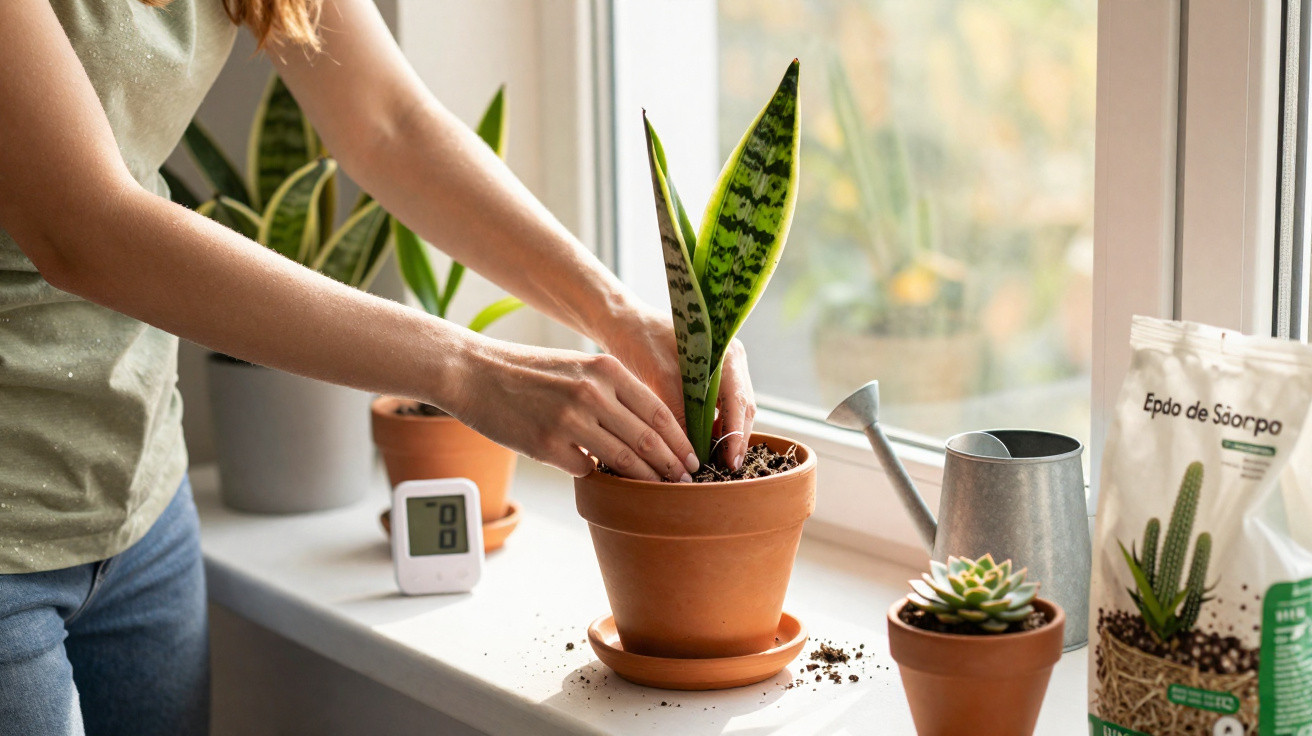
Saint George’s sword is well known for its toughness and its ability to cope with different conditions, yet in many homes the plant can go for months without producing a single new leaf. When growth stalls, the cause is usually straightforward: the wrong light levels, overwatering, a pot that has become too tight, or depleted compost. Tweaking these basics is often enough to get the plant growing again steadily, with a healthier appearance.
Why does Saint George’s sword stop growing?
Even people who have grown this species for years can be caught off guard when they notice the plant never thickens up and keeps only a few leaves that look thin and washed out. In situations like this, it helps to check where your Saint George’s sword is positioned, how you are watering it, and how long it has been since it was repotted or fed-these clues usually reveal what is holding growth back.
Insufficient light is the most common reason Saint George’s sword fails to develop properly. It can tolerate indoor spaces, but if it spends all day in a very dark spot, its metabolism slows and it produces fewer new shoots. The result is leaves that become overly elongated, flop over, and take on a darker, duller look.
Watch a video on the YouTube channel Horta do Ditinho explaining the ideal type of pot and substrate to help Saint George’s sword grow quickly and multiply into new plantlets:
https://www.youtube.com/watch?v=rX_jY8dK2aM
How do light and watering affect development?
Correcting the light is usually the first move to restore the plant’s vigour. Ideally, keep it near a bright window where it receives strong indirect light for much of the day, or on a covered balcony/veranda where it gets a few hours of gentle morning sun-making any change gradually so it can adjust.
With watering, the key is to water only once the potting mix is dry to the touch down to a depth of at least about 3–4 cm (roughly two finger widths). Soil that stays wet all the time encourages root rot, which blocks nutrient uptake and leaves the plant stuck in place, even if it continues to look “alive” for a long time.
How do you set up the right pot and potting mix for Saint George’s sword?
Alongside balanced light and careful watering, the container and the growing medium make a big difference to growth. A pot with reliable drainage paired with a light, well-aerated mix prevents water from sitting around the roots and gives the rhizomes more room to spread, helping the plant form a full, dense clump.
To make these care steps easier to manage day to day, it is worth following a few simple guidelines when planting or repotting:
- Use a light mix made from soil, sand, and well-rotted organic matter.
- Add a drainage layer at the bottom of the pot (gravel, broken pottery shards, or expanded clay pellets).
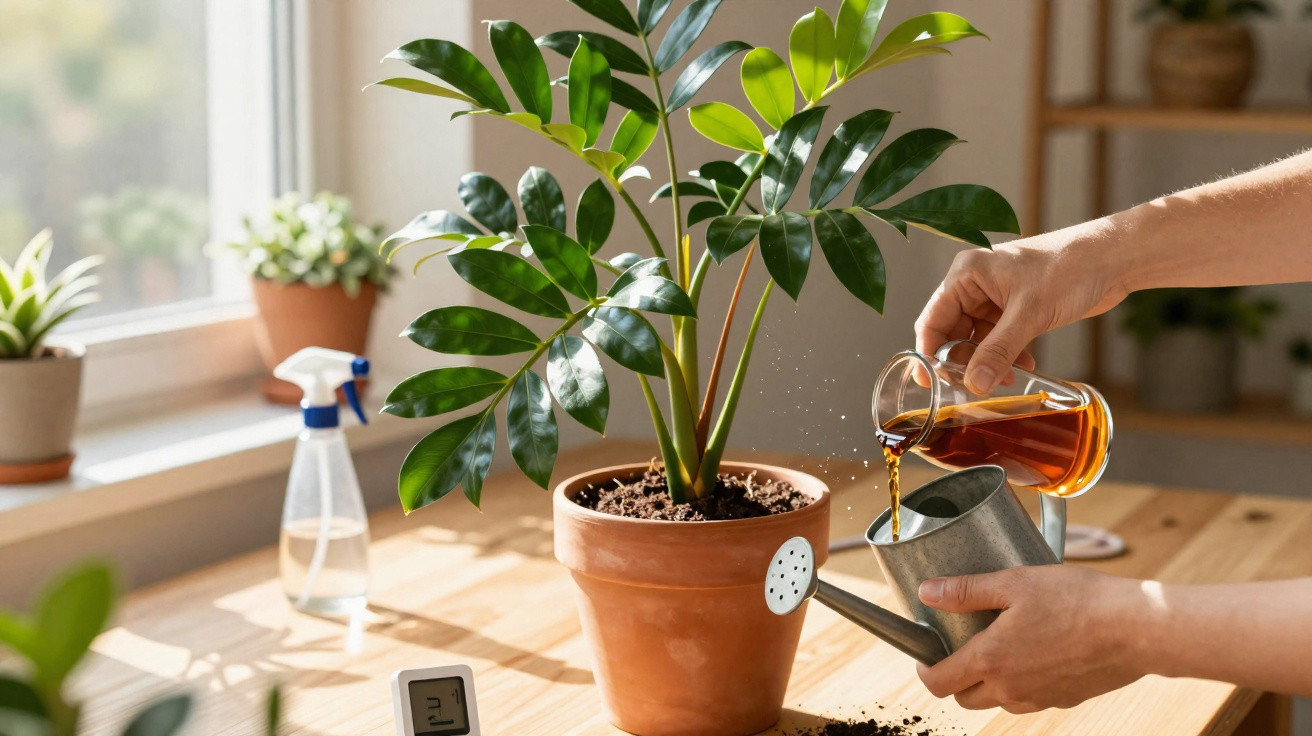
- Choose terracotta pots to help excess moisture evaporate.
- Do not leave saucers holding standing water beneath the pot.
- Check regularly whether the pot is packed with roots and plan to repot when needed.
What care makes Saint George’s sword more vigorous and easier to propagate?
Once you have corrected light, watering, and the pot, the plant often starts improving on its own. However, a light application of organic feed every two or three months can speed up the production of thicker leaves. If the container has become crowded with roots, moving it to a slightly larger pot-and removing any dark, soft sections-often kick-starts new growth and refreshes its overall look.
When the clump is dense, you can propagate by division, separating sections that have at least two or three leaves and firm rhizomes. Using clean tools, keeping it out of very strong sun for the first few days, and maintaining the mix only lightly moist helps the new divisions root quickly and keeps Saint George’s sword looking good for many years in both indoor spaces and sheltered outdoor areas.
Comments
No comments yet. Be the first to comment!
Leave a Comment