
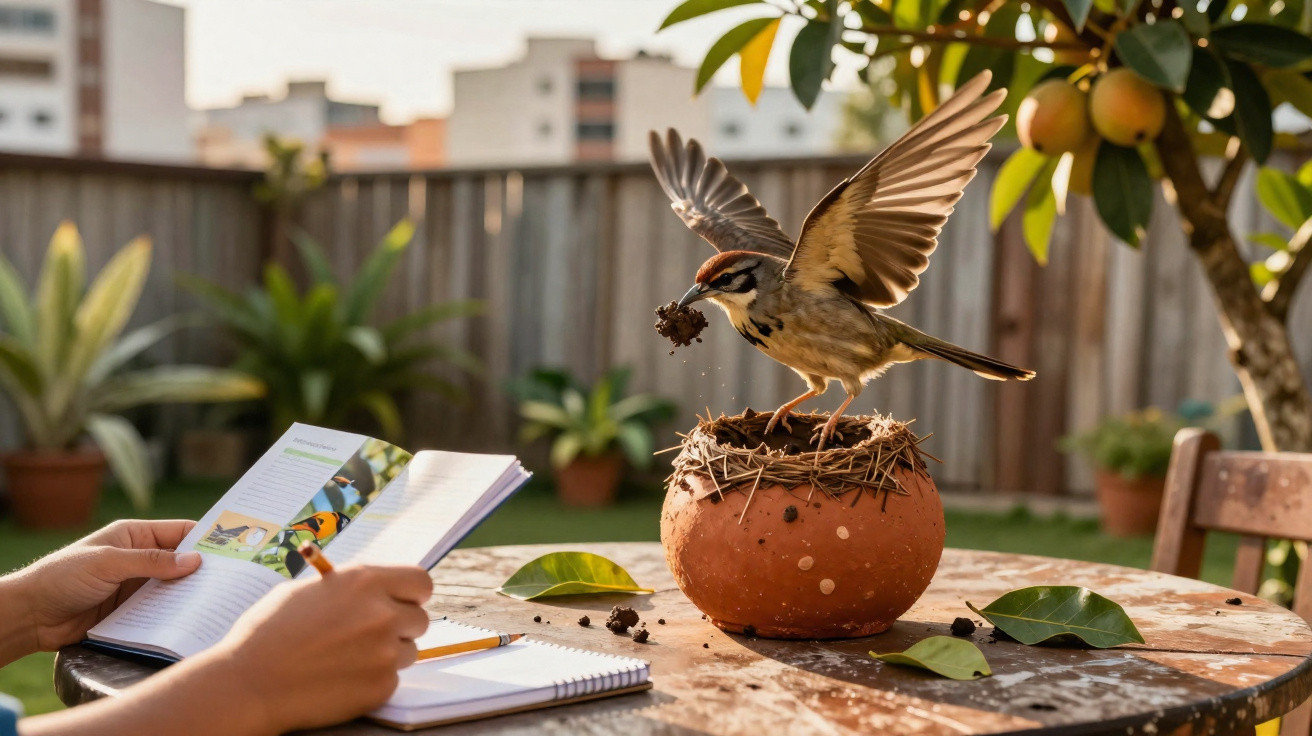
Having a rufous hornero (joão-de-barro) nest in the back garden creates a strong link with nature and suggests the area provides plenty of resources. Spotting this striking structure on your property is a very positive sign of balance and urban biodiversity.
How does the joão-de-barro build its nest in the garden?
The pair works in complete cooperation to raise its well-known mud home. Male and female share the jobs evenly, making thousands of trips to gather the damp clay needed to shape a durable structure.
This intricate building process typically takes anywhere from two weeks to a full month to finish. The birds show remarkable commitment and do not stop their daily work, even during spells of heavy rain or over long bank-holiday periods.
Key features you can observe during the construction of these little houses include:
- Fresh mud: The pair collects clay and straw to achieve the ideal binding for the walls.
- ⏱ Estimated time: The full build takes fifteen days to one month of effort.
- Multiple trips: More than two thousand material-carrying journeys are required.
- Continuous work: The birds keep working even on Sundays and public holidays.
- New home: A brand-new shelter is built by the pair each breeding season.
What are the main myths about this Brazilian bird?
Plenty of folk tales surround this bird’s behaviour, but science rejects the more dramatic rumours. The story that the male locks the female inside the structure out of jealousy is entirely false and has no real biological basis.
Another widespread myth claims these small birds remain widowed for life after losing a partner. In reality, although they can maintain a solid partnership for many years, they will seek a new mate if the original partner dies prematurely in the wild.
Below, watch an explanatory video from the Planeta Aves YouTube channel that clears up these curious mysteries:
How does the internal structure of the mud house work?
The interior design of the shelter is highly sophisticated and intended to keep the brood safe. The main entrance is positioned away from prevailing winds, while a narrow corridor slows or blocks dangerous predators and also helps protect against water from heavy rain.
Internal layout
The two rooms
The nest is cleverly divided into two distinct spaces. The first room functions as a passageway and a kind of reception area immediately after the entrance.
The second chamber is the dedicated incubation space, fully lined with feathers, fur and soft moss to keep the eggs comfortable.
Hygiene inside the nest is also treated as a top priority by these attentive parents. The pair cleans continuously, removing debris and chick droppings directly with their beaks, keeping the space healthy and free from contamination.
More details on the placement and engineering of this shelter:
- Door orientation: The opening is planned to prevent the region’s prevailing draughts from blowing in.
- Beak “handedness”: Choosing to place the doorway to the right or left works like a manual preference in the birds.
- Hidden chamber: Access to the laying area is through a narrow gap that helps stop predators getting in.
Why does this bird’s presence indicate urban biodiversity?
When these nests are successfully established in built-up areas, it demonstrates an ecosystem in good balance. To build the house, the pair must be able to find water easily, good-quality mud, and a plentiful supply of small insects that provide food for the chicks.
In this way, the bird becomes an excellent biological control agent in residential gardens. By eating a huge number of larvae and beetles each day, these animals help regulate natural pests on their own, encouraging valuable ecological harmony in the environment.
See how the continued presence of these birds benefits the surrounding space:
- Natural feeding: Their constant search for insects dramatically reduces the number of garden pests.
- Ecological indicator: Choosing the site signals that the urban area still has healthy soil and clean water.
- Environmental calm: Nesting in place shows the garden offers peace and low levels of disturbance.
What is the joão-de-barro’s reproductive behaviour?
The breeding cycle demands an extraordinary energy investment from the monogamous pair. Each season they leave the old nest behind and start a new build from scratch, which explains why so many empty little houses end up scattered across city blocks.
These unused structures play a fantastic social role, providing ready-made shelter for swallows, canaries and other smaller birds. In other words, the joão-de-barro’s original effort creates a valuable housing network that supports many other species within our local wildlife.
Read also: What it means to find a joão-de-barro little house at your home



Comments
No comments yet. Be the first to comment!
Leave a Comment