
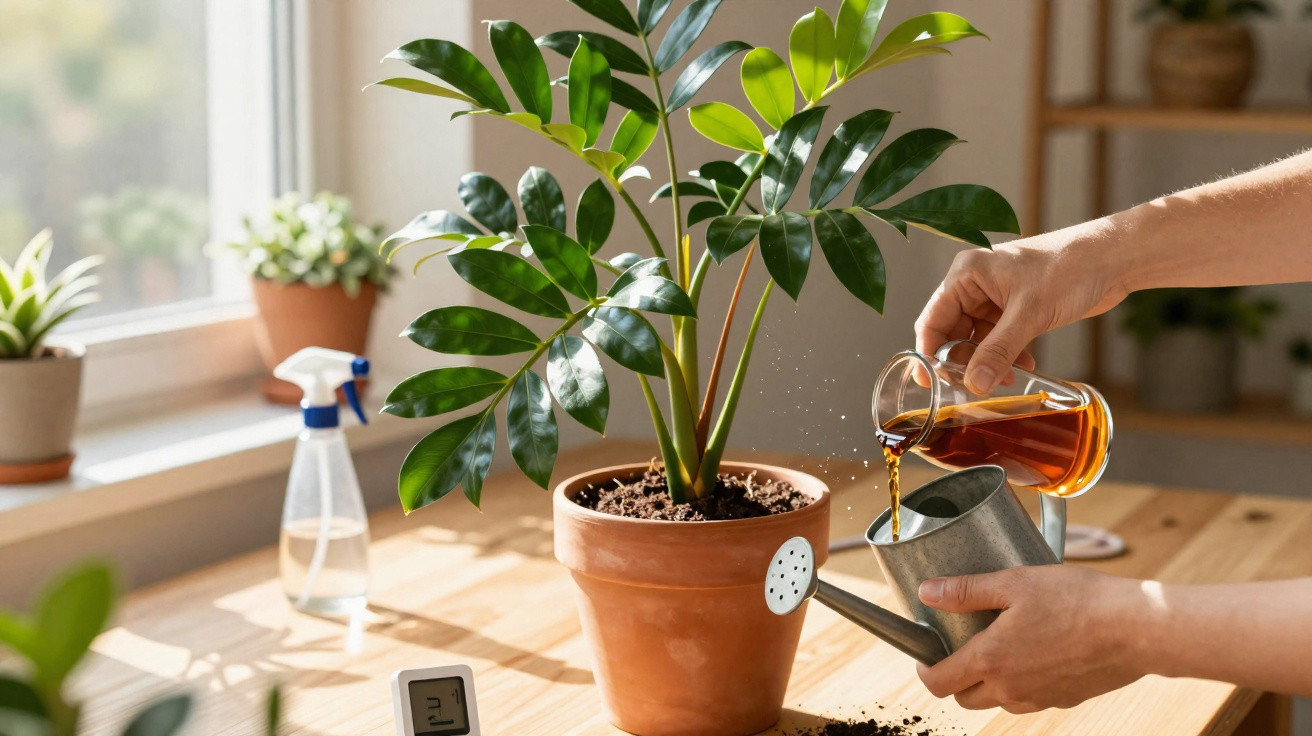
Zamioculca is one of the toughest decorative houseplants, but when it goes without the right nutrients it can lose its natural gloss. Learn how to bring your pot back to life by using the correct fertilising routine to achieve truly impressive leaves.
How can you tell your zamioculca needs nutrients?
When the potting mix becomes depleted of key elements, the plant shows obvious weakness through its foliage. The leaves start to lose the characteristic mirror-like finish, becoming dull and lifeless in closed residential or commercial spaces.
Alongside the loss of vitality, a lack of a controlled feeding routine can also prevent new, healthy shoots from emerging in the pot. Choosing a good-quality fertiliser helps restore the deep, vibrant tone that highlights the beauty of this much-loved ornamental species.
How do you make zamioculca sprout much faster?
There is a fail-safe, completely natural method that encourages strong new stems to appear on your plant in just a few days… Read more.
What is the importance of liquid humus in fertilising?
Liquid humus works directly to improve compacted potting mix, delivering a nutrient-rich blend of essential micro- and macronutrients. This type of organic fertilising supports fast uptake by the succulent roots, providing the essential strengthening the plant needs to cope well in indoor conditions.
Using this liquid solution weekly helps maintain ideal moisture levels without triggering rot in the underground stem. With consistent nourishment, older leaves regain their protective vitality and quickly look noticeably refreshed and highly glossy in a short time.
Below, watch the exclusive video published by the Spagnhol Plantas channel on YouTube, featuring several detailed explanations shared by respected specialists to clarify once and for all how to carry out proper plant nutrition and bring back leaf shine:
How do you set up the perfect pot to prevent rot?
To keep your zamioculca healthy, choose a pot with generously sized drainage holes so water can run out quickly. Building an effective drainage layer with expanded clay pellets stops harmful moisture from collecting at the bottom of a plastic container.
Placing a protective mesh over the clay helps prevent soil from blocking the drainage routes during regular watering. A sandy, well-aerated potting mix ensures the plant’s tubers stay protected against destructive fungi and bacteria caused by excess water.
Ideal Nutrition and Care
Fundamental elements
Three essential components to save your zamioculca:
- High-quality liquid humus for weekly application during watering;
- A substrate prepared with coarse sand to ensure excellent aeration;
- A pot with enlarged holes and a layer of expanded clay at the bottom.
What daily lighting care is needed?
Zamioculca needs bright, indirect natural light to photosynthesise properly in homes or flats. Keeping the plant too far from windows or glazed doors slows development, leaving new stems weak and completely lacking vigour.
On the other hand, direct exposure to strong sunlight can scorch the leaves, creating dark marks that are difficult to reverse. Balanced light, combined with correct organic fertilising, is what specialists point to as the secret to maintaining intense shine and perfect colouring.
To organise your home growing routine efficiently, we have put together a detailed list of the main must-do care steps that help keep your zamioculca consistently healthy, with foliage full of lasting vigour:
- Water only when the potting mix is completely dry;
- Keep the pot in a spot with good natural brightness;
- Avoid direct sun on the leaves during the hottest times of day.
How can you keep the plant protected in the long term?
Wiping the leaves regularly with a damp cloth helps remove built-up dust that blocks light. This simple upkeep boosts the impact of the weekly fertiliser, ensuring the plant continues its biological processes with full success and energy.
Remember that this species is also toxic, so take extra care in homes with pets or small children. Place the pot on raised stands to keep everyone safe while you enjoy lush, green, visibly renewed foliage supported by organic nutrition.



Comments
No comments yet. Be the first to comment!
Leave a Comment