
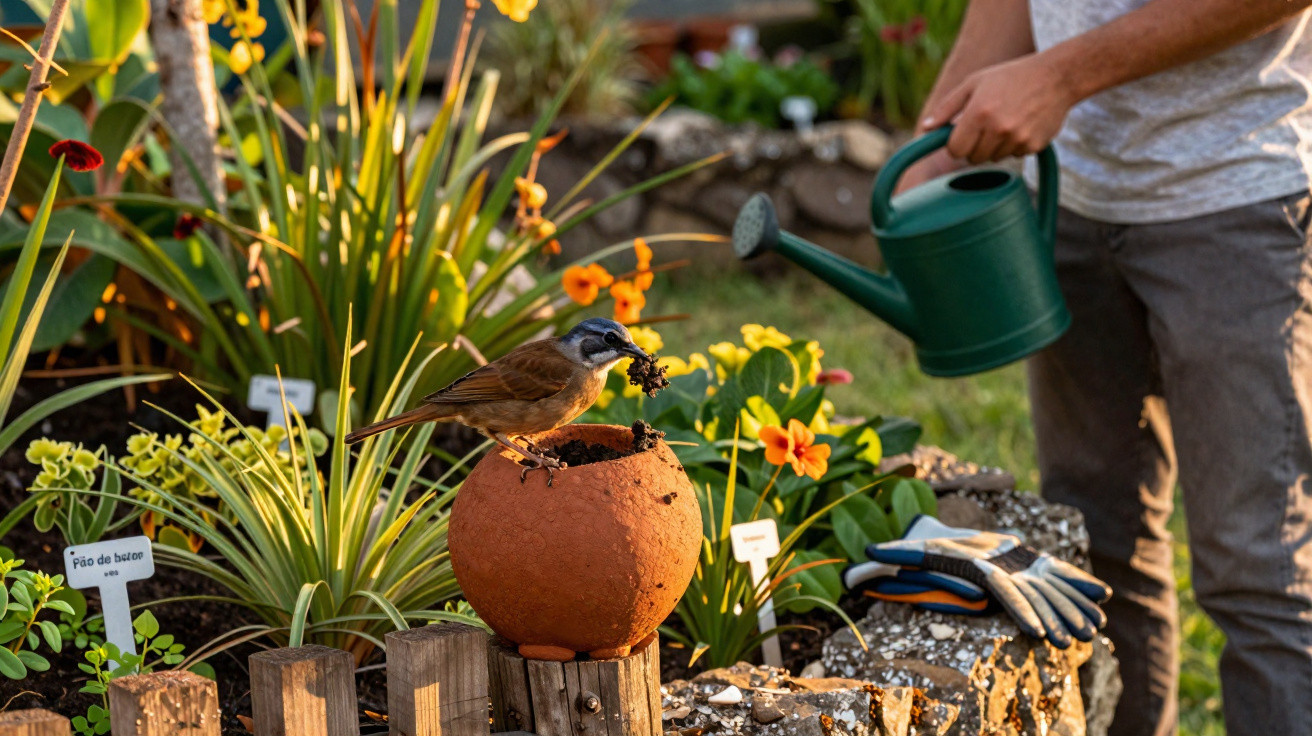
Finding a mud nest stuck to the edge of a roof or attached to a branch in your garden can be unsettling if you do not know what it means. There is no need to worry: this small sign from nature often says far more than it first appears. The rufous hornero does not settle just anywhere, and understanding what its presence suggests about your space can completely change how you see your garden.
A bird that only approves what is worth approving
The rufous hornero is notably selective. It tends to steer clear of noisy places, depleted soil, and areas with constant, disorganised human activity. When a pair chooses your garden or part of your home to build a mud nest, it is, in effect, giving the site a positive ecological assessment. In practical terms, that points to healthy vegetation, insects living in the soil, and a low level of pollution.
From a biological standpoint, this bird belongs to the Furnariidae family and is found across much of South America, being especially common in Brazil. The pair builds together in a process that takes between 18 days and one month. Made from mud, straw, and manure, the structure can weigh up to four kilograms and includes two separate chambers, with the entrance positioned strategically on the side most protected from rain and wind.
- Natural engineering: the nest has two chambers and can weigh up to four kilograms, built using no tools other than the beak
- A sign of balance: the bird’s presence points to fertile soil, healthy vegetation, and low pollution in the area
- Pest control: the rufous hornero feeds on insects, larvae, and soil invertebrates, without any chemical products
- Biodiversity boost: its presence often draws other birds in, enriching the garden ecosystem
- A symbol of partnership: the pair builds the nest together, reinforcing a cultural meaning of unity and dedication
What popular tradition says about it
In Brazilian popular culture, the rufous hornero holds a particularly special place. The best-known belief is that it only builds a mud nest in safe, calm locations with good energy. For that reason, finding one on your property is often read as a sign of prosperity, family harmony, and protection for the household. In folklore, its lively song is taken as an omen of good weather and better days ahead.
The fact that the nest is built by a pair also strengthens the bird’s symbolic role as an emblem of partnership and a steady home life. The species is monogamous, and seeing both birds carrying mud and arranging the structure side by side is one of the strongest images of shared effort in the Brazilian imagination. It is no coincidence that the rufous hornero appears in songs, stories, and cultural references across the country.
Three signs it is assessing your space
The bird does not always arrive with mud in its beak from the start. There is usually an observation period in which the pair moves around the area before deciding whether to build the mud nest. Noticing these behaviours helps you understand what stage the rufous hornero is at with your garden.
How to tell whether it has approved your garden
Keep an eye out for the following behaviours. Daily visits at the same time suggest the bird is starting to weave the area into its routine. Frequent singing indicates it feels safe, and the consistent presence of the pair together is a sign that a nesting decision may be close.
When it begins carrying mud, that is the clearest confirmation: your garden has been approved. From that point on, it is best to keep the area calm, avoid excessive noise near the nest, and never try to remove or touch the structure while it is being built.
It is also worth remembering that Brazilian environmental legislation protects this species and its structures. Destroying a mud nest is prohibited, and it also drives away one of the most welcome residents your garden could have.
What your garden gains from this visit
The presence of the rufous hornero brings practical, concrete ecological benefits to any garden. It mainly feeds on insects, larvae, and small invertebrates it finds in the soil, acting as a natural form of pest control without any chemical products. Its arrival helps reduce the spread of beetles and larvae that can harm roots and planting beds.
Beyond that, a pair of rufous hornero birds often attracts other birds to the surrounding area, increasing biodiversity across your green space. A garden with more species moving through it is typically more resilient and better able to regulate itself. Keeping planting beds with loosened soil and avoiding excessive use of pesticides are simple steps that can greatly increase your chances of welcoming-and keeping-this bird nearby.
Native species: the right invitation for the rufous hornero to arrive
Medium-sized trees and shrubs, especially species native to Brazilian flora, are among the rufous hornero’s preferred options for anchoring a mud nest. Investing in landscaping with native plants does more than improve how a garden looks: it creates a rich micro-ecosystem that supports insects, small reptiles, and birds, making the environment far more appealing to such a demanding bird when it comes to choosing where to live.
The rufous hornero is, without question, one of the best companions a garden can have: it works quietly for the area’s balance, tells a meaningful story of partnership, and fills the space with song, life, and a sense of purpose. When it chooses your home, it is because your home was worth choosing.
If this surprised you, share it with someone else who also enjoys discovering what nature has to say about the spaces around us.




Comments
No comments yet. Be the first to comment!
Leave a Comment