
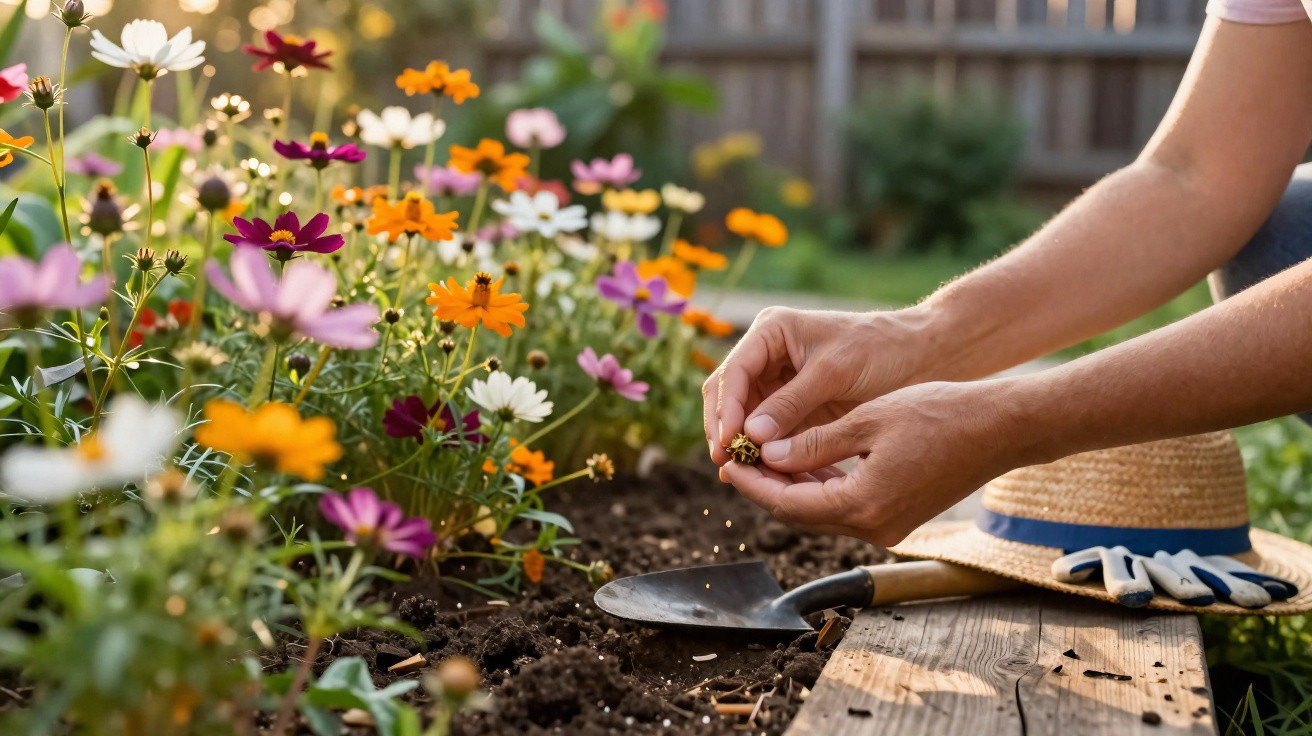
Having a flower-filled garden without needing to plant again each season is a common aim for many gardeners. Certain species have a useful trait: they set seed, those seeds naturally drop onto the soil, and they sprout the following season-something known as self-seeding. With just a little attention, these flowers keep beds colourful, draw in pollinators, and cut down the time spent on garden upkeep.
How do flowers that self-seed naturally work?
Once flowering has finished, these plants produce seeds that can sit in the soil until conditions are right for germination. With many species, winter cold or seasonal rainfall helps trigger this process, so new seedlings appear on their own the next year.
This habit makes a garden both more changeable and more cost-effective. As well as reducing the need to buy new plants, self-sown seedlings often settle in more successfully because they are already matched to the local soil and climate. It also supports visits from bees, butterflies, and other pollinators.
Which flowers come back every year without replanting?
There are plenty of well-known plants that self-seed easily. Some are annuals that leave seed behind for the next season, while others are biennials or short-lived plants that still keep the garden blooming thanks to fresh new growth.
When grown in the right conditions, they can gradually form larger, denser drifts year after year.
- Marigold
- Borage
- Poppy
- Forget-me-not
- Columbine
- Foxglove
- Sea holly
How can you encourage these flowers to reappear?
For the natural cycle to happen, avoid removing every faded flower straight after blooming. It helps to leave some spent flowers on the plant until the seeds have fully ripened and dropped onto the soil.
It is also best not to apply an overly thick layer of mulch where you want seedlings to emerge. In spring, you can simply remove or transplant any surplus seedlings to keep your beds tidy.
- Let some flowers go to seed
- Avoid completely clearing beds at the end of the season
- Do not cover the soil with an overly thick layer of mulch
- Identify seedlings before pulling them out
- Move plants that have self-sown in unsuitable places
- Keep very vigorous species in check to prevent too many seedlings
Is it worth growing self-seeding flowers?
If you want a good-looking garden with less effort, these species are strong allies. Alongside lowering the cost of replacing plants, they create a more natural feel and boost biodiversity, supporting pollinating insects and other organisms that help keep the garden in balance.
With a bit of planning and regular observation, these flowers can turn beds into living spaces that refresh themselves every year, with very little need for new planting.
Let nature do the work for you
By choosing flowers that self-seed naturally, you set up a garden that almost renews itself each season. With a few simple measures and by respecting each plant’s cycle, you can enjoy beds that become increasingly colourful and lively, while spending less time and money on replanting.
In this way, the garden gains beauty, biodiversity, and practicality-so you can spend more time enjoying the flowers and less time replanting beds.
Comments
No comments yet. Be the first to comment!
Leave a Comment