

Air pollution sits among the world’s most lethal environmental dangers. Roughly 99% of people worldwide are breathing air that does not meet safe thresholds.
The latest estimates link air pollution to about one in eight deaths globally, putting it on a par with long-established health hazards such as smoking and unhealthy diets.
It is easy to assume gardens are part of the solution: green, leafy places filled with plants many of us believe can lift grime and toxins from the air.
That logic feels sound, but a major new review suggests the research base behind it is almost absent.
Researchers led by the University of East London (UEL) set out to find robust evidence that domestic gardens improve the air people actually breathe at home - and found remarkably little.
The argument is not that gardens let us down; it is that the question has scarcely been tested properly.
Gardens cover surprising ground
Domestic gardens are not a trivial slice of urban land. In the United Kingdom, around 25.8 million gardens cover approximately 959,800 hectares (2.4 million acres).
Their footprint differs sharply between places. In London, gardens account for about 41% of the city’s total area, compared with roughly one-fifth in cities including Leeds.
That reach is precisely why the evidence gap matters. Every day, vast numbers of people unwind, cultivate vegetables, and step straight from their homes into these spaces.
Given how common gardens are, you might expect a substantial evidence base on how this greenery affects neighbourhood air. Yet, surprisingly, that evidence base is barely there.
No direct evidence exists
The review process was extensive rather than selective. The researchers screened more than 34,000 studies and ultimately retained only 43 that related to gardens and air pollution.
Even so, none of those 43 studies had directly measured whether a domestic garden reduces pollution levels or improves the air residents breathe at home. Despite decades of attention on urban greenery, the count of direct studies was zero.
“Most of us think of gardens as healthy green spaces, and they absolutely provide many important benefits. But when it comes to air quality, we simply don’t yet know enough,” said Dr. Karina Corada-Pérez.
“Plants can capture pollutants, but a garden is much more than a collection of individual plants. Its layout, boundaries, proximity to roads and buildings, and the way air moves through the space may all influence whether vegetation helps reduce pollution or allows it to accumulate.”
How gardens differ from parks
The review also makes an important distinction. Much of what we know about trees, hedges and green walls capturing air pollution comes from parks, street canyons and other larger green spaces - not from private gardens.
In those environments, tree cover has been associated with reductions in coarse particle concentrations of between 7 and 24 per cent.
Domestic gardens, however, operate under different conditions. Homes, fences, sheds, parked cars and mixed planting can reshape airflow, producing patterns that are unlikely to occur in more open green areas.
In fact, very dense planting can potentially hinder cleaner air. While thick vegetation can collect particles on leaf surfaces, it may also hold stagnant air in the sheltered area behind it.
Even so, some findings from the wider literature look encouraging. A small number of studies reported that roadside hedges and green walls cut nearby particle pollution by more than 70 per cent.
However, the outcomes were highly variable, influenced by factors including vegetation height and spacing, along with changing weather conditions.
Food near busy roads
The review then considers people who grow their own produce.
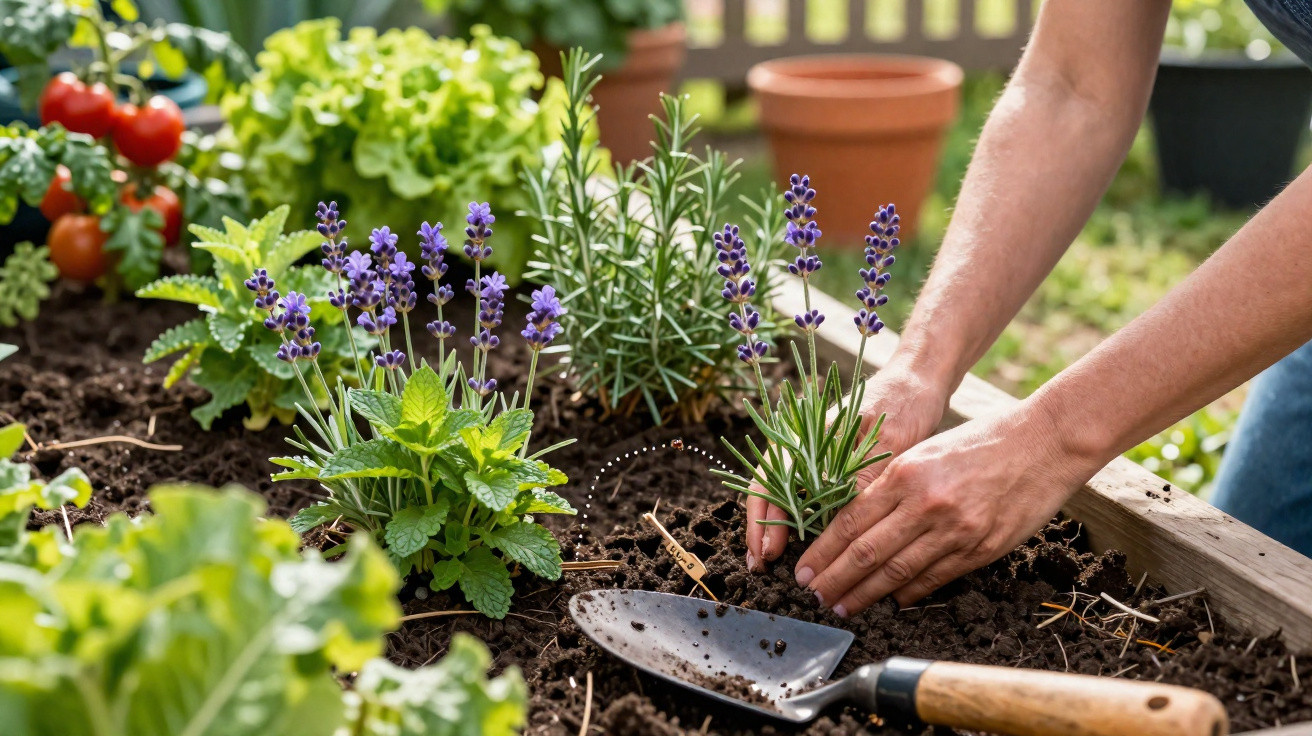
Fruit, vegetables and herbs cultivated near heavily trafficked roads can absorb pollutants carried from passing vehicles, potentially transferring that contamination from the garden into meals.
Metals are the key concern. Earlier research found lead accumulating in crops grown within about 10 metres (33 feet) of heavy traffic, sometimes exceeding European safety limits.
The type of leaf appears to affect exposure. Parsley and mint were more likely to accumulate contamination than root vegetables or legumes, a difference linked to their broad, exposed leaves.
This is not presented as a reason to abandon home growing. The authors emphasise that gardening for food remains worthwhile, while calling for clearer, practical guidance on where and how to plant.
Choosing plants gets complicated
Selecting the “right” plants is not straightforward. Leaves that are rough, hairy or waxy generally capture particles more effectively.
Dense conifers can be particularly good at trapping fine particles, helped by their needle-like foliage and year-round cover. Yet those same plant choices may come with downsides.
Some species emit natural compounds that can react in sunlight and contribute to secondary pollution during warmer spells. Others produce highly allergenic pollen that can aggravate hay fever.
Routine maintenance can also affect emissions. Mowing, pruning and using petrol-powered tools may each add pollution directly or trigger the release of plant compounds.
Turning gardens into evidence
Rather than offering simple planting checklists, the paper argues for evidence gathered in real domestic settings.
It suggests that guidance derived from parks cannot automatically be assumed to apply inside the boundaries of back gardens, where airflow can behave in stubborn, site-specific ways.
“Because millions of people spend time in their gardens, grow food in them and open their homes onto them, we urgently need research in real domestic gardens,” Dr. Corada-Pérez said.
“Only then can we give homeowners, planners and policymakers reliable advice about which planting choices are most likely to support cleaner air.”
“Domestic gardens already support biodiversity, help cool our cities, reduce flood risk, provide space for growing food and improve our wellbeing.
“Understanding how air quality fits alongside those benefits could help us make better use of one of the most widespread – but least studied – forms of green infrastructure in our cities.”



Comments
No comments yet. Be the first to comment!
Leave a Comment