
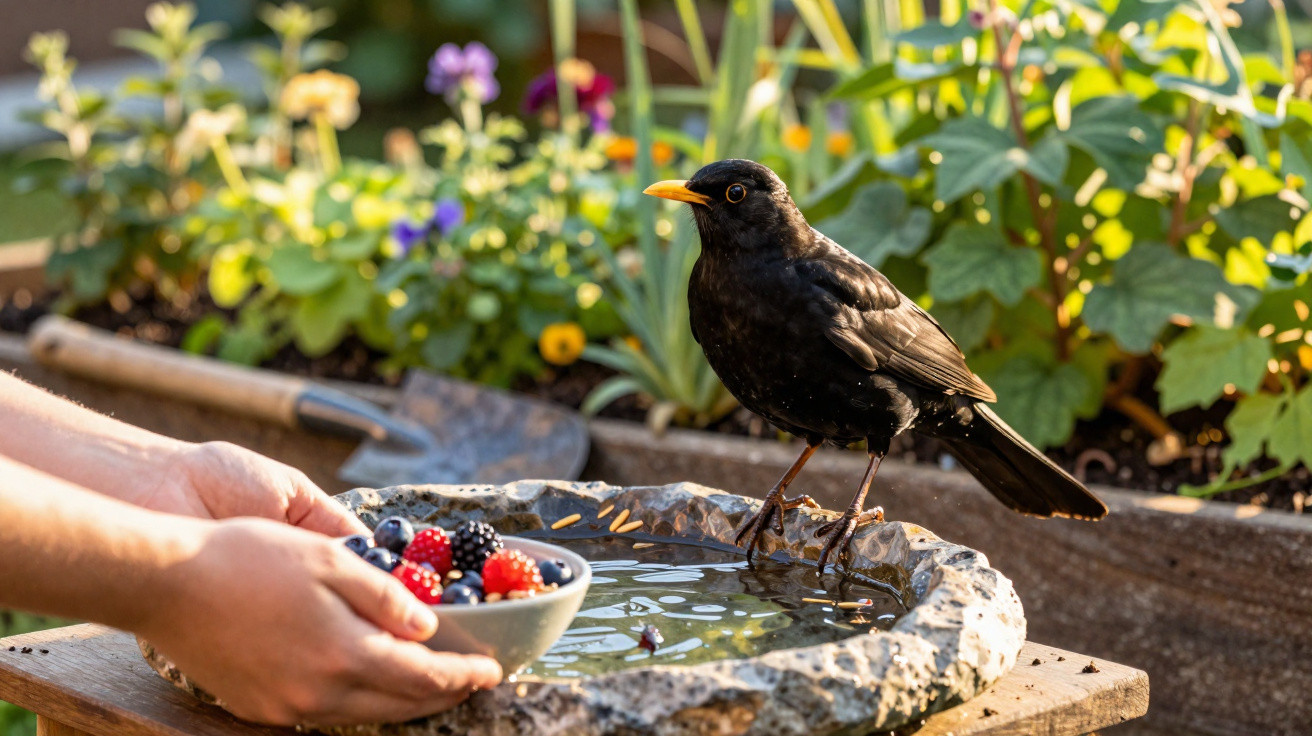
The frequent return of a blackbird in the garden often piques people’s curiosity. This elegant, watchful bird does not pick a spot at random: it looks for places that feel safe, offer plenty of food and have a strong natural character. When a blackbird turns up in the garden every day, it usually means the space provides ideal conditions for it to thrive-and it can also point to encouraging signs about the garden’s overall health.
Why does the blackbird keep coming back to the same garden?
Blackbirds are notably territorial and tend to stick with areas where shelter, water and food are easy to find. Once they recognise a garden as suitable, they return again and again, sometimes even settling into a daily routine there.
Gardens with natural planting, healthy soil and minimal chemical treatments are far more appealing to these birds. A blackbird favours calm places with shrubs and sheltered corners where it can rest and stay out of sight from potential threats.
What does the blackbird’s presence reveal about the garden?
Seeing this bird visit regularly can be taken as an excellent environmental sign. The blackbird relies on a balanced ecosystem to locate insects, earthworms and other small organisms that make up its natural diet.
Certain features are commonly found in gardens that attract blackbirds frequently:
- Soil rich in natural life
- Denser, more varied vegetation
- Reduced use of pesticides
- A supply of insects and earthworms
- A quiet, sheltered setting
This shows a garden does not need to look overly “perfect” to be healthy. More natural spaces typically support biodiversity and draw in different bird species.
How does the blackbird help protect plants?
Many people do not realise it, but the blackbird can act as an important natural ally in pest control. As it searches for food across the lawn and among the beds, it eats a range of insects and larvae that can damage flowers, vegetables and fruit trees.
What’s more, the bird’s steady presence helps the garden stay balanced without relying so heavily on artificial products. Among the main organisms a blackbird eats are:
- Snails that attack leaves
- Larvae that harm plants
- Insects hidden in the soil
- Small pests found in planting beds
- Organisms living in the grass
Because of this behaviour, many gardeners regard the blackbird as extremely beneficial for keeping the garden healthier in a natural way.
How can you encourage the blackbird to keep visiting the garden?
Keeping the garden welcoming for a blackbird is simpler than it may seem. Small adjustments can make the space much more attractive to the bird-especially when the garden retains its natural features and avoids overuse of chemicals.
Allowing a few shrubs to grow thicker, providing clean water and leaving some areas with leaf litter on the ground can make a real difference. The blackbird values calm, secure places, so its frequent return often reflects a genuine sign of balance and harmony with nature.

Comments
No comments yet. Be the first to comment!
Leave a Comment